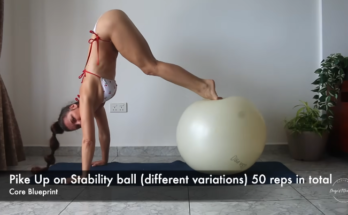
In a world where many people chase speed, intensity, and extreme workouts, the idea of slowing down to focus on mobility might seem simple—almost too simple. Yet mobility is one of the most powerful foundations of lifelong health, strength, and pain-free movement. An 18-minute full body mobility routine may sound short, but when done with intention, it can completely transform the way your body feels, moves, and performs over time. This is not just exercise; it is an investment in longevity and a commitment to moving for life without pain.
Mobility is often confused with flexibility, but the two are not the same. Flexibility refers to how far a muscle can stretch, while mobility is about how well your joints move through their full range of motion with control and strength. True mobility combines strength, coordination, balance, and awareness. When you train mobility regularly, you are not only improving how far you can move, but also how safely and powerfully you can move in everyday life.
As we age, the body naturally becomes stiffer if it is not challenged through movement. Long hours of sitting, repetitive tasks, stress, and lack of varied motion slowly reduce joint health. Hips tighten, shoulders lose range, the spine becomes rigid, and pain often follows. This is why a full body mobility routine is so essential for longevity. It counteracts the negative effects of modern lifestyles and helps maintain youthful, resilient joints.
An 18-minute full body mobility session is designed to be realistic and sustainable. You do not need hours in the gym or complicated equipment. What you need is consistency and mindful movement. In this short window of time, you can gently wake up every major joint in the body, restore balance, and reconnect with how your body is meant to move.

The session usually begins with breath and awareness. Breathing is the foundation of pain-free movement. Deep, controlled breathing helps relax the nervous system, reduce tension, and prepare the body to move safely. When you breathe with intention, you improve oxygen delivery to muscles and joints, which supports recovery and long-term health. This initial phase sets the tone for the entire practice, reminding you to move with ease rather than force.
Next, attention often shifts to the spine. The spine is central to mobility because it connects the upper and lower body. Gentle spinal movements—such as flexion, extension, rotation, and side bending—help maintain disc health and reduce stiffness. When the spine moves well, the rest of the body follows. Pain in the hips or shoulders is often linked to limited spinal mobility, so addressing it early in the routine is crucial.
Shoulders are another key focus in a full body mobility practice. The shoulder joint is one of the most mobile joints in the body, but it is also highly vulnerable to injury if not supported by strength and control. Slow, controlled shoulder circles, arm sweeps, and rotational movements help restore range of motion while strengthening the stabilizing muscles. Over time, this reduces the risk of pain, impingement, and chronic tension in the neck and upper back.
Hips are often described as the powerhouse of the body. They play a major role in walking, running, lifting, and maintaining balance. Tight hips can lead to lower back pain, knee issues, and poor posture. In an 18-minute mobility routine, hip movements are typically explored from multiple angles—forward, backward, and rotational patterns. These movements nourish the hip joints, improve circulation, and increase strength at end ranges, which is essential for long-term joint health.
The knees and ankles are sometimes overlooked, yet they are critical for pain-free movement. Healthy knees rely on good mobility in the hips and ankles, while strong, mobile ankles support balance and stability. Gentle knee flexion and extension, combined with ankle circles and controlled weight shifts, help keep these joints resilient. This is especially important for longevity, as knee and ankle pain are common reasons people reduce activity as they age.

A full body mobility routine also emphasizes integration. Rather than isolating each joint, movements flow together in coordinated patterns. This trains the body to move as a unit, just as it does in real life. Getting up from the floor, reaching overhead, twisting, or stepping in different directions all require coordination between multiple joints. Practicing these patterns regularly improves functional strength and reduces the risk of injury.
One of the most powerful benefits of mobility training is pain reduction. Many aches and pains are not caused by weakness alone, but by poor movement patterns and limited joint range. When joints are stiff, the body compensates, placing extra stress on muscles and connective tissues. Over time, this leads to discomfort and chronic pain. Mobility work restores balance, allowing the body to distribute forces more evenly and move without strain.
Increased strength is another major outcome of consistent mobility practice. While mobility movements may appear gentle, they build strength in positions that are often neglected in traditional training. Holding controlled positions at the edges of your range of motion strengthens muscles and tendons where they are most vulnerable. This type of strength is essential for longevity because it supports joint integrity and reduces the likelihood of injury.
An 18-minute routine is also mentally accessible. Knowing that you only need a short amount of time removes barriers to consistency. You can practice in the morning to prepare for the day, during a break to reset your body, or in the evening to unwind and release tension. The key is regularity. Even a short daily practice can create profound changes when done consistently over months and years.
Moving for life pain free is not about avoiding challenge; it is about choosing the right kind of challenge. Mobility training encourages you to listen to your body, respect its limits, and gradually expand them. There is no rush, no competition, and no pressure to perform. Instead, the focus is on quality of movement and long-term sustainability.

Another important aspect of mobility for longevity is body awareness. Through slow, mindful movements, you learn to notice subtle sensations, asymmetries, and areas of tension. This awareness allows you to address issues early, before they develop into pain or injury. It also builds a deeper connection between mind and body, which supports overall well-being.
Over time, the benefits of a full body mobility routine extend beyond physical health. Many people report improved posture, better sleep, reduced stress, and increased confidence in their movement. When your body feels capable and pain-free, everyday tasks become easier and more enjoyable. You move through life with greater ease and freedom.
An 18-minute full body mobility practice is not a replacement for strength training or cardiovascular exercise, but it is a powerful complement to them. It prepares the body for more intense workouts and supports recovery afterward. For those who are new to exercise or returning after a break, mobility training provides a safe and effective starting point.
Ultimately, longevity is not just about living longer; it is about living better. It is about maintaining independence, enjoying movement, and staying connected to the activities you love. Mobility is the bridge between strength, health, and quality of life. By dedicating just 18 minutes a day to full body mobility, you are choosing to move for life—strong, resilient, and pain free.
This practice is a reminder that the body thrives on movement, variety, and care. When you move with intention and respect, your body responds with strength, flexibility, and vitality. An 18-minute full body mobility routine may seem small, but its impact can be life-changing. Move for longevity. Move for strength. Move for life—pain free.