She learned early how to make herself small.
Not physically—though she tried that too—but emotionally. She learned how to lower her eyes when people stared too long, how to stand slightly behind others in group photos, how to laugh softly when jokes brushed too close to the truth. She learned how to pretend she didn’t notice when conversations paused after she spoke, or when compliments skipped over her like stones across water.
People didn’t mean to be cruel.
That was the worst part.
They were just honest.
“She’s… different,” someone once said, thinking she couldn’t hear.
“Not ugly,” another added quickly, like an apology. “Just… not pretty.”
Those words stayed.
They followed her into mirrors, into classrooms, into job interviews and crowded buses where she caught her reflection in darkened windows and felt something sink quietly in her chest.
Her name was Lina.
She had a face people didn’t know how to look at. One eye slightly lower than the other. A scar that curved from her cheek to her jaw, the result of a childhood accident no one ever asked about kindly. Her smile—when she dared to use it—pulled unevenly, as if even joy hesitated before settling on her features.
She didn’t hate her face.
She hated what it did to people.
She saw it in the way strangers’ eyes flickered away too quickly. In the polite distance coworkers kept. In the way compliments were always about her work, her kindness, her reliability—never her.
“You’re so brave,” they said sometimes, with smiles that felt heavy.
Brave for existing.
By her twenties, Lina had perfected the art of invisibility. Neutral clothes. Hair tied back. No makeup that might draw attention. She kept her voice gentle and her opinions soft, careful not to take up too much space in a world that already seemed uncomfortable with her presence.
Rejection came quietly but often.
A job interviewer who smiled warmly until she looked up. A dating app match that vanished the moment she sent a photo. A stranger who recoiled just slightly when she sat beside them.
Each time, Lina told herself it didn’t hurt.
But her body remembered.
It remembered in the tightness of her shoulders, in the way her hands shook when she spoke to new people, in the way her chest ached at night for something she couldn’t name but deeply needed.
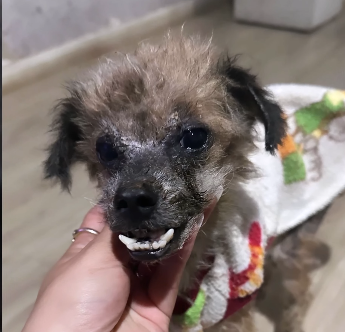
She didn’t crave admiration.
She craved acceptance.
One rainy afternoon, Lina volunteered at a community center—something she did every week because helping others felt safer than being seen herself. That day, the center was hosting a small support group for people who struggled with social anxiety and isolation.
She hadn’t planned to stay.
But the rain trapped her there.
Chairs were arranged in a loose circle. The room smelled faintly of coffee and damp coats. People spoke hesitantly, sharing pieces of themselves like offerings placed carefully on a table.
When it was Lina’s turn, she hesitated.
“I’m… here to help,” she said softly.
The facilitator smiled. “And you’re welcome to share too, if you’d like.”
Silence stretched.
Lina swallowed.
“I get rejected,” she said finally. “A lot.”
No one interrupted.
“Not loudly,” she continued. “No one yells or insults me. They just… step back. Like I’ve crossed an invisible line.”
Her fingers twisted in her lap.
“They reject me for my face,” she said. “Even when they don’t say it.”
Her voice didn’t break. She’d practiced that part.
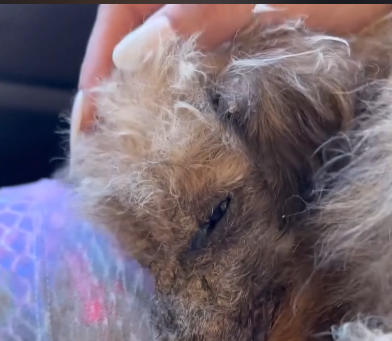
But her body betrayed her. A faint tremor ran through her arms, then her shoulders. Her breathing grew shallow, like she was bracing for impact.
“I try to be kind,” Lina whispered. “I try to be useful. I try to make it easy for people to like me.”
She paused, eyes fixed on the floor.
“But sometimes,” she said, “I just want to be held. Without having to earn it.”
The room was completely silent.
Then someone stood up.
It was a woman around her age, with tired eyes and a gentle face. She didn’t speak. She didn’t ask permission.
She simply walked over and opened her arms.
Lina froze.
Every instinct screamed danger. Attention. Judgment. Pity.
Her body began to shake harder now, an uncontrollable trembling she couldn’t stop. Years of restraint loosened all at once.
“I—” Lina whispered, panic rising. “I’m sorry, I—”
The woman shook her head softly. “You don’t have to explain.”
She waited.
Slowly, uncertainly, Lina stepped forward.
When the woman’s arms wrapped around her, something inside Lina collapsed.
The hug wasn’t careful or distant. It wasn’t quick. It was warm and steady, holding her like she was neither fragile nor wrong—just human.
Lina’s breath hitched.
Her hands hovered uselessly for a second before gripping the back of the woman’s sweater like she might fall apart without it. Her knees weakened. The trembling grew stronger, but now it wasn’t fear.
It was release.
Tears came silently, soaking into fabric. Lina pressed her face against the woman’s shoulder, the scar on her cheek exposed and unhidden, and for the first time in years, she didn’t flinch.
No one pulled away.
No one stared.

The hug lasted longer than comfort usually allows.
And in that space—wrapped in another person’s arms—Lina felt something unfamiliar bloom.
Safety.
When they finally separated, Lina wiped her eyes, embarrassed. But the woman just smiled.
“You’re allowed to exist,” she said softly. “Exactly as you are.”
Something shifted then.
Not dramatically. Not magically.
But deeply.
Lina didn’t wake up beautiful the next day. People didn’t suddenly stop judging. Rejection didn’t disappear.
But the hug stayed with her.
She remembered it when she caught her reflection. When someone looked away. When loneliness crept in at night like an old ache.
She remembered how her body had trembled—and survived.
How it had been held without condition.
Over time, Lina began to take small risks. Wearing a brighter color. Letting her hair fall loose. Meeting people’s eyes a second longer than felt comfortable.
Some still rejected her.
But some didn’t.
And now, when rejection came, it didn’t hollow her out the same way. Because she knew—deep in her bones—that being unwanted by some did not make her unworthy of love.
Sometimes, healing doesn’t come from changing how you look.
Sometimes it comes from being hugged when you least believe you deserve it.
And trembling… until the shaking finally stops.