Hunger has a sound.
It isn’t always the loud growl people imagine. Sometimes it is quieter—like the soft scrape of an empty stomach against ribs, or the shallow breath of someone who has learned that crying wastes energy. I didn’t know that then. I learned it the day I met her.
She stood at the edge of the street where the market ended and the broken road began. Around her, people passed with bags of rice, baskets of fruit, steaming bowls of noodles balanced expertly in one hand. No one stopped. Hunger had made her invisible.
She was small—too small for her age, though I couldn’t have told you how old she was. Her dress hung on her like it belonged to someone else long ago. Dust clung to her bare feet. When she looked at me, she didn’t rush forward the way other beggars sometimes do. She just watched. Carefully. Like someone afraid that even hope might hurt.
I reached into my pocket, already expecting to feel coins.
But before I could move, she stepped closer.
She didn’t speak at first.
She took my hand with both of hers. Her fingers were thin, almost fragile, but warm. Then, without warning, she lowered her head and kissed my hand.
It was gentle. Reverent. As if my skin were something holy.
My heart slammed against my chest.
“Please,” she whispered. Her voice cracked like dry earth. “Just crumbs.”
Crumbs.
Not a meal. Not money. Not even bread.
Crumbs.
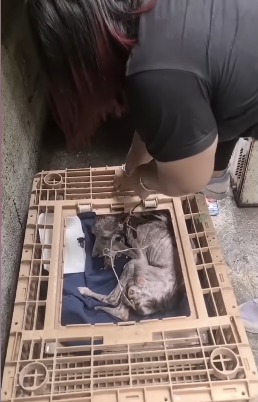
For a moment, the world went quiet. The traffic noise faded, the vendors’ calls blurred into nothing. All I could see was her face—her eyes too large, her cheeks hollow, her lips pale and trembling as if holding back the last of her strength.
Hunger ran through her veins like poison.
I knelt in front of her, my throat tight. I could smell the food from the nearby stalls, rich and cruel in the air. I wondered how many hours—no, days—it had been since she last ate.
“I have food,” I said quickly, afraid she might disappear if I didn’t act fast. “Wait here.”
Her eyes widened, not with joy, but with fear.
“Really?” she asked, as if the word itself might break something.
I nodded and rushed to the nearest stall. I bought more than I planned—rice, bread, soup, even fruit. My hands shook as I paid. I kept glancing back, terrified she’d be gone.
But she was still there.
When I returned and placed the food in front of her, she didn’t grab it.
She stared.
Then she touched the edge of the bag lightly, like it might burn her.
“This… all for me?” she asked.
“Yes,” I said. “Eat.”
She broke then.
Tears spilled silently down her cheeks. She pressed her forehead against my arm and whispered thank you again and again, each word thinner than the last. Then she ate—but not the way hunger movies show. No wild tearing, no desperation.
She ate slowly.
Carefully.
Like someone who had learned that food could vanish at any moment.
She saved half the bread and wrapped it in her dress.
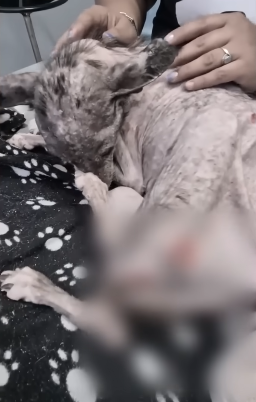
“For later,” she explained when she noticed me watching. “In case tomorrow…”
She didn’t finish the sentence.
We sat together on the curb while she ate. I asked her name.
“Mai,” she said softly.
“Where is your family, Mai?”
She hesitated, then shrugged in a way no child should ever learn. “Mama is gone. Papa too. I sleep near the river sometimes. When it’s not raining.”
The words landed like stones.
I wanted to say something comforting. I wanted to promise her things I wasn’t sure I could give. Instead, I asked, “How long have you been hungry?”
She thought for a moment, counting time in a way different from mine.
“Since yesterday,” she said. Then she corrected herself. “No… since the day before. I don’t remember eating yesterday.”
She smiled apologetically, as if forgetting meals were a personal failure.
When she finished, she wiped her hands on her dress and looked at me with solemn seriousness.
“I won’t forget you,” she said. “Even if I don’t see you again.”
I felt something break open inside me.
I walked her to the edge of the market, where the buildings thinned and the road turned rough. She stopped there, suddenly shy.
“Thank you,” she said again. Then she surprised me one last time—she took my hand and kissed it once more, softly, like a blessing.
Then she ran.
I stood there long after she disappeared, the imprint of her lips still burning on my skin.
That night, I couldn’t sleep.
I kept seeing her eyes. Kept hearing the word crumbs echo in my head. I thought of how close hunger had brought her to the edge of vanishing—not dying loudly, not dramatically, but quietly, politely, without demanding much of the world at all.
The next morning, I returned to the market.
I don’t know what I expected—maybe that she wouldn’t be there, that our meeting had been a single thread crossing briefly before snapping.
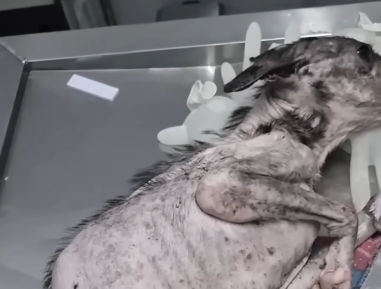
But she was there.
Sitting in the same spot.
When she saw me, she froze. Then she smiled—not the careful smile from before, but something brighter, something braver.
“You came back,” she said.
“So did you,” I replied.
That day, I brought food again. And the next day. And the day after that.
Eventually, I learned where she slept. I learned which vendors secretly slipped her leftovers when they thought no one was watching. I learned that hunger had taught her manners before it taught her survival.
And slowly—so slowly I almost didn’t notice—her cheeks began to fill. Her steps grew lighter. Her eyes lost some of their fear.
But I never forgot the first day.
I never forgot how hunger ran through her veins, how it bent her pride until all she could ask for were crumbs. I never forgot the weight of her kiss on my hand—a reminder that dignity can survive even the cruelest emptiness.
Sometimes, when I pass the market now, I still feel that moment echo in my bones.
Because hunger isn’t just about food.
It’s about being unseen.
And sometimes, all it takes to save someone is noticing them—before they disappear.