It was supposed to be an ordinary afternoon, the kind filled with laughter, open space, and the simple joy of a game of fetch. The sun hung comfortably in the sky, the grass shimmered with warmth, and the dog’s tail wagged with pure excitement. Fetch was his favorite game. It wasn’t just about the ball—it was about running freely, feeling strong, and sharing a moment with the human he loved more than anything. No one could have imagined that in a single instant, everything would change.
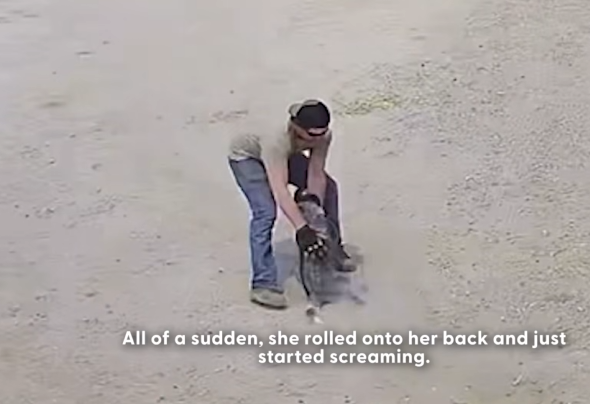
The ball flew through the air, bouncing once before rolling across the field. The dog sprinted after it, muscles moving in perfect rhythm, ears flapping with each stride. Then, suddenly, he stopped. Not slowed. Not stumbled. He simply collapsed. His body crumpled to the ground as if the strength had been pulled from him without warning. The ball lay just a few feet away, untouched.
At first, his owner thought he was joking—dogs sometimes play strange games. But seconds passed, and the dog did not rise. His tail didn’t wag. His legs didn’t move. Panic replaced laughter in an instant.
Calling his name brought no response, only wide eyes filled with confusion. The dog tried to stand, pushing with all his will, but his back legs would not obey. They lay still beneath him, unresponsive, unfamiliar. His front paws clawed at the grass, dragging his body forward slightly before he gave up, breathing hard. Fear settled in—sharp and overwhelming.
Rushed to the veterinary clinic, time stretched painfully. Every red light felt cruel. Every second felt stolen. The diagnosis came like a heavy blow: sudden paralysis, likely caused by a spinal injury or neurological event. No clear warning signs. No obvious reason. Just a life changed in moments.
The word paralyzed echoed in the room, hollow and terrifying.
The vet explained gently that the dog might never walk again. That recovery, if it happened at all, would take time—months, maybe longer. That there were no guarantees. His owner listened, nodding, but inside, their heart broke. How could this dog—who lived to run, to chase, to leap—be trapped in a body that no longer worked?
But dogs do not grieve the future the way humans do.
The dog did not know what paralysis meant. He only knew that his legs didn’t move, that things were harder, and that his person was still there. When his owner knelt beside him, he licked their hand, tail thumping weakly against the floor. He wasn’t thinking about what he had lost. He was thinking about now.
The first days were the hardest. Simple tasks became complicated. Getting up. Going outside. Eating. Sleeping. His owner learned how to lift him gently, how to support his weight, how to move him without causing pain. Nights were filled with worry and quiet tears. But every morning, the dog greeted the day with the same bright eyes, the same determination.
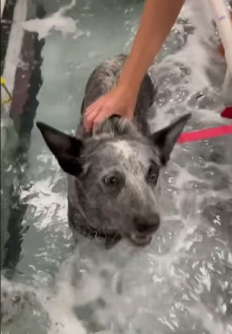
Physical therapy began slowly. Painfully slowly. Small movements. Gentle stretches. Water therapy that supported his weight when gravity felt too cruel. Some days showed progress. Other days felt like setbacks. But through it all, the dog never stopped trying.
He dragged himself forward with his front legs when he wanted to reach his owner. He barked at the door when he wanted to go outside. He adapted, not with bitterness, but with creativity. Where others might have surrendered, he adjusted.
A custom wheelchair arrived weeks later. At first, he was unsure. The strange frame wrapped around his body, wheels where legs used to do the work. He stood awkwardly, confused, hesitant. Then his owner threw the ball—gently, just a short distance.
Instinct took over.
The dog leaned forward. The wheels rolled. Slowly at first, then faster. His ears lifted. His mouth opened in a joyful grin. He ran. Not the way he used to—but he ran. Laughter and tears blended as his owner watched him chase the ball, refusing to let paralysis steal his joy.
But the impossible part of this story had not happened yet.
Months passed. Therapy continued. Every day, tiny signs appeared—muscle twitches, brief weight shifts, moments that made the vet pause. The dog began to push during therapy sessions, concentrating deeply, as if willing his body to remember something it had forgotten.
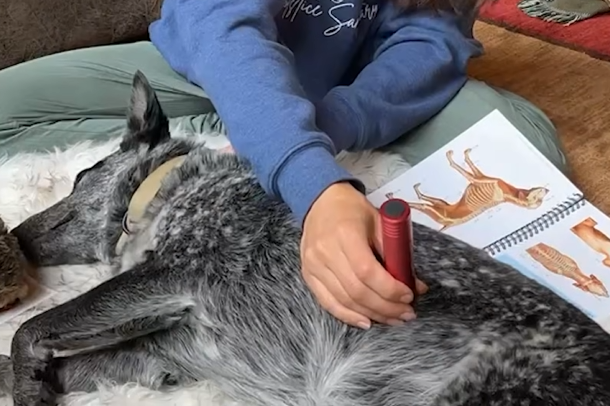
Then one day, during a routine exercise, it happened.
The dog stood.
Not fully. Not confidently. But unmistakably—he put weight on his back legs. Everyone froze. Afraid to breathe. Afraid to interrupt the moment. The dog wobbled, swayed, then collapsed gently back down.
But it had happened.
From that moment on, nothing was the same.
The dog worked harder than ever, fueled by something deeper than training—hope. Day by day, his legs responded a little more. A second longer. A step further. Progress came in inches, not miles, but each inch was a victory.
The first unassisted step came unexpectedly. His owner was in the kitchen when they heard a soft sound behind them. Turning around, they saw the dog standing—really standing—and taking a shaky step forward. Then another. And then he fell.
But he didn’t look scared.
He looked proud.
Tears streamed as his owner knelt down, praising him, hugging him, celebrating something doctors once said might never happen. The dog wagged his tail furiously, thrilled not by the miracle itself, but by the joy it brought.
Over time, steps turned into short walks. Short walks turned into confident movement. The wheelchair was used less and less, until one day it sat untouched in the corner, no longer needed.
When the dog finally ran again—slowly, awkwardly, but on his own legs—it felt unreal. Fetch returned, not as it once was, but transformed. Each throw carried gratitude. Each run carried triumph.
The dog had done the impossible.
But the true miracle wasn’t just that he walked again. It was how he lived through paralysis. Without self-pity. Without giving up. Without losing his spirit. He taught everyone around him that resilience isn’t loud or dramatic—it’s quiet persistence. It’s showing up every day and trying again, even when yesterday was hard.
The Dodo shared his story not because it was rare, but because it was inspiring. Because it reminded people everywhere that animals are not defined by their limitations. They are defined by their hearts.
This dog didn’t know he was doing something extraordinary. He just knew he loved his life, his human, and his game of fetch. And when life changed the rules, he didn’t quit the game—he learned a new way to play.
Paralyzed during fetch, he faced a future rewritten without warning. But with love, patience, and an unbreakable will, he rewrote it again.
And in doing so, he showed the world that sometimes, the impossible is just the beginning. 🐾❤️