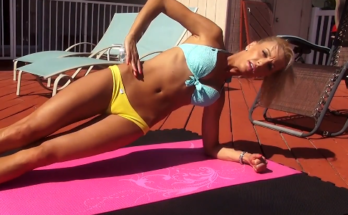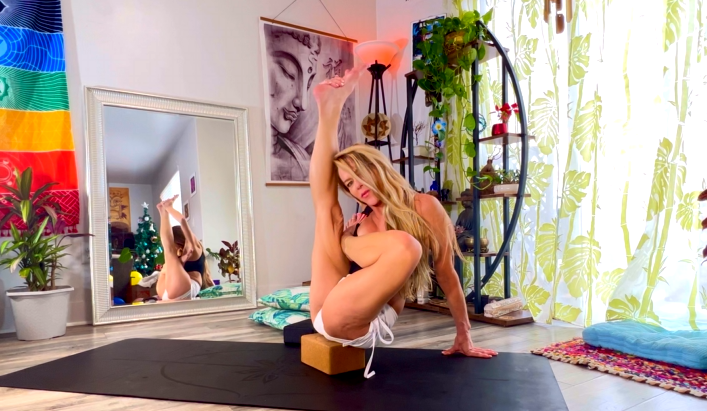
Balancing on a block while moving into over splits represents the perfect meeting point between flexibility, strength, control, and mental focus. This advanced practice is often seen in flexible yoga flows, gymnastics training, and modern fitness routines that emphasize mobility and body awareness. While it looks impressive, the true value of balancing on a block with over splits lies not in appearance, but in the deep physical intelligence it builds throughout the entire body.
Understanding Over Splits
Over splits go beyond the traditional flat split by elevating the front or back leg on a block, chair, or other support. This elevation increases the stretch intensity in the hip flexors, hamstrings, and connective tissues. Over splits require not only exceptional flexibility but also proper alignment and muscular engagement to remain safe.
Unlike passive stretching, over splits are an active flexibility exercise. Muscles must stay engaged to protect the joints and maintain balance. This is why over splits are commonly trained by gymnasts, dancers, and advanced yoga practitioners.
Why Use a Block?
Using a block introduces height, instability, and challenge. When one foot is elevated on a block, the body must work harder to maintain balance and alignment. This instability activates deep stabilizing muscles in the hips, core, ankles, and spine.
A block also allows gradual progression. By adjusting the height, practitioners can safely increase stretch intensity over time. Yoga blocks are ideal because they are stable, firm, and designed to support body weight safely.
The Balance Component
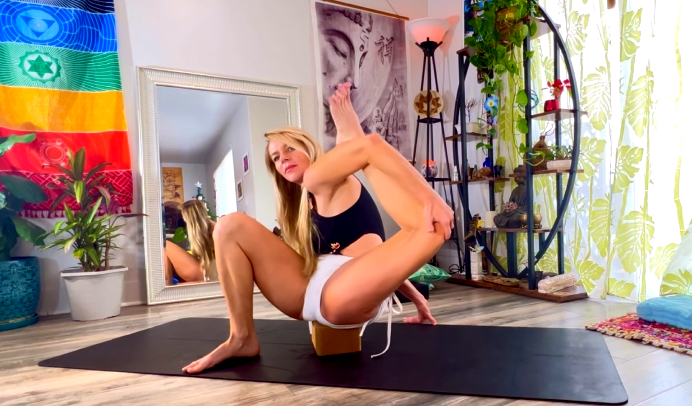
Balancing on a block transforms over splits from a flexibility drill into a full-body training experience. Balance demands focus, coordination, and control. Even small shifts in weight can affect stability, requiring constant micro-adjustments throughout the body.
This balance challenge strengthens proprioception—the body’s ability to sense its position in space. Improved proprioception enhances athletic performance and reduces injury risk in both sports and everyday life.
Strength Meets Flexibility
One of the biggest misconceptions about flexibility training is that it is purely passive. Balancing on a block with over splits proves the opposite. Strength is essential.
The core must engage to stabilize the pelvis. The glutes support hip alignment. The quadriceps protect the knees. The calves and ankles work continuously to maintain balance. This combination of strength and stretch creates resilient, functional flexibility rather than fragile range of motion.
Preparing the Body Safely
Before attempting over splits on a block, thorough preparation is essential. Cold muscles and connective tissue are more prone to injury. A proper warm-up should include light cardio, dynamic leg swings, lunges, and hip circles to increase blood flow.
Flexibility should already be well-developed. A comfortable flat split on the floor is generally considered a prerequisite. Rushing into over splits without proper foundation increases the risk of strain, especially in the hamstrings and hip flexors.
Alignment Is Everything
Correct alignment determines whether balancing on a block with over splits is safe or harmful. The hips should remain squared as much as possible, avoiding excessive rotation. The pelvis should be supported by core engagement rather than collapsing into the stretch.
The spine stays long and neutral, with the chest lifted and shoulders relaxed. Looking at a fixed point can help maintain balance and stability.
Mental Focus and Breath Control
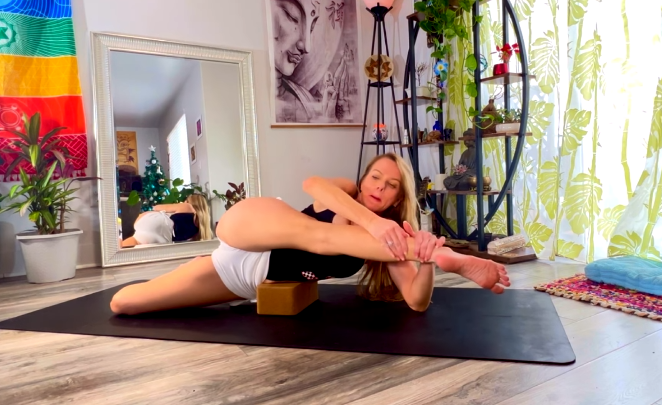
Advanced flexibility work is as much mental as it is physical. Fear, tension, or distraction can immediately affect balance. Calm, controlled breathing helps regulate the nervous system and maintain focus.
Slow inhalations create space in the body, while controlled exhalations encourage muscles to release without losing engagement. This balance between relaxation and control is essential for success in over splits.
Yoga Perspective: Mindful Depth
In yoga, balancing on a block with over splits is approached with mindfulness and respect for the body’s limits. The goal is not to force depth but to explore sensation with awareness.
Yoga emphasizes breath, alignment, and inner awareness. Practitioners may hold the position briefly, focusing on steady breathing and energetic balance rather than pushing for maximum stretch. The pose becomes a meditation in strength and surrender.
Gymnastics Perspective: Precision and Control
In gymnastics, over splits are trained to exceed standard flexibility requirements, making regular splits feel effortless. Balancing on a block builds control through extreme ranges of motion.
Gymnasts focus on precision, squared hips, pointed toes, and strong leg engagement. The emphasis is on clean lines and repeatable control, which translates directly to improved performance in leaps, jumps, and acrobatic skills.
Fitness Perspective: Functional Mobility
From a fitness standpoint, balancing on a block with over splits develops functional mobility and joint resilience. Strong, flexible hips improve athletic movement patterns such as sprinting, kicking, and changing direction.
This type of training also enhances posture, reduces stiffness, and supports long-term joint health when done correctly and progressively.
Common Mistakes to Avoid
One of the most common mistakes is forcing depth before the body is ready. Pain is not progress. Sharp sensations, numbness, or loss of control are warning signs to back off.
Another mistake is neglecting strength. Without active engagement, over splits place excessive stress on ligaments instead of muscles. Using unstable or unsafe objects instead of a proper block is also risky.
Skipping recovery is another issue. Intense flexibility work requires adequate rest and recovery to allow tissues to adapt.
Progression and Patience
Progress in over splits is gradual. Increasing block height too quickly can overwhelm the body. It is better to stay at a lower height with perfect alignment and control than to chase depth.
Consistency, not intensity, brings lasting results. Short, focused sessions practiced regularly are more effective and safer than infrequent extreme stretching.
Recovery and Aftercare
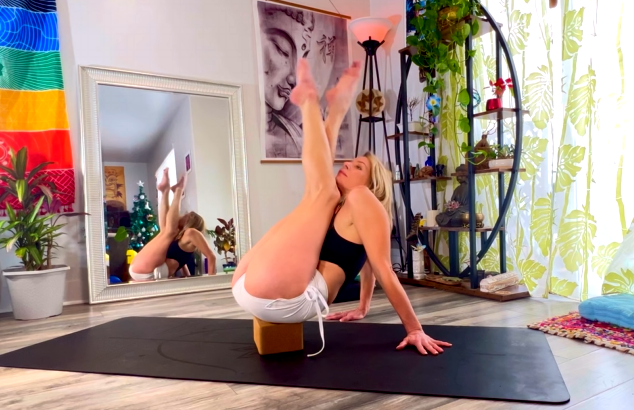
After practicing balancing on a block with over splits, gentle movements help the body recover. Light stretching, walking, or foam rolling can reduce muscle soreness. Hydration and proper nutrition also support tissue recovery.
Listening to the body after practice is just as important as during it. Rest days allow flexibility gains to solidify and prevent overuse injuries.
Who Should Practice This?
Balancing on a block with over splits is best suited for advanced practitioners with a solid foundation in flexibility and body awareness. Dancers, gymnasts, yogis, and athletes with experience in mobility training benefit the most.
Beginners should focus on basic splits, hip strength, and balance training before attempting this advanced variation.
Closing Thoughts
Balancing on a Block with Over Splits: Flexible Yoga, Gymnastics, Fitness is a powerful expression of what the human body can achieve when strength, flexibility, balance, and focus work together. It is not merely a display of flexibility, but a demonstration of control, patience, and deep body awareness.
When practiced mindfully and progressively, this advanced technique builds resilience, confidence, and functional mobility that extends far beyond the mat or gym floor. It reminds us that true flexibility is not about pushing limits recklessly, but about meeting the body where it is and guiding it forward with intelligence, respect, and steady breath.