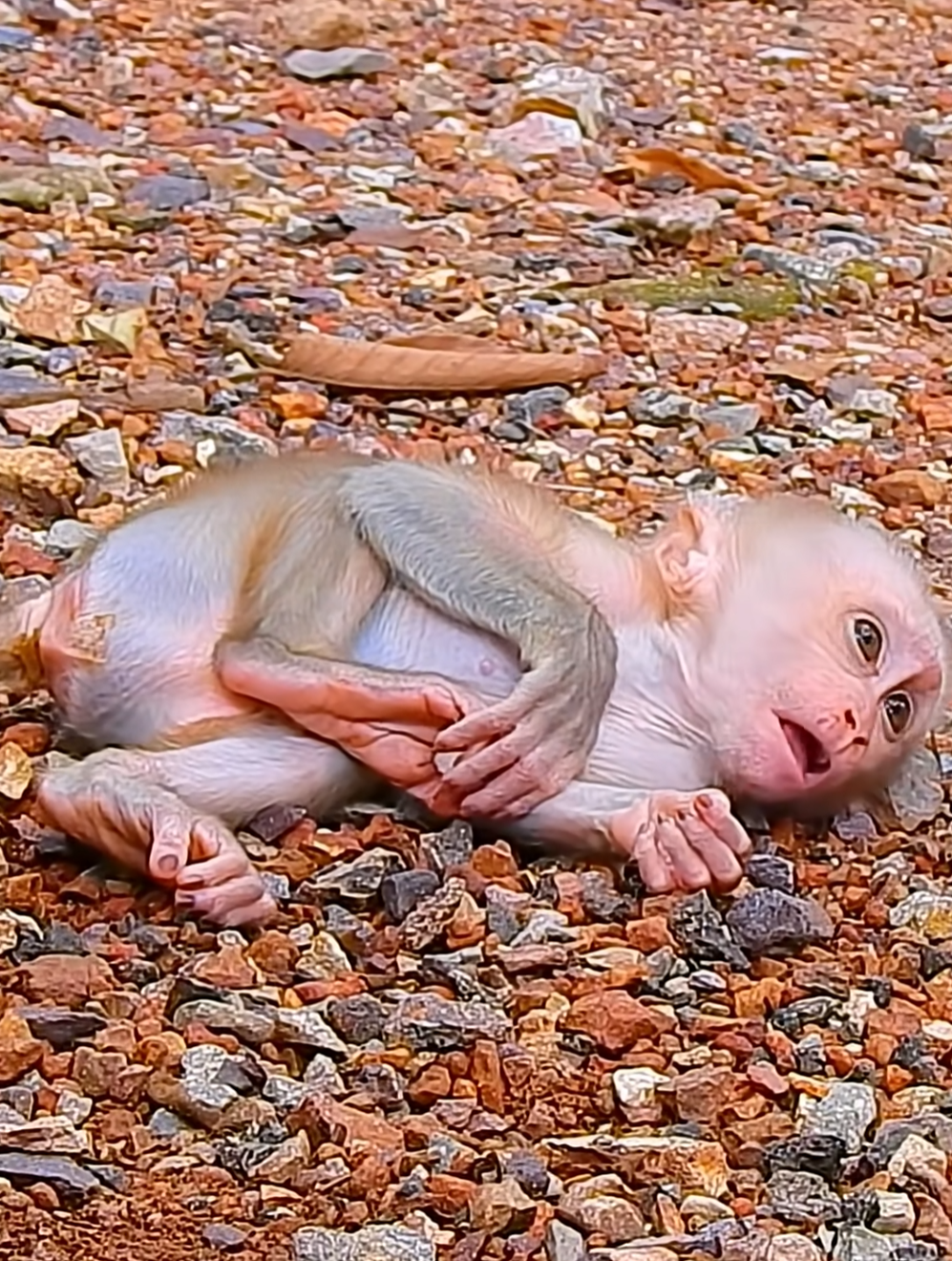
Little Luno was one of the smallest baby monkeys in his troop. With bright eyes, soft brown fur, and a curious spirit, he should have been spending his days climbing little branches, learning to balance on wobbly logs, and cuddling close to someone who loved him. But life had not started easily for him. Luno’s mother, Mara, struggled to care for him. She was always nervous, restless, and overwhelmed, and instead of comforting Luno, she often pushed him away or ignored him.
It wasn’t that Mara didn’t care—she simply didn’t know how to show love. She had grown up in a harsh environment where she received little affection, and now, without meaning to, she repeated the same mistakes. But a baby monkey can’t understand complicated reasons like that. All Luno knew was that something felt wrong.
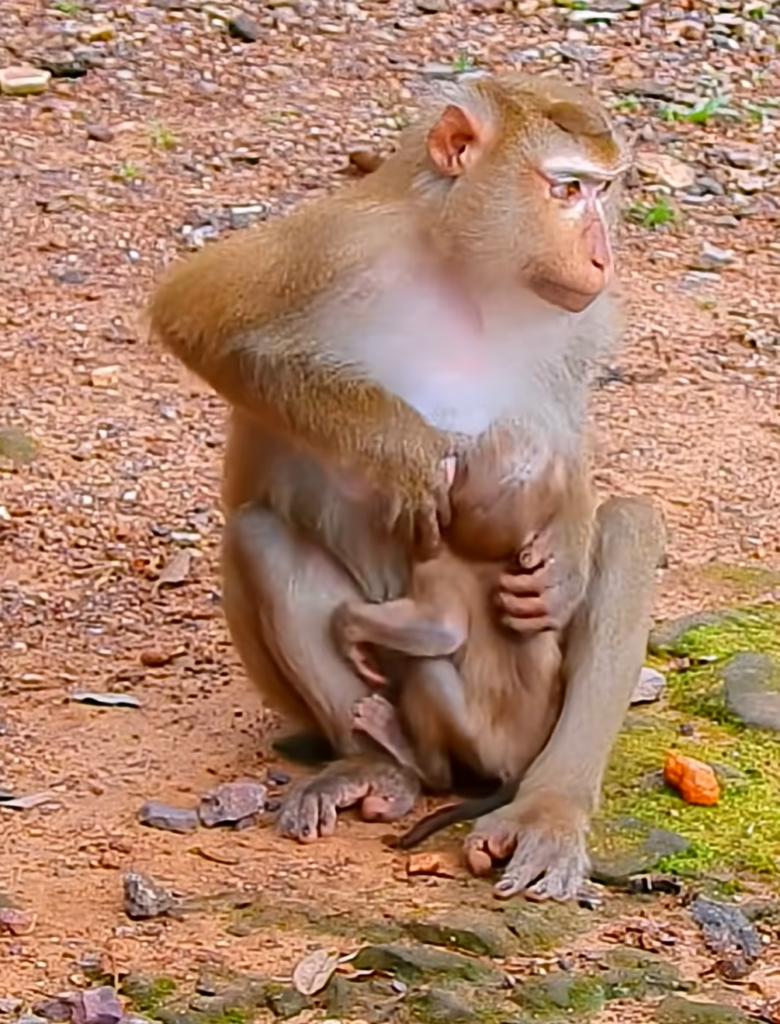
Every morning, Luno would wake up hoping that maybe, today, things would be different. Maybe his mom would pull him close and groom his tiny head. Maybe she would play with him or let him rest gently against her chest. But most mornings, Mara hurried away to find food or sit alone, leaving Luno confused and sad.
The troop felt the change in the little one. Baby monkeys are usually bursting with energy, squeaking happily as they bounce around. But Luno often stayed by himself, sitting quietly on a tree root, his small arms wrapped around his knees. He felt unwanted and didn’t know what he had done wrong.
Some of the older monkeys in the troop noticed. Auntie Nari, a wise and kind female who had raised many babies of her own, often watched Luno with concern. She saw how he flinched when Mara scolded him or shooed him away. She saw how his shoulders slumped when he tried to get close and was turned aside.
One afternoon, while the sun warmed the forest and most of the troop napped, Luno sat alone again. Mara had snapped at him earlier when he tried to climb onto her back, and he had quietly walked away so she wouldn’t get upset again. He sat under a tree, picking at leaves and trying not to cry, though his little heart felt heavy.
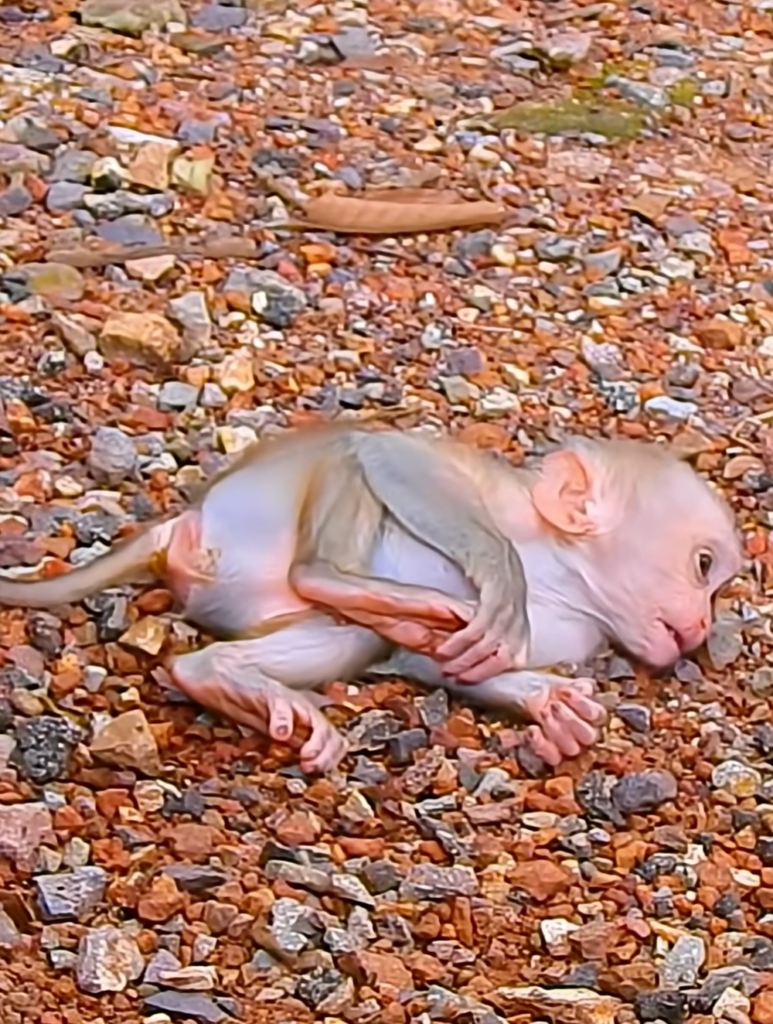
Auntie Nari approached him slowly so she wouldn’t startle him.
“Luno,” she said softly, “why are you sitting all alone?”
Luno lowered his head. “Mom doesn’t want me. I tried to be good. I tried to stay quiet. I tried not to bother her, but she still gets angry. I don’t know what to do.”
Nari’s heart ached. She reached out her hand and gently brushed a leaf off his shoulder. “Oh, little one, you’ve done nothing wrong. Sometimes grown-ups have their own troubles inside, and they forget how much little ones need love. But that’s not your fault. Not at all.”
Luno’s lip trembled. “Then why doesn’t she hug me? Why doesn’t she smile at me like other moms do?”
Nari sat beside him. “Some hearts take longer to open. Your mom is struggling, but that doesn’t mean you are not worthy of love. You deserve comfort and care, Luno. Every little one does.”
Luno leaned into her side, his tiny body shaking. For the first time that day, he felt safe.
From that moment, Nari kept a close eye on him. Whenever Mara wandered off, Nari invited Luno to play with her grandchildren. She groomed his fur when he looked stressed and cuddled him when he needed warmth. Slowly, Luno began to smile again.
But one day, something unexpected happened.
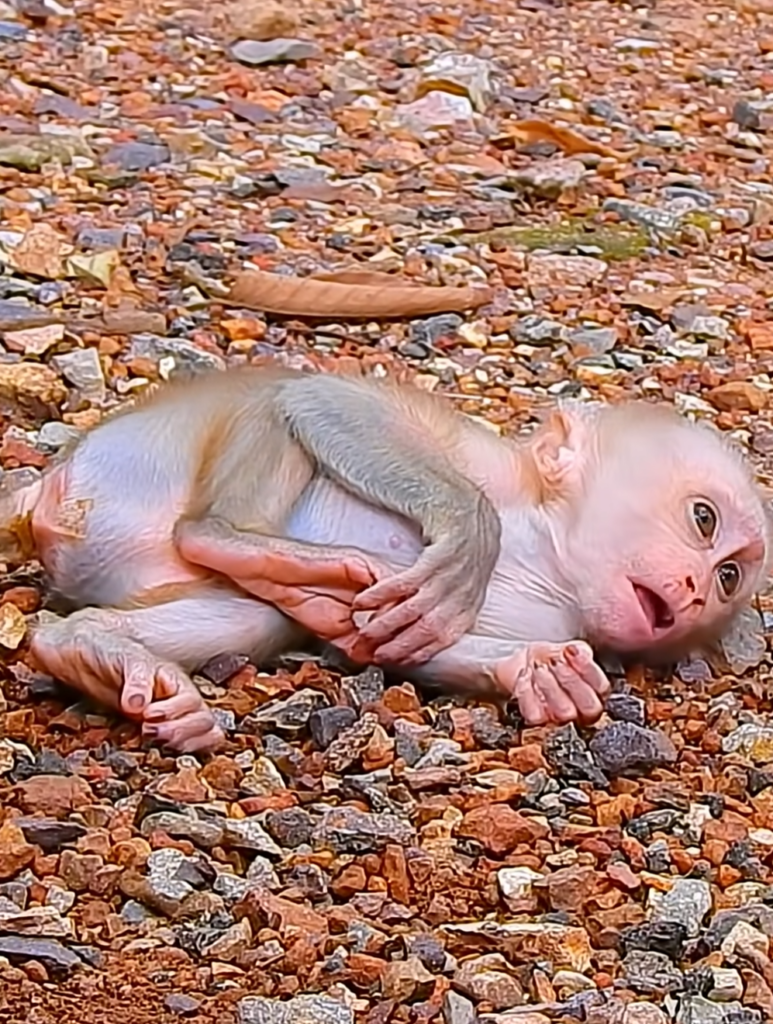
As Luno sat with Nari eating berries, Mara appeared nearby. She watched them silently. For the first time, she saw her baby truly relaxed, enjoying a peaceful moment. She noticed how Luno kept glancing toward her, hoping she would join—but when their eyes met, he quickly looked away, afraid she might scold him again.
That tiny action pierced Mara’s heart. She suddenly realized how frightened he was of her. Not because he had misbehaved, but because she had pushed him away so many times.
Mara felt a wave of guilt and sadness. She had never meant to hurt him. She had never meant to make him feel lonely. But she also didn’t know how to fix what she had done.
That evening, while the troop settled down, Mara approached quietly. Luno was curled up under a branch, half-asleep. Nari watched from a distance but didn’t interfere.
Mara sat beside her baby. She hesitated, unsure of what to do. She slowly stretched out her hand and gently groomed the top of Luno’s head. It was a simple gesture, but for a baby monkey who had longed for affection, it meant everything.
Luno’s eyes opened wide. When he saw his mother’s hand, he froze for a moment—but then, very slowly, he leaned into the touch. His little fingers reached up and held her wrist as if asking, Is this real?
Mara pulled him closer. Luno felt her chest rise and fall as she hugged him for the first time in many days. His tiny arms wrapped around her neck. He didn’t cry—he just held on tightly, afraid the moment might disappear.
But it didn’t.
Over the next few weeks, Mara tried harder. She wasn’t perfect—sometimes she still became overwhelmed—but each time she drifted away, she found herself coming back. And each time, Luno welcomed her with hope in his bright eyes.
The troop noticed the change. Luno played more, laughed more, and grew stronger. Mara learned how to be gentle, patient, and connected. And although the difficult beginning had left a mark, those marks slowly healed under the tenderness of a growing bond.
One day, as Luno chased butterflies with the other youngsters, Mara sat beside Nari.
“Thank you,” she said quietly. “I didn’t know how much I was hurting him. I didn’t know how much I needed help.”
Nari smiled. “No mother is meant to raise a child alone. Troops survive by supporting each other.”
Mara nodded. She watched her little one leap joyfully through the grass, his spirit no longer weighed down by sadness.
Luno still remembered the hard days, but he no longer lived in their shadow. With care, patience, and the kindness of those around him, he grew into a confident and happy young monkey. And Mara, once lost in her own troubles, learned to be the mother he always needed.
Though his start had been painful, Luno’s story became one of healing, hope, and the gentle truth that love can grow again—even where it was once missing.