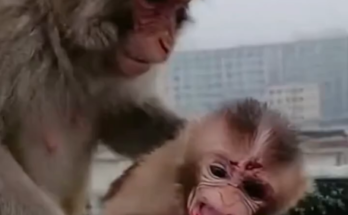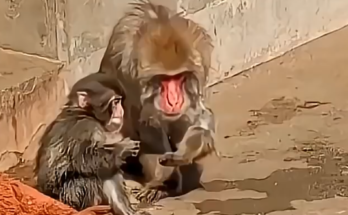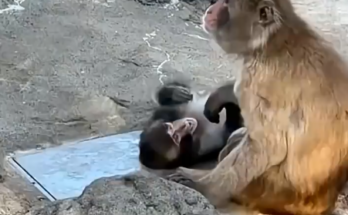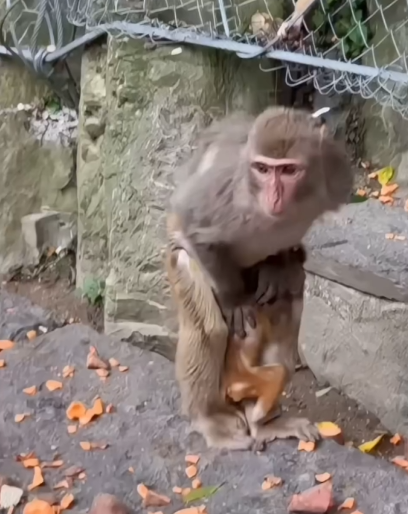
In the quiet shade of the forest, where sunlight gently filters through the tall trees and the sounds of birds echo through the air, a curious scene unfolds among a group of monkeys. At first glance, everything appears normal. A mother monkey sits on a low branch, her baby clinging softly to her chest. But nearby, another monkey approaches and begins doing something unusual to the little baby. Anyone watching closely might wonder, “What is it doing to the baby? It looks pretty strange.”
The baby monkey is small, only a few weeks old, with soft fur and bright, curious eyes. It clings to its mother almost constantly, learning about the world through warmth, touch, and safety. Like many baby animals, it depends completely on its mother for protection, food, and comfort. However, monkeys live in social groups, and other members of the troop often interact with the babies too.
The strange behavior begins when an older female monkey, possibly an aunt or older sister in the group, slowly moves closer. She doesn’t appear aggressive or threatening. Instead, her movements are calm and careful. She leans forward and gently touches the baby’s fur with her fingers. Then she begins to pick through the baby’s hair, moving tiny pieces aside while carefully examining its skin.
To someone unfamiliar with monkey behavior, this might look unusual or even concerning. The baby squirms slightly, making small sounds, while the older monkey continues her strange inspection. She pulls apart small sections of fur, occasionally bringing something to her mouth before tossing it away. Observers might wonder if she is hurting the baby or doing something harmful.
But in reality, this behavior is a very important part of monkey social life. It is called grooming.
Grooming is one of the most common activities among monkeys. They spend a large portion of their day grooming each other’s fur. While it may look strange to humans, grooming serves several very important purposes. First, it helps keep the monkeys clean. By picking through the fur, they remove dirt, parasites, and tiny insects that might cause irritation or disease.
For a baby monkey, grooming is especially important because young monkeys cannot clean themselves properly yet. Older monkeys help by carefully inspecting their fur and skin, making sure they stay healthy.
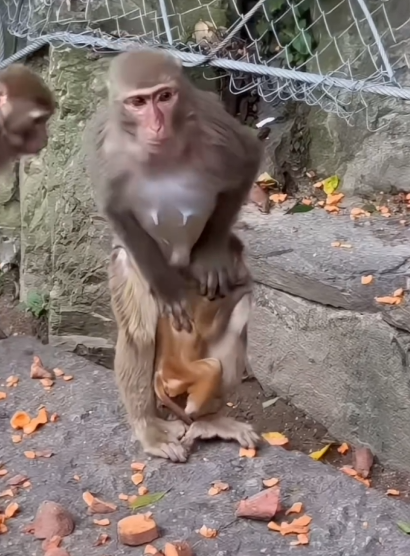
However, grooming is not just about cleanliness. It is also a powerful way for monkeys to build relationships and strengthen social bonds. When monkeys groom each other, they are showing trust and care. It helps maintain peace within the group and reduces tension between members.
The baby monkey may look confused at first as the older monkey continues grooming. Its tiny hands reach out, touching the older monkey’s arm as if trying to understand what is happening. Occasionally, the baby squeaks softly, but it does not show signs of fear. In fact, after a few moments, it begins to relax.
Meanwhile, the mother monkey watches closely. She does not interfere because she recognizes the grooming as normal behavior. If the baby were in danger, she would quickly react. Instead, she calmly sits nearby, occasionally glancing over to check that everything remains gentle.
Soon another young monkey becomes curious about the situation. It moves closer and watches the grooming process with wide eyes. Young monkeys learn many social behaviors by observing older members of the group. Grooming skills are passed down through observation and practice.
The forest around them continues its quiet rhythm. Leaves rustle in the wind, insects buzz softly, and distant calls from other monkeys echo through the trees. In this peaceful setting, the strange-looking behavior is actually part of the daily routine that keeps the troop connected and healthy.
After several minutes, the older monkey finishes grooming the baby. She gives one last gentle touch to the baby’s head before moving away. The baby quickly climbs back onto its mother’s chest, holding tightly as if nothing unusual has happened.
But something important has taken place. Through grooming, the baby has been protected from parasites, cared for by another member of the troop, and introduced to the social connections that define monkey life.
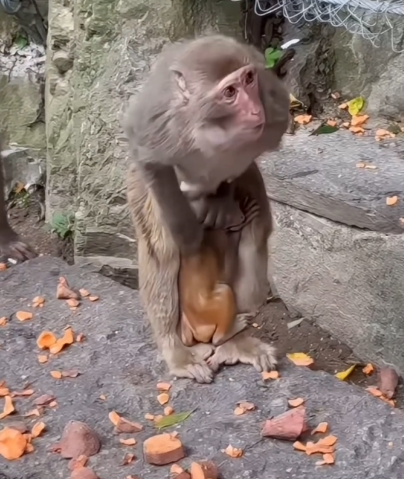
For humans observing from a distance, moments like this can seem mysterious. Animal behavior often appears strange when we first see it. Yet once we understand the purpose behind these actions, we begin to see the intelligence and complexity of life in the animal world.
Monkeys are highly social animals with strong emotional bonds. They care for each other’s young, communicate through body language and sounds, and cooperate to survive in their environment. Grooming, which might look odd or even funny at first, is actually one of the most important ways they maintain these relationships.
The baby monkey will grow up learning these same behaviors. One day, it will groom younger monkeys in the group, continuing the cycle of care and connection that keeps the troop strong.
So the next time someone watches a monkey doing something that looks strange to a baby, it may not be strange at all. It may simply be a quiet act of care, a moment of bonding, or an essential part of their social life.
In the forest, where survival often depends on cooperation and trust, even the smallest actions can carry deep meaning. What seemed unusual at first becomes a beautiful reminder that animals, like humans, rely on relationships, kindness, and community to thrive.
And as the baby monkey rests peacefully against its mother, the troop slowly moves through the trees, continuing their journey together — connected not just by instinct, but by the gentle and powerful bonds that hold their little family together.