
4
Backbending is more than just bending your spine—it’s about opening the front body, building strength in the back muscles, improving posture, and creating a sense of energy and emotional release. A well-structured backbend routine helps counteract long hours of sitting, relieves stiffness in the chest and shoulders, and supports spinal health.
This follow-along style routine is inspired by slow, mindful movement and progressive opening. Whether you’re a beginner exploring gentle spinal extension or an experienced mover deepening your flexibility, this sequence can be adapted to your level.
Move with patience. Never force depth. Let your breath guide you.
🌿 Why Practice Backbends?
Backbends offer physical and mental benefits:
- Improve spinal mobility
- Strengthen the back body
- Open chest and hip flexors
- Enhance breathing capacity
- Boost mood and energy
- Counteract forward posture
They can feel vulnerable at first, but over time they build confidence and resilience.
🧘 Warm-Up (5–8 Minutes)
Never jump straight into deep backbends. Prepare the body first.
1️⃣ Gentle Neck Rolls — 1 minute
Slowly circle your head, releasing tension. Keep movements smooth.
2️⃣ Shoulder Rolls — 1 minute
Roll shoulders forward and back, widening across the collarbones.
3️⃣ Cat–Cow Flow — 2 minutes
On hands and knees:
- Inhale — drop belly, lift chest.
- Exhale — round spine.
Focus on articulating each vertebra.
4️⃣ Arm Swings — 1 minute
Open arms wide to stretch the chest.
Feel warmth building through the upper body.
🌞 Stage 1 — Gentle Spinal Opening
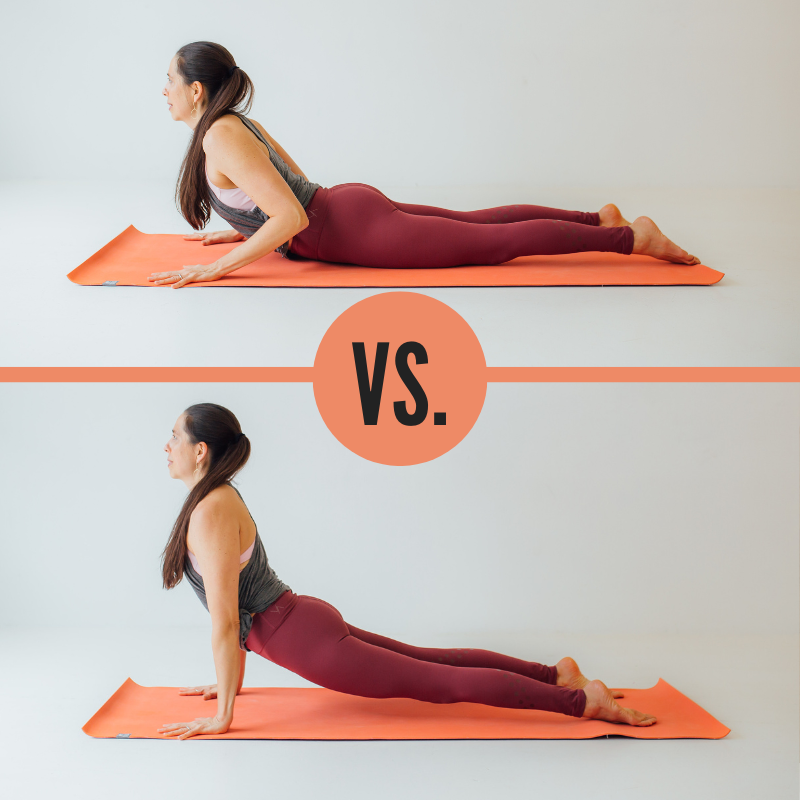
🐍 Cobra Pose (Low Backbend)
Lie on your belly.
- Hands under shoulders
- Press lightly into palms
- Lift chest using back muscles
Keep elbows soft.
Hold for 5 breaths.
Benefits:
- Awakens spinal extensors
- Opens chest gently
- Builds foundation strength
Cue: imagine length, not height
🐶 Sphinx Pose
Lower onto forearms.
Relax shoulders away from ears.
Stay for 8–10 breaths.
This pose passively encourages spinal extension while remaining accessible.
🔥 Stage 2 — Front Body Stretch
🦋 Prone Quad Stretch
Bend one knee and hold ankle behind.
Feel stretch through thigh and hip flexor.
Hold 30 seconds each side.
Tight hip flexors often limit backbends—this step is essential.
🧍 Kneeling Chest Opener
Kneel upright.
Interlace fingers behind back.
Lift arms gently and broaden chest.
Breathe deeply.
Feel expansion across heart space.
🌈 Stage 3 — Moderate Backbends
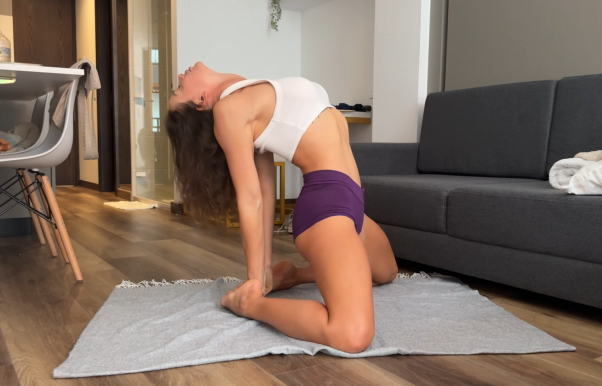
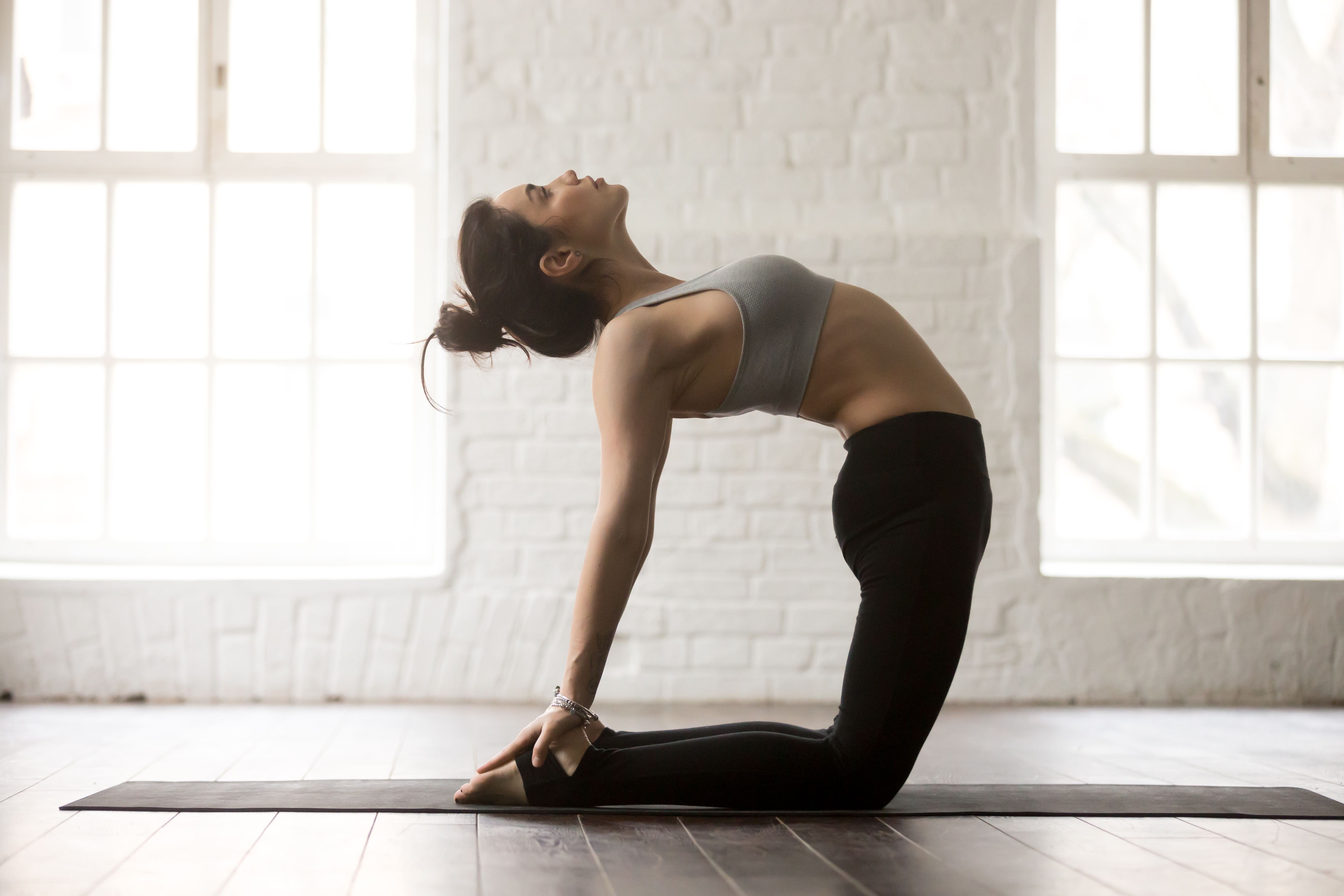
🐪 Camel Pose (Supported)
Kneel with hands on lower back.
- Lift sternum upward
- Engage glutes lightly
- Lean back slowly
Optional: reach for heels.
Hold 5 breaths.
Focus on lifting through chest rather than collapsing into lower back.
Modification: tuck toes for higher heels.
🌉 Bridge Pose
Lie on your back.
- Feet hip-width
- Press into feet
- Lift hips
Clasp hands under body if comfortable.
Hold 8 breaths.
Benefits:
- Strengthens glutes
- Opens hip flexors
- Supports spinal extension safely
Cue: press knees forward.
💫 Stage 4 — Deep Backbend Exploration
Only move here if body feels ready.
🎡 Wheel Pose (Optional Advanced)
From bridge:
- Place hands near ears
- Press into hands and feet
- Lift chest
Keep breath steady.
Hold briefly—3 to 5 breaths.
Come down slowly.
Modification: stay in bridge.
Remember: depth is not required.
🧎 Puppy Pose
From hands and knees:
- Walk hands forward
- Melt chest toward floor
This creates a gentle heart-opening stretch.
Hold 8–10 breaths.
🫁 Breathing Technique
Backbends thrive on breath.
Try:
- Inhale — expand chest.
- Exhale — soften tension.
Deep breathing helps nervous system stay calm while opening.
🧠 Alignment Tips
✔ Lengthen spine before bending
✔ Engage core lightly
✔ Keep neck relaxed
✔ Lift through sternum
✔ Avoid compression in lower back
Think of backbends as “lifting and arching,” not “dropping backward.”
⚠️ Common Mistakes
❌ Forcing depth
❌ Locking lower back
❌ Holding breath
❌ Ignoring shoulder engagement
❌ Moving too quickly
Respect your limits.
💪 Strength Matters
Backbends are not only about flexibility—they require strength.
Support your practice with:
- Plank holds
- Superman lifts
- Glute bridges
- Resistance band rows
Strong muscles protect the spine.
🧡 Emotional Side of Backbending
Many people feel emotional during heart openers.
This is normal.
Opening the chest can release stored tension. Stay present, breathe, and allow sensations without judgment.
Backbends can feel empowering and freeing.
💤 Cool Down (Very Important)
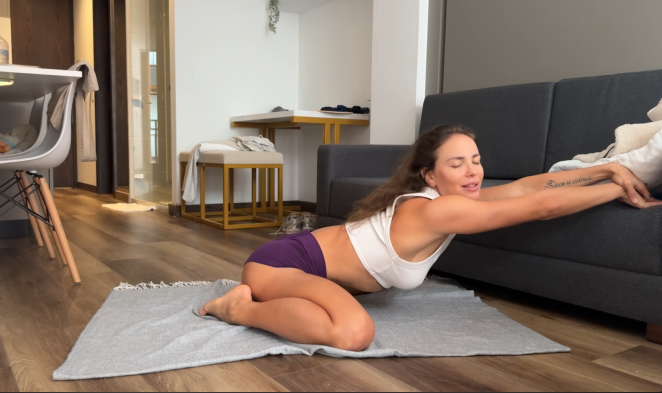
After deep extension, neutralize the spine.
🌙 Child’s Pose — 1 minute
Rest forehead down, soften back.
🤗 Knees to Chest — 30 seconds
Gently rock side to side.
🌊 Supine Twist — each side 30 seconds
Release spinal tension.
Cooling down keeps practice balanced.
📅 Suggested Routine Structure
2–4 times per week:
- Warm-up
- Gentle opening
- Moderate poses
- Optional deep work
- Cool down
Consistency leads to safe progress.
📈 What Progress Feels Like
Over time you may notice:
- Easier posture
- Less shoulder tightness
- Increased spinal mobility
- Deeper breathing
- More confidence in movement
Progress is gradual—honor the process.
🌟 Mindset for Long-Term Growth
Backbend flexibility develops slowly.
Think:
“Open with patience.”
Some days will feel tight. That’s normal.
Celebrate small improvements—like breathing deeper or feeling more comfortable in a pose.
💬 Final Thoughts
A backbend routine is a conversation with your body. It asks for awareness, strength, and kindness toward yourself.
When practiced mindfully, backbends can feel energizing and uplifting—like opening a window inside your body and letting fresh air flow through.
Take your time. Move with curiosity. Let each breath guide you deeper into comfort rather than force.
With steady practice, you’ll discover that backbending isn’t just about flexibility—it’s about creating space, physically and mentally, and learning to trust your body’s ability to open safely.