The rain had not stopped for three days.
It fell in soft sheets over the narrow alleyways, washing dust into the drains and leaving behind the faint smell of wet earth and rust. People hurried past with umbrellas tilted low, eyes fixed on their own destinations, their footsteps echoing against the concrete walls.
At the corner near an abandoned warehouse, beneath a crooked tin awning, two small figures had once slept side by side.
Now only one remained.
She was barely more than a child—thin, with tangled hair clinging to her cheeks, and eyes far too tired for someone so young. Her clothes were soaked and stiff with dirt, but she did not seem to notice. She knelt beside a still form wrapped in an old blanket, her small hands resting gently on it as if afraid it might drift away.
“Please help my brother…” she whispered whenever someone passed.
Most did not stop.
Some glanced briefly, uncomfortable, then looked away. Others pretended not to see at all, their footsteps quickening as though kindness might delay them.
The boy beneath the blanket had been sick for weeks. Fever burned through him in waves, and his cough echoed through the alley at night. She had tried everything she knew—cool cloths, whispered stories, even singing the lullaby their mother used to hum long ago.
But one morning, when she shook him gently, he did not wake.
She had called his name again and again until her voice cracked.
Still, she did not leave.
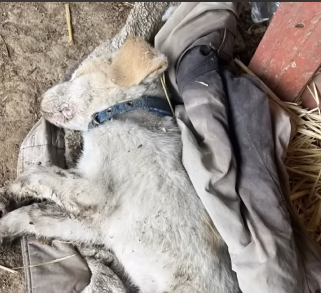
“He’s just sleeping,” she told herself the first day, stroking his hair through the blanket. “He’ll wake up soon.”
On the second day, she began asking for help.
A street vendor paused long enough to hand her a piece of bread, his eyes soft with pity, but he shook his head when she asked if he knew a doctor.
“I’m sorry, child,” he said quietly. “I don’t.”
She thanked him anyway.
At night, she sat awake, guarding him from the stray dogs that wandered the alley. When the wind blew cold, she pulled her thin jacket off and laid it over the blanket, shivering but determined.
Memories came in fragments.
She remembered the day they arrived in the city—her brother holding her hand tightly as they stepped off a crowded bus, both of them scared but hopeful. He had always been the brave one, always the one who said, “Don’t worry, I’m here.”
She remembered how he would share whatever food he found, even when it meant he went hungry. How he made her laugh by pretending to be a magician, pulling imaginary coins from behind her ears.
“You’ll see,” he used to say. “One day we’ll have a little room. Maybe with a window.”
She clung to those words now.
On the third day, her voice grew weaker.
“Please… help my brother…”
A woman walking her dog stopped for a moment, eyes widening at the sight. She knelt down carefully.
“How long have you been here?” the woman asked gently.
The girl blinked slowly. “He’s sleeping,” she said. “But he won’t wake up.”
The woman’s face tightened with concern. She reached out and touched the girl’s shoulder, feeling the chill beneath her damp clothes.
“Have you eaten?”
The girl shook her head faintly.
The woman hurried away, promising to return. But the city is busy, and sometimes promises are swallowed by time.
By evening, the rain returned, heavier than before.
Water dripped steadily from the awning, forming small puddles around them. The girl leaned against the wall, her hand still resting protectively over her brother.
She spoke to him in a soft murmur.
“Remember when you said we’d get a window? Maybe it would face the sunrise… You always liked mornings.”
Her voice trembled, but she kept talking, as if words alone could keep him close.
Night fell.
The alley grew quiet except for the distant hum of traffic and the occasional bark of a dog. She fought sleep, afraid that if she closed her eyes, something might happen.
But exhaustion is relentless.
Her head nodded once… twice… then rested lightly against the wall.
The next morning, a sanitation worker pushing his cart down the alley noticed them. He slowed, frowning.
“Hey,” he called softly. “Are you okay?”
The girl stirred faintly but did not answer.
He approached carefully and saw the stillness beneath the blanket. His expression changed instantly. Setting his cart aside, he knelt down.
“Child,” he said gently, “what happened?”
Her lips parted, barely moving. “Please… help my brother…”
He felt a lump rise in his throat.
“I’m going to call someone,” he said.
Minutes later, a small crowd gathered—neighbors, shopkeepers, passersby. Someone called emergency services. Someone else brought a bottle of water, trying to coax the girl to drink.
She took a small sip, her hands trembling.
“Is he… going to wake up?” she asked quietly.
No one knew how to answer.
When the ambulance arrived, the paramedics moved with quiet urgency. They checked the boy first, their faces solemn, then turned to the girl.
“She’s severely dehydrated,” one of them said softly. “And exhausted.”
As they lifted her onto a stretcher, she reached weakly toward the blanket.
“Don’t leave him,” she whispered.
“We won’t,” a paramedic assured her gently.
Her eyes fluttered closed.
At the hospital, nurses worked quickly—warming blankets, IV fluids, soft voices offering reassurance. For hours she slept, her body finally surrendering to rest.
When she woke, the room was quiet except for the steady beep of a monitor.
A nurse noticed and smiled warmly. “You’re safe,” she said.
The girl looked around, confusion clouding her face. Then memory returned like a sudden storm.
“My brother…” she whispered.
The nurse sat beside her, taking her hand. “He’s being taken care of,” she said softly. “You did everything you could.”

Tears welled in the girl’s eyes, slipping silently down her cheeks.
Days later, as she regained strength, social workers came to speak with her. They listened patiently as she told her story—about their journey, their struggles, and the promise of a room with a window.
One afternoon, the sanitation worker who had found her came to visit. He stood awkwardly at the doorway, holding a small stuffed toy.
“I thought you might like this,” he said, placing it gently on her bedside table.
She smiled faintly. “Thank you.”
“You were very brave,” he added quietly.
She shook her head. “He was the brave one.”
Outside, the rain had finally stopped. Sunlight filtered through the hospital windows, warm and gentle.
In time, arrangements were made for her to stay in a safe home where she would be cared for, where she would have warm meals and a bed of her own.
On her first night there, she stood by the window—yes, there was a window—and watched the stars appear one by one.
She held the stuffed toy close and whispered softly into the quiet room.
“We made it,” she said. “There’s a window.”
Though grief remained, so did something else—an ember of hope, small but steady, carried forward by the memory of a brother who had always promised brighter days.
And somewhere, in the stillness of the night, it felt as though he was listening.