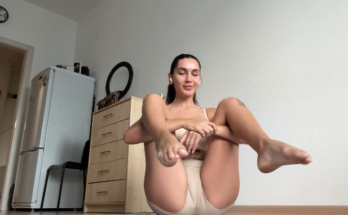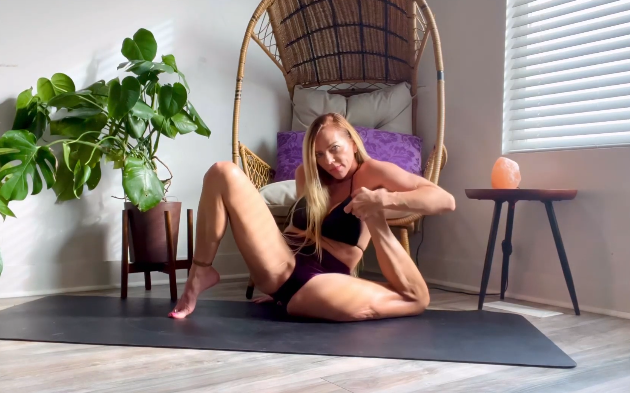
Contortion yoga is where strength meets softness, where discipline blends with grace, and where the body learns to move beyond its perceived limits. In this journey of deep flexibility and mindful control, Contortion Yoga Movements with Penelope represents more than just impressive poses—it is a story of patience, body awareness, and the art of listening to oneself. Through yoga practice inspired by contortion principles, Penelope demonstrates how flexibility, fitness, and mental focus can come together in a powerful and beautiful way.
Understanding Contortion Yoga
Contortion yoga is not about forcing the body into extreme shapes. Instead, it is a slow, intelligent practice that builds flexibility alongside strength. Unlike traditional contortion often seen in performances, contortion yoga places safety, breath, and alignment at the center. It draws from classical yoga, gymnastics, and mobility training to create movements that open the spine, shoulders, hips, and legs while maintaining muscular control.
Penelope’s approach emphasizes that flexibility is not something you are born with—it is something you cultivate. Through consistent practice, even stiff bodies can become more open, balanced, and resilient. Contortion yoga is suitable not only for advanced practitioners but also for beginners who are willing to move patiently and respect their limits.
The Role of Breath and Awareness
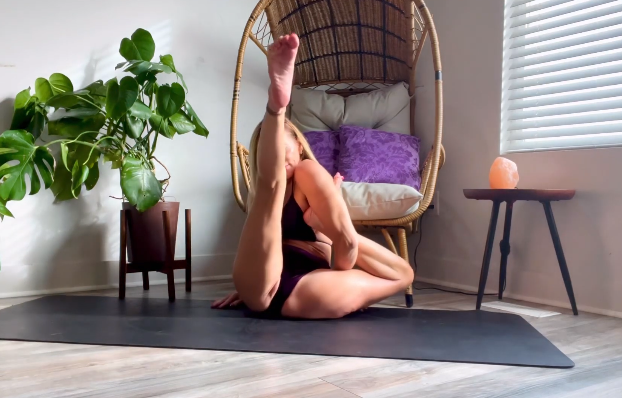
Breathing is the foundation of contortion yoga. Every deep bend, twist, or stretch begins with calm, controlled breathing. Penelope encourages slow nasal breathing, allowing the nervous system to relax and the muscles to soften naturally. When the breath is steady, the body feels safe, and flexibility increases without strain.
Awareness is equally important. Contortion yoga teaches practitioners to feel where tension is held and how to release it gradually. Rather than chasing the final pose, the focus is on the journey into the movement—observing sensations, adjusting alignment, and honoring what the body can do on that day.
Preparing the Body: Warm-Up and Conditioning
Before attempting any contortion yoga movements, a thorough warm-up is essential. Penelope begins each session with gentle cardiovascular activity, such as light bouncing, dynamic arm swings, or flowing sun salutations. This raises body temperature and prepares muscles and joints for deeper work.
Conditioning exercises follow. These may include core engagement drills, shoulder stabilizers, and hip activation movements. Conditioning is what makes contortion yoga safe and sustainable. Strong muscles protect joints and support deep ranges of motion. Without strength, flexibility can lead to instability or injury.
For example, before backbending, Penelope often incorporates plank holds, glute bridges, and controlled spinal waves. These exercises awaken the muscles that support the spine, ensuring that bends are distributed evenly rather than compressed into one area.
Spine Flexibility: The Heart of Contortion Yoga
The spine is central to contortion yoga, and Penelope’s practice places special attention on spinal health. Flexibility is developed in all directions—forward folds, backbends, side bends, and twists—to maintain balance.
Backbends are often the most visually striking contortion movements, but they require patience and preparation. Penelope guides practitioners through gentle back extensions before progressing to deeper poses such as wheel variations or forearm-supported backbends. Each movement is approached with control, engaging the core and legs to protect the lower back.
Equally important are forward folds and spinal flexion. These movements decompress the spine and counterbalance backbending. By integrating both, the spine remains healthy, mobile, and strong.
Shoulder and Chest Opening
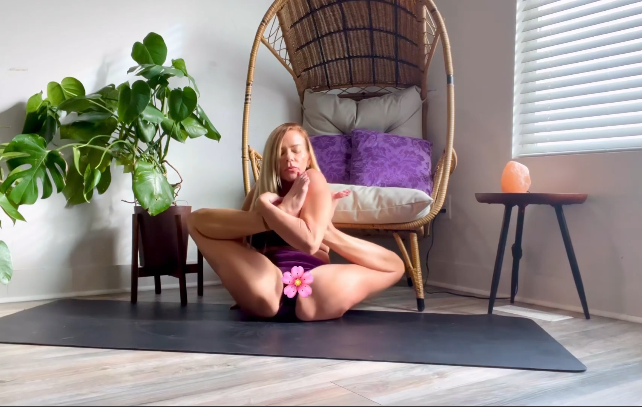
Shoulder flexibility is essential in contortion yoga, especially for poses involving arm balances or deep backbends. Many people carry tension in the shoulders due to daily activities like working at a desk or using phones. Penelope addresses this with gradual shoulder-opening sequences.
Movements such as puppy pose, shoulder flossing, and supported chest openers help increase range of motion while maintaining joint integrity. Strengthening exercises for the shoulders and upper back are also included to ensure stability.
As the shoulders open, posture improves, breathing becomes deeper, and upper-body movements feel lighter. This balance of openness and strength is a key theme throughout Penelope’s contortion yoga philosophy.
Hip and Leg Flexibility
Hips are one of the largest and most complex joints in the body, and they play a major role in contortion yoga. Penelope’s practice includes a variety of hip-opening movements that target flexors, extensors, and rotators.
Lunges, splits preparation, and deep squats are used to release tight hip flexors and hamstrings. Over time, these movements improve mobility and reduce lower-back strain. Penelope emphasizes that progress in hip flexibility often comes slowly, but consistency yields lasting results.
Leg flexibility is developed through controlled stretches rather than bouncing or forcing. Active flexibility exercises, where muscles engage while lengthening, help build strength in extended positions. This approach supports both athletic performance and everyday movement.
Balance, Control, and Grace
Contortion yoga is not just about flexibility—it is also about control. Balance plays a significant role, especially in transitions between poses. Penelope often incorporates slow, mindful transitions that challenge stability and coordination.
Standing balances, controlled leg lifts, and supported inversions build confidence and body awareness. These movements train the nervous system as much as the muscles, improving focus and precision.
Grace emerges naturally when movements are controlled and intentional. Penelope reminds practitioners that beauty in yoga comes from presence, not perfection. Each pose becomes an expression of inner calm and strength.
Mental Benefits of Contortion Yoga
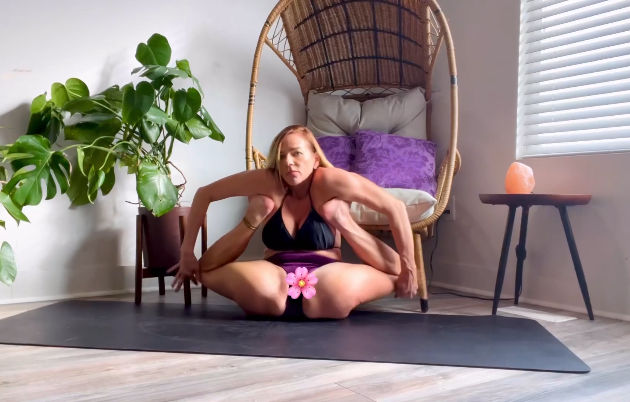
Beyond physical transformation, contortion yoga offers powerful mental benefits. The practice requires patience, humility, and self-compassion. Progress cannot be rushed, and this teaches practitioners to let go of comparison and unrealistic expectations.
Penelope often speaks about how contortion yoga becomes a form of meditation. The deep focus on breath and sensation quiets the mind and reduces stress. Over time, practitioners develop greater emotional resilience and a stronger connection to their bodies.
This mental clarity often extends beyond the mat, influencing daily life with increased confidence, calmness, and self-trust.
Safety and Longevity in Practice
Safety is a core principle in Penelope’s teaching. She emphasizes that contortion yoga should never involve pain or sharp discomfort. Stretching sensations should feel intense but controlled, and any signs of joint pain or numbness are signals to stop.
Rest days, proper hydration, and adequate sleep are essential for recovery. Penelope encourages listening to the body and adjusting practice based on energy levels and physical condition.
Using props such as blocks, straps, or bolsters can make contortion yoga more accessible and safer. These tools support alignment and allow practitioners to explore movements gradually.
Building a Sustainable Practice
A sustainable contortion yoga practice is built on consistency rather than intensity. Short, regular sessions often lead to better results than occasional long workouts. Penelope recommends combining contortion yoga with other forms of movement such as walking, strength training, or gentle flow yoga for overall balance.
Setting realistic goals helps maintain motivation. Instead of aiming for extreme poses, focusing on improved mobility, reduced stiffness, or better posture creates a healthier mindset.
Conclusion
Contortion Yoga Movements with Penelope is a journey into flexibility, strength, and self-discovery. Through mindful yoga practice, intelligent conditioning, and deep respect for the body, contortion yoga becomes accessible and empowering. It is not about pushing limits recklessly, but about expanding them with patience and care.
Under Penelope’s guidance, contortion yoga transforms from a visually impressive discipline into a holistic practice that supports fitness, flexibility, and mental well-being. With dedication and compassion, every practitioner—regardless of starting point—can experience the freedom, grace, and confidence that contortion yoga offers.