The factory had been silent for years.
Once, it was a place of noise and motion—machines pounding, whistles blowing, workers shouting over the roar of production. But now it stood forgotten at the edge of the city, its broken windows staring like empty eyes, its rusted gates hanging crooked on their hinges. Weeds pushed through cracked concrete, and dust covered everything like a heavy blanket. Most people passed by without a second glance.
Inside that silence, a dog was crying.
At first, the sound was so faint it was almost mistaken for the wind slipping through broken walls. A soft, trembling whine echoed down the long, dark corridor of the factory. It rose and fell, carrying something more than fear—something that sounded like loneliness stretched thin over time.
No one knew how long the dog had been there.
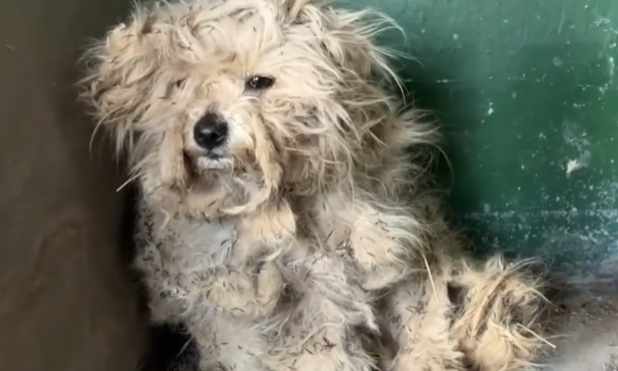
She was a medium-sized stray, her fur once light-colored but now darkened by grease, dust, and rain. Her body was thin, her legs shaky from weakness. One ear was torn slightly, a mark of past fights or accidents. She moved carefully, as if the factory itself might punish her for making noise.
For her, the abandoned factory was both prison and shelter.
When rain came, the broken roof let water drip through, but the walls blocked the wind. When nights grew cold, she curled up beside old machinery, pressing her body against cold metal just to feel something solid. She scavenged for scraps—old food wrappers, rodents, anything that moved. Hunger was a constant companion, never leaving her side.
The worst part wasn’t the hunger.
It was the waiting.
Every day, she listened. Footsteps? Voices? The sound of a door opening? Hope flickered whenever she heard something new, only to fade again when the silence returned. She had likely known people once. At some point, someone had fed her, touched her, called her name. But that life was gone, replaced by shadows and echoes.
On one quiet afternoon, the silence finally broke.
Two animal rescue volunteers, Anya and Minh, were exploring the area after receiving a vague report: “There might be a dog inside the old factory.” It wasn’t the first false lead they’d followed, but they went anyway. Experience had taught them that vague reports sometimes hid the most urgent cases.
They pushed open a rusted door, the metal screeching loudly.
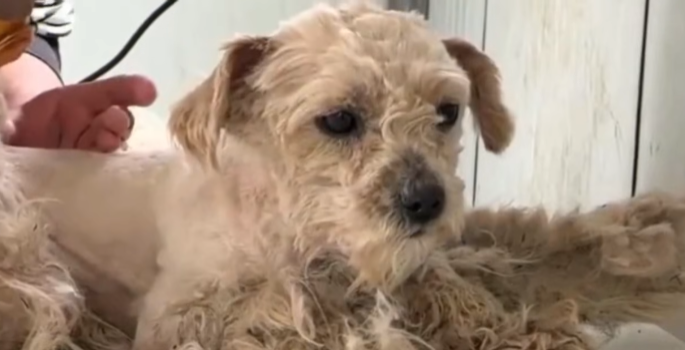
The dog froze.
Her heart slammed in her chest. The sound was too sudden, too sharp. She scrambled backward, nails scraping against concrete as she searched for a place to hide. Her body trembled violently. She didn’t bark. She didn’t growl. She simply cried—a broken, desperate sound that echoed through the empty building.
Anya stopped in her tracks.
“Did you hear that?” she whispered.
Minh nodded, his face already tense. “She’s scared.”
They crouched low, making themselves smaller. Anya spoke softly, her voice calm and steady, as if talking to a frightened child.
“It’s okay. We’re not going to hurt you.”
The dog couldn’t understand the words, but she heard the tone. The shouting she remembered from the past was gone. This voice was gentle, careful. Still, fear held her in place. She pressed herself against a wall, eyes wide, body rigid.
Then something unexpected happened.
Tears began to fall from her eyes.
They weren’t dramatic or obvious, just small wet trails cutting through the grime on her face. Her chest heaved as she cried, soft sobbing sounds slipping out with every breath. It was as if her body had finally given up holding everything inside.
Anya’s breath caught.
“I’ve seen scared dogs,” she said quietly, “but this… this feels different.”
Minh nodded. “She’s been alone too long.”
They didn’t rush her. They sat on the cold floor, letting the factory swallow their silence. After a few minutes, Anya gently slid a piece of food across the floor. It stopped a short distance from the dog’s paws.
The dog stared at it.
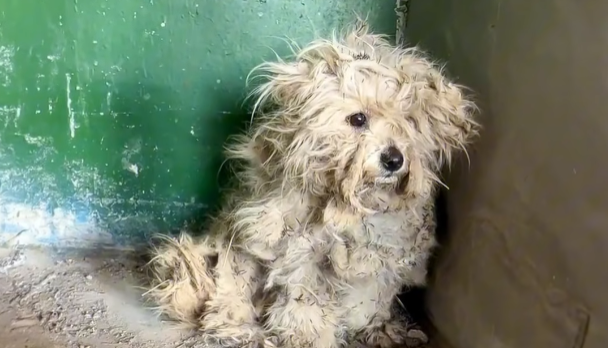
Hunger and fear fought inside her. Slowly, she leaned forward, sniffing. She took one bite, then another, never taking her eyes off the strangers. When she finished, she licked the floor, searching for more.
That was when her crying changed.
The sobs softened, becoming quiet whimpers. Her body still shook, but something inside her shifted. She took a step forward, then another. Each movement was cautious, as if she expected pain to follow.
Anya reached out her hand, stopping halfway, letting the dog decide.
The dog hesitated, then pressed her nose gently against Anya’s fingers.
At that moment, the tears came again—stronger this time.
She cried as Anya touched her head for the first time. She cried as Minh wrapped a blanket around her thin body. She cried as if every day of fear, hunger, and abandonment was finally pouring out all at once.
Rescuing her wasn’t easy.
Loud noises from outside sent her into panic. She tried to pull away, her legs weak and unsteady. But the volunteers moved slowly, patiently, speaking softly the entire time. When they finally guided her into the rescue van, she curled into a tight ball, still crying quietly, as if afraid that if she stopped, everything would disappear.
At the shelter, the vet confirmed what they already suspected.
She was severely malnourished. Dehydrated. Covered in parasites. But physically, she was stronger than she looked. Emotionally, though, she was shattered.
“She’s been traumatized,” the vet said gently. “Whatever happened to her, it broke her trust.”
They named her Echo, after the sounds that once surrounded her in the empty factory.
The first few nights at the shelter were difficult. Echo cried in her sleep, waking suddenly and trembling. Sudden movements made her flinch. She refused to eat unless someone sat nearby. Being alone, even for a moment, terrified her.
But day by day, something changed.
Echo learned the routine of the shelter. She learned that food came regularly. That hands brought comfort, not harm. That voices could mean kindness. Slowly, her crying became less frequent. Her eyes softened. Her tail began to wag—first cautiously, then freely.
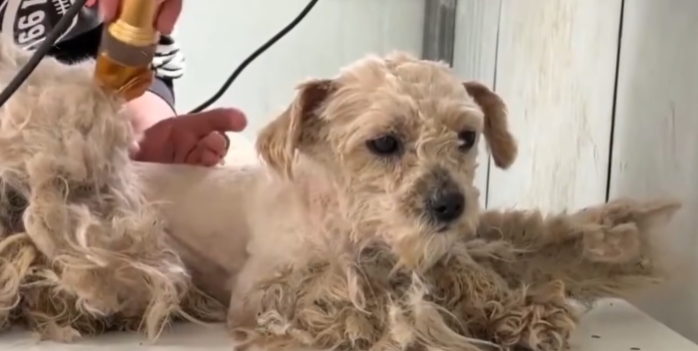
One afternoon, weeks after her rescue, Anya visited again.
The moment Echo heard her voice, she ran.
She ran as fast as her recovering legs could carry her and threw herself against the gate, tail wagging wildly. When Anya knelt down, Echo pressed her whole body into her, whining with happiness. Not fear. Not sorrow.
Joy.
News of Echo’s rescue spread. People were touched by the image of a dog crying when finally saved—not from pain, but from relief. Applications came in, but the rescue team was careful. Echo needed a special home. A quiet one. A patient one.
Eventually, they found it.
A retired teacher named Lan, who lived alone in a small house near the countryside, came to meet Echo. She sat on the floor, just like Anya had, and waited. Echo approached her slowly, sniffed her hands, then rested her head on Lan’s knee.
That was all it took.
Today, Echo sleeps on a soft bed near Lan’s feet. She follows her from room to room. She still startles sometimes at loud noises, and she still needs reassurance. But she no longer cries from fear.
Sometimes, when Lan strokes her fur, Echo lets out a deep sigh and closes her eyes.
Those tears in the factory weren’t weakness.
They were the moment a broken heart realized it was finally safe.
And inside an abandoned place full of silence, humanity answered a cry—and changed a life forever.