Observing monkeys in the wild or even in semi-controlled environments like sanctuaries often offers unexpected moments of humor, surprise, and sometimes tension. One such moment that captures attention is when a monkey becomes visibly angry at a human—particularly a child. This reaction can leave onlookers stunned, curious, or even nervous. While it may seem surprising or even amusing, the anger of a monkey is never random. Understanding why a monkey reacted angrily toward a child requires looking at monkey behavior, instincts, and social rules, as well as the nature of interactions between humans and wildlife.
The incident in question began innocently enough. A young child, curious and eager, approached a group of monkeys at a local wildlife sanctuary. The child was excited, pointing, laughing, and trying to engage with the animals. At first, the monkeys observed the child from a distance, chattering softly among themselves. Their alertness was evident, and they seemed wary of this small, unpredictable creature. Monkeys, like most wild animals, are highly sensitive to sudden movements, loud noises, or unusual behavior.
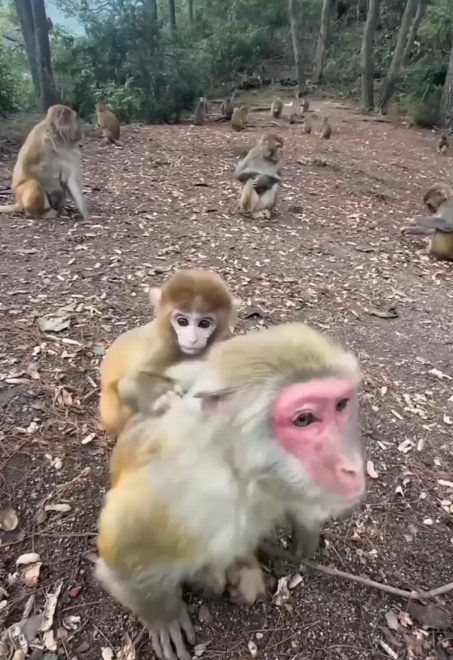
The specific monkey in this scenario was a young adult female, responsible for caring for her infant. She was perched on a low branch, her baby clinging tightly to her belly. The presence of the child immediately triggered her protective instincts. In the animal kingdom, mothers are highly attuned to potential threats to their young. Even minor disturbances—like someone reaching toward their space or moving unpredictably—can provoke a strong reaction. This mother monkey’s anger was rooted in instinctual protection, not malice.
Monkeys communicate through a combination of vocalizations, body language, and facial expressions. When the child reached toward the baby or made sudden movements, the mother emitted a series of sharp calls and displayed tense postures. Her fur bristled slightly, her tail flicked rapidly, and her eyes widened—a universal signal in primates for warning or anger. These signals are meant to convey a clear message: “Stay away from my baby.” Unlike humans, who might explain boundaries verbally, monkeys rely on immediate, observable cues to communicate safety and control.
It’s important to recognize that the child’s behavior, though harmless in intention, may have been perceived as threatening. Children often move unpredictably, reach quickly, and express emotions openly, all of which can be interpreted as potential danger by a wild animal. For the mother monkey, protecting her infant is the highest priority. Any action, no matter how innocent, that she interprets as a risk can trigger anger or defensive behavior.
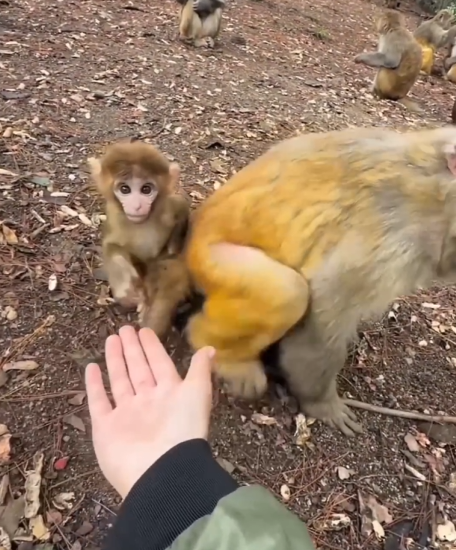
Interestingly, monkeys also have social rules and expectations, even when interacting with humans. Troops are hierarchical and highly structured, with clear boundaries and personal spaces. Adults expect juveniles—or outsiders, including humans—to respect these boundaries. When a child encroaches, even unknowingly, it disrupts the expected order. The anger is not personal but situational, a response to a perceived violation of social norms. In this case, the mother was enforcing her boundary to maintain safety and order around her baby.
The intensity of the monkey’s reaction can also be understood through the lens of emotional arousal. Mothers, especially those with infants, have heightened stress sensitivity. Cortisol levels—the hormone associated with stress—are elevated in response to perceived threats. This physiological state makes the mother more reactive, so even a small action by the child, like reaching toward the branch the baby is holding, can trigger a sharp response. From an observer’s perspective, the reaction may seem dramatic or exaggerated, but it is an adaptive behavior designed to protect vulnerable infants.
Another factor to consider is the element of curiosity and play. Children often attempt to interact with monkeys out of fascination. They may imitate movements, try to offer food, or simply move closer to observe. While this curiosity is natural, monkeys, particularly those caring for young, interpret close proximity differently. What seems like playful interest to a child can be seen as potential interference or competition. The anger, therefore, is not a personal vendetta; it is a natural boundary-setting behavior.
After the initial angry response, the mother monkey often engages in follow-up behaviors that are instructive. She may move her baby to a safer location, emit warning calls, or physically shield the infant from the child. These actions demonstrate problem-solving, social awareness, and maternal care. They also serve as a learning opportunity for the young monkey, teaching it to stay close to the mother and understand potential threats. For the observing child, consciously or not, this encounter offers lessons in respect, patience, and attentiveness toward animals.
Interestingly, monkeys are quick to forgive once the perceived threat is removed. If the child steps back, moves slowly, or stops reaching toward the infant, the mother’s agitation typically diminishes. She may return to grooming, playing with her baby, or engaging with the troop. This rapid transition from anger to calm illustrates the adaptability and emotional intelligence of primates. Their responses are situational and context-driven rather than permanent judgments.
It’s also worth noting the role of other troop members. Monkeys are highly social, and adult females often coordinate in monitoring each other’s infants. If a potential threat, like a child, is nearby, multiple adults may observe, warn, or intervene. These social dynamics ensure that infants have multiple layers of protection, highlighting the complexity and sophistication of primate communities.
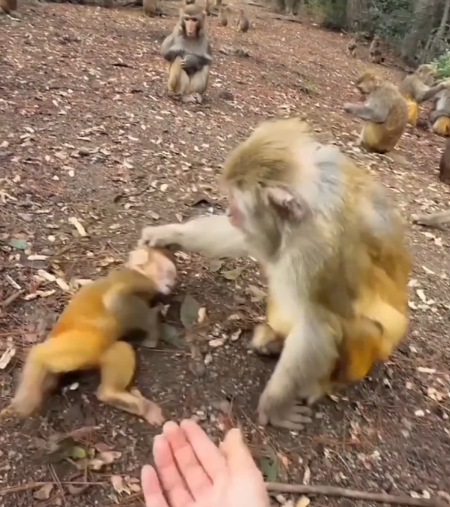
From a human perspective, witnessing a monkey become angry at a child can be alarming, yet it is an opportunity to learn about wildlife behavior. The incident underscores the importance of respecting animal space, understanding body language, and recognizing the instincts that drive behavior. Observers gain insight into how intelligence, emotion, and instinct intersect in the animal kingdom. It also emphasizes the importance of teaching children how to interact with wildlife safely, calmly, and respectfully.
The event also invites reflection on empathy and perspective-taking. While it is easy for humans to view the mother’s anger as irrational or aggressive, understanding the context—the protection of her infant, the instinctive reaction, and the social structure of her troop—reveals a rational, adaptive behavior. Empathy in wildlife observation means seeing the world from the animal’s perspective and appreciating the challenges, risks, and responsibilities they navigate daily.
In conclusion, the question “Why did the monkey get angry at the child?” is answered by examining maternal instinct, social norms, perceived threats, and emotional arousal. The mother’s reaction is a protective, adaptive response designed to ensure the safety of her infant. It demonstrates the intelligence, vigilance, and emotional depth of monkeys. While it may appear surprising or amusing, it is rooted in evolutionary necessity and social understanding.
For anyone observing such moments, there are several key lessons. First, respect the personal space of wild animals, particularly those with young. Second, recognize that anger or aggression in animals is often functional, serving survival or educational purposes. Third, patience and careful observation are essential to understanding behavior. Finally, witnessing these interactions can deepen empathy, enhance learning, and foster a greater appreciation for the intelligence and complexity of wildlife.
Moments like this—where a monkey becomes angry at a child—capture the beauty and intensity of the natural world. They reveal the intricate web of instincts, emotions, and social rules that guide behavior. They also remind us that in nature, every action has meaning, and every response, even anger, serves a purpose. By observing and reflecting on these interactions, humans gain insight into the lives of our primate relatives, their bonds, and the delicate balance between curiosity, respect, and survival. 😱🤔🥱