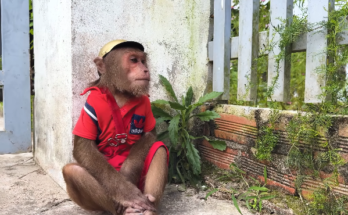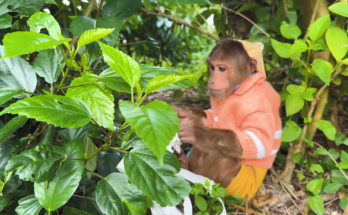
Spending time with monkeys is an experience filled with surprises, laughter, and moments of learning. Each monkey has a distinct personality, preferences, and quirks, and learning to understand these traits is part of the joy of interacting with them. One of the most memorable lessons I learned was about boundaries—particularly the lesson that my buddy monkey doesn’t like me to touch his foot. It seems simple, but this small detail became a fascinating window into his personality and the intelligence of these incredible animals.
I first noticed his dislike one morning during our usual time together at the sanctuary. He was perched on a branch, grooming himself, his tiny fingers moving deftly through his fur. I thought I’d be helpful—or playful—by gently touching his foot, maybe massaging it or inspecting it for dirt. In my human mind, this was a small gesture of care. But the moment my fingers reached toward his foot, his reaction was immediate and unmistakable.
He jerked his leg away, chattering sharply, and gave me a look that was equal parts surprise and indignation. His tail flicked nervously, a clear signal that he wanted me to stop. I froze, momentarily caught off guard by the intensity of his response. It was not a minor annoyance—it was an unmistakable “No.” In that instant, I realized that, unlike humans who often tolerate minor invasions of personal space, monkeys have clear boundaries about what parts of their bodies are touchable and what parts are off-limits.
After that first incident, I became much more observant. I noticed that he allowed me to touch his back, his arms, even his head when he was comfortable, but the feet were a strict no-go zone. Whenever my hand approached them, he pulled back, twitched his tail, or let out a soft warning chatter. I learned to respect this boundary immediately. In a way, it was humbling. As humans, we often assume animals are okay with any form of physical attention we give, but my buddy’s reaction reminded me that respect is universal, crossing species.
Monkeys use body language to communicate constantly, and this was a clear example. His signals were subtle but consistent. The flicking of the tail, the sharp chatter, the sudden movement of his leg—all were cues that I had learned to read carefully over time. I began to understand that just as humans have comfort zones, monkeys do too, and violating them—even unintentionally—can create stress or tension.
Interestingly, his dislike of foot-touching was not about aggression. He never attempted to bite or scratch. Instead, it seemed to be about control and personal space. Feet, after all, are sensitive, just like hands or faces. They are often used in locomotion, gripping, and balance, making them highly functional and, perhaps, more private in the monkey’s perception. By establishing this boundary, he was simply maintaining a sense of safety and autonomy, something we humans also crave.
This small detail began to influence how I interacted with him overall. I became more mindful of his comfort, observing his posture, gestures, and responses before initiating contact. If he moved away, I gave him space. If he leaned in, I offered gentle touches where he was comfortable. The trust between us grew stronger as a result. Respecting even a small boundary like the foot-touching rule became a gateway to deeper understanding and connection.
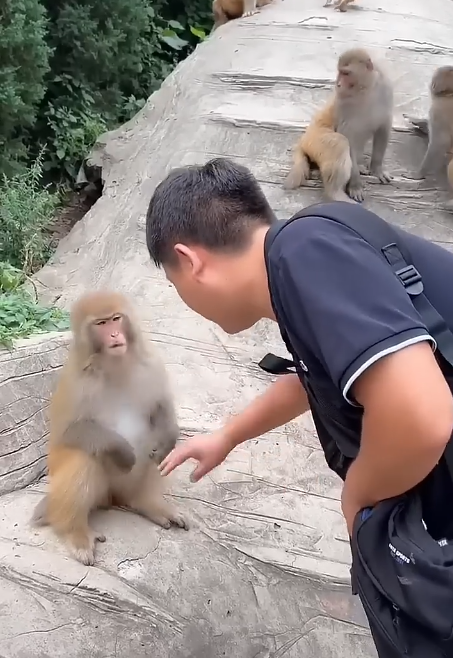
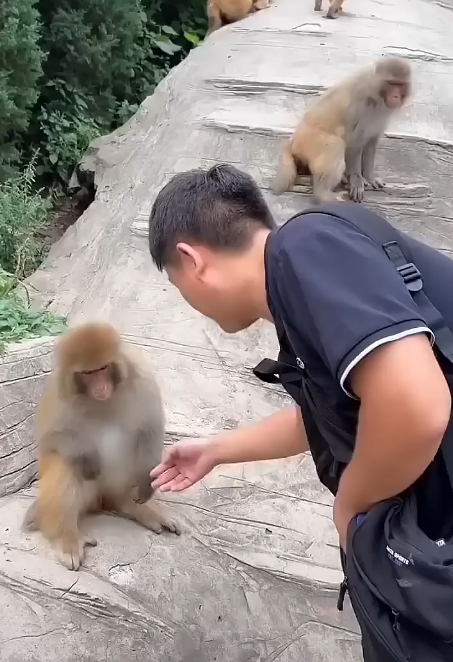
Over time, I noticed patterns. He tolerated brief interactions with his feet if he was distracted by a treat or engaged in play, but even then, it was fleeting. Any prolonged attempt triggered a warning. This consistency in his behavior was fascinating. It showed me that monkeys are not capricious in their reactions—they have predictable boundaries that, once understood, make interacting with them smoother and more rewarding.
The incident also highlighted the importance of observation in animal care. In many monkey sanctuaries, staff emphasize watching closely for cues of discomfort, stress, or joy. My buddy’s reaction was a textbook example of communication through body language. I realized that if I had ignored these signals, I could have created unnecessary stress for him, undermining the trust we had built. By listening, watching, and responding appropriately, I was learning an essential skill in working with all animals: empathy in action.
It wasn’t just about avoiding discomfort—it became a playful challenge. I began to anticipate his reactions, noting the exact moment he would twitch, chatter, or pull away. It turned into a game of subtle communication, a dance of trust and attention. Sometimes I would extend my hand slowly, pause, and see whether he allowed contact; sometimes I would gesture gently toward the foot and then retract, letting him make the decision. Each small interaction was a lesson in patience, timing, and mutual respect.
This experience also gave me insight into the individuality of monkeys. Not all monkeys have the same preferences. In the sanctuary, other monkeys were far more tolerant, allowing their feet to be touched for grooming or play. My buddy’s firm boundary was part of his personality, and recognizing it helped me appreciate diversity within the species. It reminded me that patience and flexibility are key, and that one-size-fits-all approaches rarely work when interacting with intelligent animals.
Through this small boundary, I also became more reflective about human interactions. How often do we ignore subtle cues from friends, family, or coworkers? How often do we assume comfort or consent without noticing signals of discomfort? My buddy’s reaction was a clear reminder that respecting boundaries fosters trust, improves relationships, and encourages honest communication—lessons that apply far beyond the sanctuary.
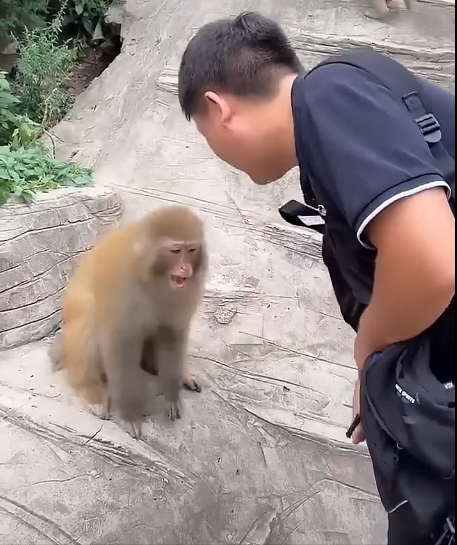
Over days and weeks, our relationship deepened. I learned to initiate touch only where he was comfortable, and he responded with trust and playful engagement. He would climb onto my shoulder, examine my hair, or even offer his hands for gentle interaction. But the feet remained sacred territory. By honoring that, I found that our bond became stronger than ever. He seemed relaxed, happy, and more willing to engage in other ways.
The sanctuary staff noticed the change too. They explained that understanding an individual monkey’s preferences is crucial for both safety and emotional well-being. Misreading signals can lead to stress, aggression, or social conflict within the group. Observing my buddy’s response to foot-touching taught me a fundamental principle: attention to detail in animal behavior is not optional—it is essential.
I also observed that he wasn’t angry in a permanent sense. His fury or discomfort was momentary, triggered by a specific action. Once I respected his boundary, his mood shifted quickly. This demonstrated the capacity of monkeys to forgive and move past small conflicts, reinforcing the importance of immediate response and attentiveness in interactions.
Reflecting on this experience, I realized how much I had learned about empathy, communication, and trust. A simple boundary around his feet became a profound lesson in observing, listening, and adapting. Monkeys, with their intelligence and expressiveness, provide endless opportunities to refine these skills.
By the end of my time with him that day, I understood that boundaries are not barriers—they are guides. They teach respect, patience, and awareness. My buddy’s insistence that his feet remain untouched wasn’t a rejection of me, but a clear message: “I am comfortable when my limits are respected.” Learning to honor those limits was an essential step in building a meaningful and trusting relationship.
Now, every time I interact with him, I remember this lesson. I avoid his feet, but I engage fully in other ways. We play, groom, and explore together, with clear understanding and mutual respect. What began as a small act of disobedience—my attempt to touch his foot—became a gateway to a deeper connection, a daily reminder of the intelligence, sensitivity, and personality of monkeys.
In conclusion, the story of my buddy monkey and his feet is more than just a tale of playful resistance—it is a lesson in patience, empathy, and communication. Animals, like humans, have boundaries, preferences, and emotions. Respecting them strengthens trust, enhances relationships, and fosters a sense of harmony. Through his insistence, my buddy taught me that sometimes the smallest details—the touch of a foot—carry the most important lessons about connection, respect, and understanding.