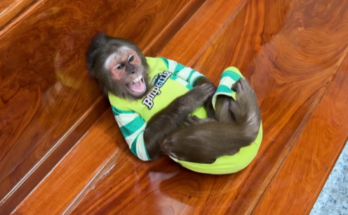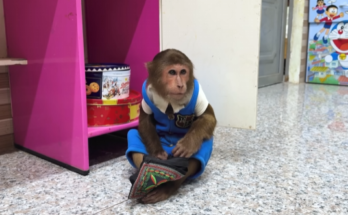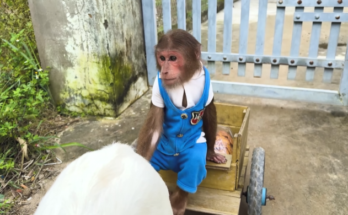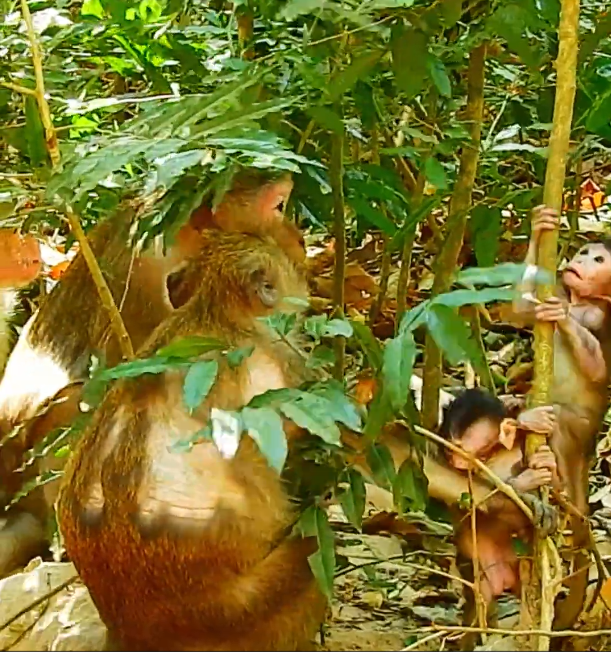
The forest was alive with sounds—the rustle of leaves, the distant call of birds, and the soft chatter of monkeys moving through the trees. Amidst this vibrant ecosystem, a tiny figure caught my attention: a baby monkey, barely weeks old, clinging tightly to its mother’s fur. Its fur was soft and golden, eyes wide and curious, reflecting the sunlight in a way that made it seem almost magical. In that moment, I realized that the life of monkeys, especially the youngest among them, is a story full of beauty, innocence, and survival.
A Fragile Beginning
From the very first moments of life, baby monkeys face challenges that humans might find unimaginable. Born blind or with limited vision, completely dependent on their mothers, they must learn the complex rules of social life while staying safe in a world full of predators. Yet, despite their fragility, there is a remarkable resilience in these tiny creatures. The baby monkey I watched clung to its mother with an intensity that spoke of trust and instinct. Every movement, every tiny grip of its fingers, was a silent promise: I will survive, and I will learn.
Mother monkeys are extraordinary in their care. They groom their babies meticulously, protecting them from insects, cleaning every patch of fur, and ensuring they are warm. The bond between mother and baby is more than emotional—it’s a matter of life and death. In the wild, the first weeks are critical. Babies are vulnerable to predators, including snakes, eagles, and even larger monkeys. Survival is not guaranteed, which makes every healthy baby monkey a triumph of nature’s design.
The Innocence of Curiosity
As the baby monkey grows, curiosity becomes its guiding force. One moment, it clings to its mother’s back, nestled securely. The next, it’s stretching its tiny arms toward a leaf, testing gravity, or attempting its first unsteady steps. Watching a baby monkey explore is watching the world being discovered anew. Every movement is a lesson, every fall a teacher.
I noticed the way the baby’s eyes followed other monkeys in the troop. It mimicked small gestures—scratching the head, reaching for fruit, chattering in short squeaks. These early imitations are crucial. In monkey societies, social learning determines who will thrive. Babies watch, copy, and gradually understand the complex hierarchy of their troop. Their early interactions may seem playful, but they are training for survival.
Life in the Troop
Monkeys are social animals, and the life of a baby monkey is deeply intertwined with its troop. Troops provide protection, guidance, and companionship. Older monkeys watch over the young, sometimes acting as babysitters while mothers forage. For the baby, being part of a troop is both a classroom and a sanctuary.
The baby I observed often clung to its mother but occasionally ventured toward a nearby juvenile, engaging in tentative play. A gentle tug here, a playful squeak there—it was learning negotiation, empathy, and the rules of social bonds. In these moments, the troop’s hierarchy and cohesion are reinforced. Each member, young or old, knows their role, and the baby slowly begins to understand its place.
The Physical Growth of Beauty
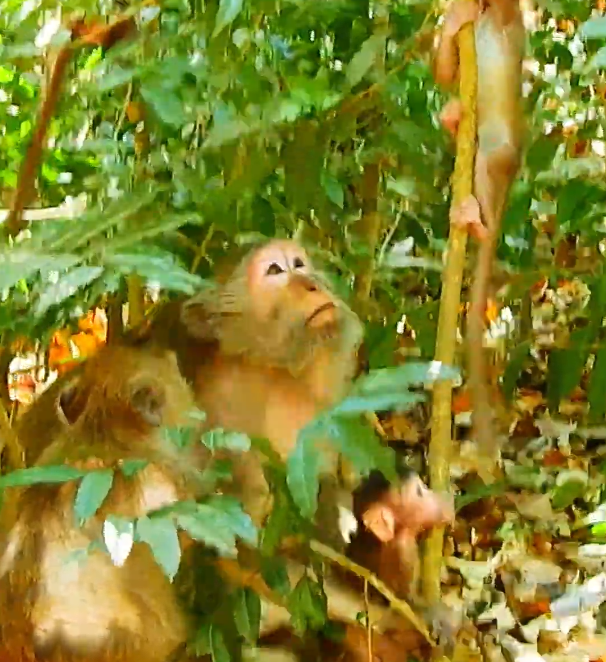
It’s impossible to ignore the sheer beauty of a baby monkey. Their fur is often softer and brighter than adults, and their eyes hold a sparkling curiosity that is both innocent and profound. Watching the baby climb, leap, and stretch is to witness nature’s design perfected for survival and grace.
Their bodies are built for agility. Long fingers grasp branches with ease, tiny toes curl around twigs, and their tails—if they have one—act as balancing tools. Each physical skill is honed from a young age. Even playful tumbles contribute to muscle development, coordination, and spatial awareness. In the wild, these skills are not optional; they are essential.
The beauty of a baby monkey isn’t just in appearance—it’s in movement. Every hop, swing, and gentle leap demonstrates flexibility, strength, and elegance. Observing this young creature in motion is like watching a living poem, where instinct and nature come together in perfect rhythm.
Emotional Connections
Monkeys are not only intelligent but emotionally complex. The bond between mother and baby is the first lesson in love, attachment, and trust. A mother monkey communicates with her baby through subtle gestures, gentle touches, and soft vocalizations. She calms fears, corrects behavior, and teaches lessons essential for life in the wild.
Watching the baby snuggle against its mother, nuzzle her chest, or suckle in moments of safety reveals an emotional depth that mirrors human tenderness. This connection is not fleeting. Studies have shown that early attachment influences social skills, stress response, and even problem-solving abilities in young monkeys.
As the baby grows, these emotional skills extend to other troop members. Grooming, playful chasing, and cautious interactions build empathy and cooperation. The baby learns who can be trusted, who is dominant, and how to navigate the social complexities of monkey life. These lessons, often playful and gentle, are essential for survival and cohesion within the troop.
Learning Through Play
Play is central to the life of a baby monkey. From chasing peers to swinging from branches, play is more than fun—it’s preparation for adult life. Through play, monkeys develop coordination, strength, and agility. They learn to read social cues, recognize limits, and negotiate interactions.
I watched as the baby monkey attempted a leap from one branch to another, falling short by a few inches. It squealed briefly, then tried again. Each failure was met with persistence rather than fear. Play teaches resilience, problem-solving, and confidence, all while providing opportunities for social bonding.
Challenges and Survival
Life in the wild is not without its dangers. Predators, harsh weather, and scarcity of food constantly test baby monkeys. The first year is particularly critical, and only the strongest, most alert babies survive. Even with a protective mother and a supportive troop, danger is ever-present.
Food scarcity teaches adaptability. Babies learn what is edible, how to forage, and how to mimic adults’ successful techniques. Water sources, climbing paths, and shaded areas are all lessons in spatial awareness. The baby monkey I observed seemed fearless, yet attentive, quickly learning to navigate its environment with increasing confidence.
Milestones in Development
Baby monkeys achieve milestones quickly. Within weeks, they begin to crawl, then walk, and eventually climb. By a few months, many attempt their first leaps between branches. Grooming, communication, and social understanding develop in tandem with physical skills.
Each milestone is a combination of instinct, observation, and trial-and-error. The beauty lies not only in the achievements themselves but in the process—the small falls, the tentative reaches, the delighted discoveries. These moments highlight the intelligence and adaptability of these young creatures.
The Wisdom of Observation
Observing baby monkeys offers insight into the larger structure of life in the wild. It is a reminder of the balance between vulnerability and resilience, dependence and independence. The baby’s beauty is amplified by its relationship with the world around it: the mother, the troop, the environment, and the challenges it faces.
For humans, this observation is more than entertainment—it is a lesson in growth, curiosity, and adaptability. The baby monkey’s actions demonstrate patience, persistence, and the natural drive to explore and survive.
Conservation and Care
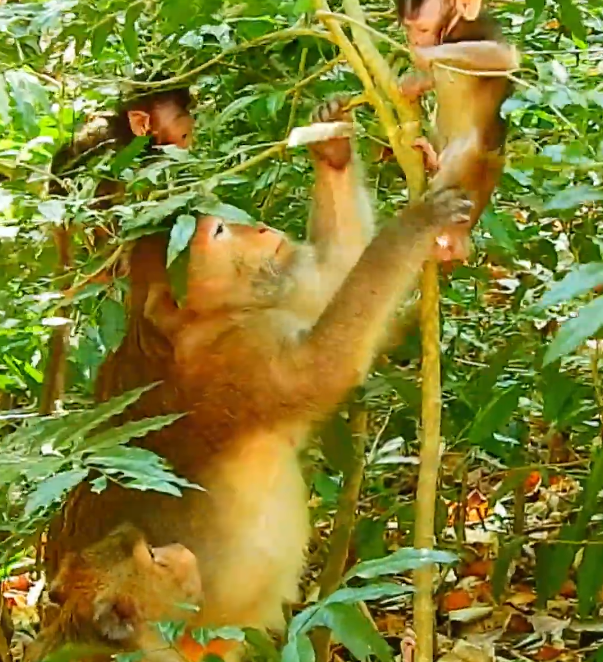
The life of monkeys is increasingly threatened by habitat loss, human encroachment, and poaching. Watching a baby monkey thrive in the wild is a reminder of the fragility of these ecosystems. Conservation efforts are essential to preserve the delicate balance that allows these creatures to flourish.
Protecting forests, regulating human interaction, and supporting wildlife reserves ensure that future generations of baby monkeys can experience life fully—climbing, playing, learning, and bonding as nature intended.
Beauty in the Everyday
The phrase “so beautiful” applies not just to the baby monkey’s appearance but to the entire process of growth. Each day is a story of exploration, learning, and resilience. Watching the baby swing from a branch, chase a sibling, or nuzzle its mother captures a kind of innocence that is rare and profound.
Beauty in monkeys is dynamic. It is found in motion, in curiosity, and in the interactions that shape their world. The golden fur, the sparkling eyes, and the tiny hands are only a part of the story—the rest is lived in the complexity and richness of life.
Reflections
The life of a baby monkey teaches us about patience, resilience, and the joy of discovery. From the first fragile moments clinging to the mother to the confident leaps through the canopy, every step is a testament to nature’s intelligence and care. Their beauty is not superficial—it is woven into every aspect of their being: physical, emotional, and social.
Observing these young creatures reminds us of the importance of nurturing, protection, and respect for the natural world. It is a call to appreciate the small, delicate wonders that thrive quietly in forests, even as humans move around them, often unaware.
Conclusion
The baby monkey is more than just an adorable creature—it is a symbol of life, learning, and the beauty of growth. Its soft fur, curious eyes, and playful energy capture hearts instantly, but it is the story behind the appearance—the struggles, the lessons, the bonds—that truly defines its beauty.
In watching the life of monkeys, we see the delicate balance between innocence and survival, play and learning, vulnerability and resilience. Each day is a journey, each leap a lesson, and each interaction a story of social complexity and trust. The baby monkey reminds us that beauty is not just in appearance but in vitality, curiosity, and the courage to explore the world.
In the forest, among the trees and sunlight, the baby monkey swings, climbs, and discovers. Its golden fur glows in the sunlight, its tiny hands reach out to touch life, and its eyes reflect the wonder of a world full of possibilities. Truly, the baby monkey is so beautiful—not only for what it is but for what it represents: life in its most pure, curious, and resilient form. 🐒✨