The growl was low, cracked, and desperate—more warning than threat. It came from beneath a collapsed wooden pallet at the edge of an abandoned lot, where weeds pushed through broken concrete and the air smelled of rust and old rain. I froze. The sound wasn’t fierce; it was thin, like a voice scraped raw from hunger. I took a slow step back and waited, letting my breath soften. From the shadows, two eyes reflected light—cloudy with fear, sharp with resolve.
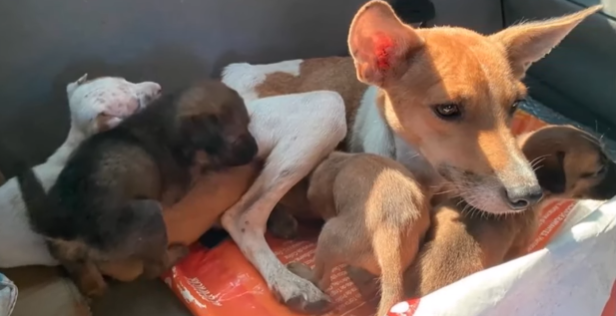
She was skeletal. Her ribs made a fragile cage beneath skin stretched tight as paper. Every bone seemed to count the days she hadn’t eaten. And still, she put herself between me and what she loved. Behind her, pressed against the dirt, were five tiny shapes—pups no bigger than my forearm, their eyes still blue, their bellies hollow and round in that worrying way that means too much hunger and too little milk.
The mother dog lifted her lip and growled again. Not to attack. To beg me to stop.
I knelt, keeping my hands visible, and slid a paper plate across the ground. On it was food I’d brought for strays—soft enough for weak jaws, warm enough to smell alive. The wind carried the scent toward her. Her nostrils flared. For a moment, I saw the war inside her: survival pulling one way, motherhood the other.
She didn’t move.
Her eyes never left me. She took a half-step forward, then planted herself, legs shaking, as if to say, You will not pass. Her pups squeaked, one climbing over another to nuzzle her belly. She flinched when they latched—pain flashing across her face—but she didn’t pull away.
I waited. Time stretched. The lot grew quiet except for the distant hum of traffic and the small, insistent cries of the puppies. I pushed the plate another inch closer, then stopped. My heart hammered. I whispered—not words she could understand, but a tone meant to say I see you.
She broke first.
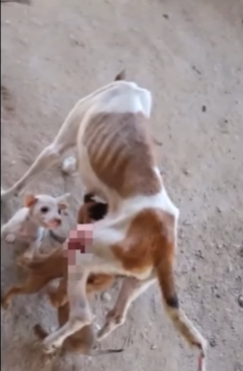
The mother dog lunged—not at me, but at the food. She grabbed a mouthful and retreated, turning her back to shield her pups as she ate. She swallowed too fast, choking once, then froze as if she’d done something unforgivable. Her head snapped around to check the puppies. They were still there. Still breathing. Still hers.
She went back for another bite.
And then something extraordinary happened.
Instead of eating it all, she carried the food to the pups. She dropped it near them, nosing it closer as if they could eat it themselves. When they only squeaked, she hesitated—confused, torn—then returned to the plate for a few more bites before finally lying down so they could nurse.
That’s when I saw the blood.
Her teats were cracked and bleeding, the skin raw from days—maybe weeks—of feeding without enough nourishment to replace what she gave. Every suckle cost her pain she couldn’t afford. And yet she closed her eyes and endured it, tail thumping weakly against the dirt.
I felt something in my chest give way.
I went back to my car and brought water, a blanket, more food. I placed everything slowly, respectfully, as if approaching a queen in exile. She watched me the whole time, her growl gone now, replaced by a trembling vigilance. When I set the water down, she surprised me again—she didn’t drink. She nudged the bowl toward the puppies.
Only after they lapped clumsily at the edge did she lower her head and drink herself.
I stayed for hours. I didn’t touch her. I didn’t try to take the pups. I just stayed, bearing witness. The sun slipped lower, painting the lot in gold. With every passing minute, her posture softened. Her ears relaxed. She lay on her side, exhausted, allowing the pups to feed and sleep in turns.
At one point, she looked at me—not with fear, not with suspicion, but with something that felt like permission.
That night, I called a rescue.
They arrived quietly, experienced hands moving with practiced calm. We talked in murmurs. The mother dog rose when they approached, instinct roaring back to life. She growled again, louder this time, standing over her pups like a living wall.
I stepped forward and did the only thing I could think to do.
I sat down.
I placed the plate between us and broke a piece of food in half. I held it out—not close enough to force her, not far enough to retreat. She stared at me, chest heaving. The rescue worker waited, net slack, giving us time.
The mother dog took the food from my hand.
She didn’t bite. She didn’t snap. Her teeth brushed my skin with a gentleness that stole my breath. Then she did something I will never forget.
She licked my fingers.
Once.
Then she turned, walked to her pups, and lay down.
The rescue workers moved in slowly. One lifted a puppy, then another, placing them in a warm crate. The mother dog watched every movement, muscles tense, eyes sharp. When they reached for her, she stood—but she didn’t growl.
She went willingly.
At the shelter, the truth unfolded. She was severely malnourished, dehydrated, anemic. Her body was failing under the weight of what she’d given. The vet said if she’d gone another few days without help, she might not have survived.
They named her Mercy.
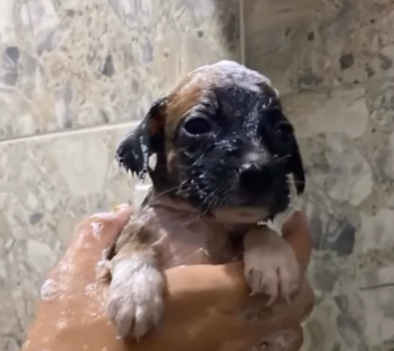
The puppies thrived first. With proper nutrition, their cries softened, their sleep deepened. Their fur grew glossy. Mercy watched them constantly, even as she recovered—always counting heads, always positioning herself between them and the world.
As Mercy gained strength, something else returned too: play. One morning, she nudged a puppy with her nose and bounced back, startled by her own energy. The staff laughed through tears. We all did.
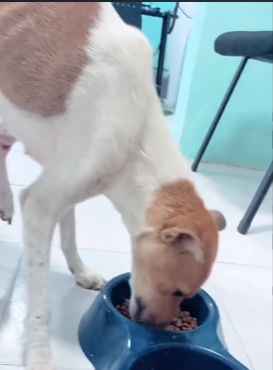
Weeks passed. Mercy’s ribs softened under muscle. Her eyes cleared. She learned to trust hands, leashes, soft voices. She learned that food came without pain. That rest didn’t mean loss.
The day her pups were adopted—together, in pairs—Mercy waited calmly. She sniffed each family, tail wagging slow and careful, as if memorizing their scent. When the last crate was carried out, she searched the room, confused, then sat by the door.
I knelt beside her.
She leaned into me.
Mercy went home a month later. Not just any home—my home. She sleeps now on a bed too big for her, belly full, dreams twitching in her paws. Sometimes, when she hears a sharp noise, she lifts her head and growls low in her throat.
Then she looks at me.
And the growl fades.
Because she knows.
She knows her pups are safe. She knows her hunger is over. And she knows—after everything—that love protected her when she had nothing left to give.
That’s what broke my heart.
And stitched it back together.