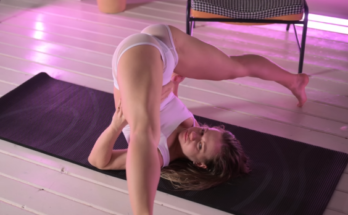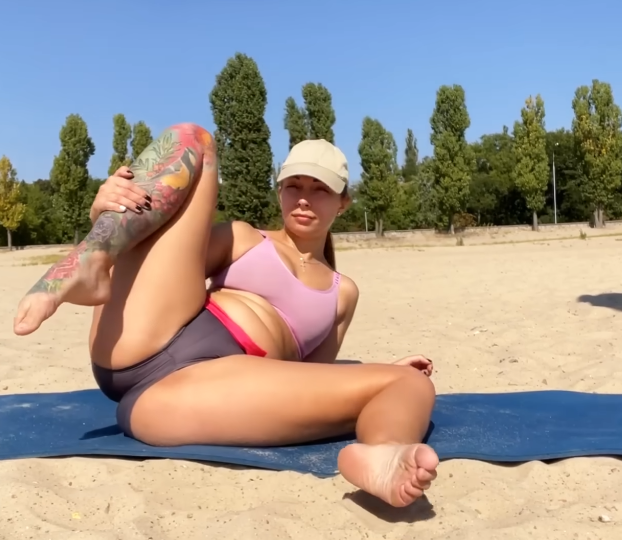
Flexibility is more than an aesthetic goal in yoga and fitness—it is a foundation for healthy movement, injury prevention, and long-term body balance. Splits for STRETCH LEGS. Oversplits. Workout STRETCH Legs Yoga is a focused and educational practice designed to help practitioners safely open the legs, lengthen tight muscles, and build confidence in deep stretching. Whether your goal is to achieve full splits, improve athletic performance, or simply move with more ease, this leg-stretching yoga workout offers a powerful path forward.
Understanding Leg Flexibility and Splits
Splits are often seen as an advanced pose, but they are actually the result of patient, consistent stretching rather than natural talent. The front split primarily targets the hamstrings of the front leg, the hip flexors and quadriceps of the back leg, and the hips as a whole. Side splits focus more on the inner thighs, adductors, and hip joints. Oversplits go one step further by gently elevating one or both legs to increase range of motion beyond the standard split position.
This workout emphasizes education as much as effort. Understanding which muscles are involved helps practitioners stretch intelligently rather than forcefully. By respecting anatomy and alignment, flexibility improves steadily while reducing the risk of injury.
Preparing the Body: Warm-Up Is Essential
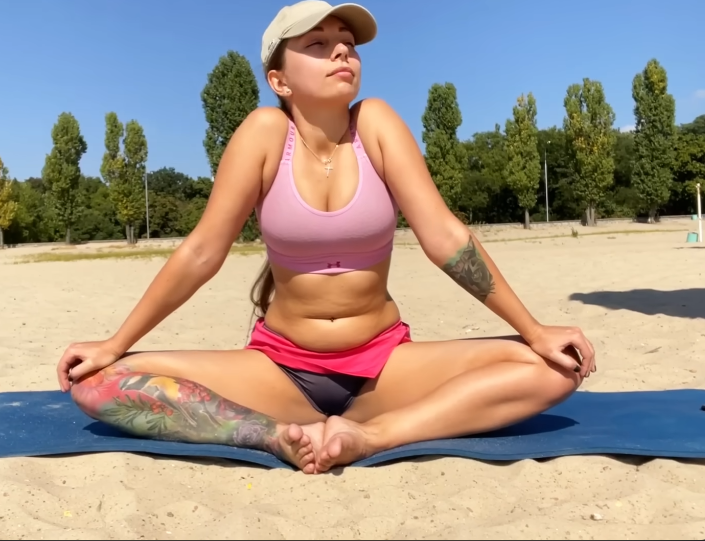
Before attempting splits or oversplits, proper warm-up is crucial. Cold muscles resist stretching and are more prone to strain. This yoga workout begins with dynamic movements designed to increase blood flow and gently activate the legs.
Light cardio-inspired motions, such as marching in place or slow lunges, help raise body temperature. Gentle leg swings, hip circles, and knee bends awaken the joints and prepare them for deeper work. Throughout the warm-up, controlled breathing keeps the body relaxed while building internal heat.
The goal is not to rush but to arrive at the deeper stretches feeling open and ready. When the body is properly warmed, flexibility training becomes both safer and more effective.
Foundational Stretches for Split Progress
The practice then moves into foundational stretches that lay the groundwork for splits. These poses are accessible to most levels and allow practitioners to assess their current flexibility without pressure.
Forward folds target the hamstrings and calves, encouraging length through the back of the legs. Low lunges open the hip flexors and quadriceps, which are often tight from prolonged sitting. Half splits, with one leg extended and the other bent, provide a clear and controlled stretch that mimics the split shape without full depth.
In each pose, emphasis is placed on alignment—keeping the hips squared, the spine long, and the breath steady. Props such as yoga blocks, cushions, or folded blankets are encouraged to support the body and maintain proper form.
Deepening Into Full Splits
Once the body is prepared, the practice gradually transitions toward full splits. This stage is approached mindfully, with clear reminders that depth is less important than sensation and control. Practitioners are guided to lower the hips slowly, stopping at the point where the stretch feels strong but manageable.
Holding the split for several breaths allows the muscles to relax naturally. With each exhale, tension softens, and the body may naturally sink a little deeper. The focus remains on breathing rather than pushing, reinforcing the idea that patience is key in flexibility training.
This portion of the workout also highlights symmetry. Both sides are practiced equally to avoid imbalances and ensure even development of flexibility.
Exploring Oversplits Safely
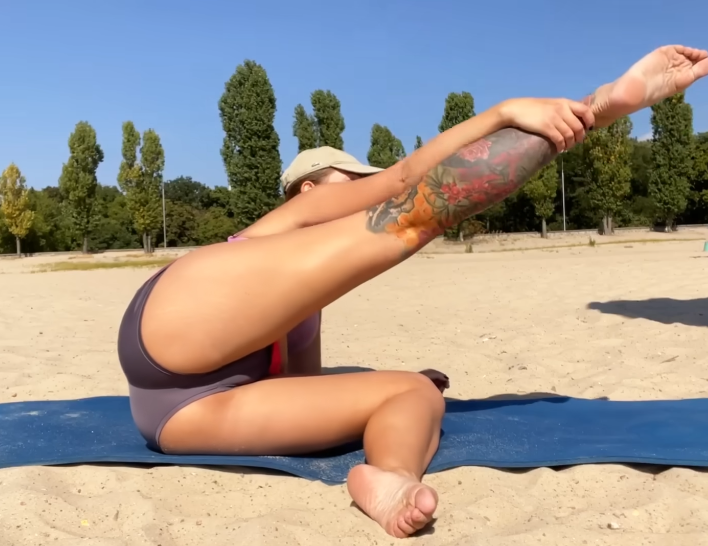
Oversplits are an advanced variation that should only be practiced when full splits feel stable and comfortable. In this workout, oversplits are introduced as an optional progression rather than a requirement. Elevating the front foot or back leg using a block or cushion increases the stretch intensity, encouraging the muscles to adapt to a greater range of motion.
Safety cues are emphasized strongly during oversplits. Practitioners are reminded to engage the core, protect the knees, and exit the pose immediately if sharp pain occurs. Oversplits should feel challenging but controlled, never forced.
When practiced responsibly, oversplits can help improve mobility for dancers, gymnasts, yogis, and athletes who require extreme leg flexibility. However, the workout reinforces that oversplits are a tool—not a measure of worth or success.
Strength and Control in Leg Stretching
One of the most important lessons in this leg yoga workout is that flexibility and strength must go hand in hand. Passive stretching alone can lead to instability. To counter this, the session incorporates gentle strength-building elements.
Engaging the quadriceps during hamstring stretches, activating the glutes in lunges, and maintaining core awareness throughout splits all help protect the joints. These subtle strength cues create active flexibility, where muscles are not just long but also capable of supporting movement.
This approach improves functional mobility, making the gains from stretching useful in everyday activities and sports.
Breathwork and Mental Focus
Deep leg stretching can be intense, both physically and mentally. Breathwork plays a vital role in managing discomfort and maintaining focus. Slow, controlled breathing signals the nervous system to relax, allowing muscles to release tension more effectively.
The workout encourages practitioners to observe sensations without judgment. Instead of labeling a stretch as “too hard” or “not enough,” the practice invites curiosity. This mindset shift transforms stretching from a struggle into a mindful exploration of the body’s capabilities.
Mental resilience developed during deep stretches often carries over into other areas of life, reinforcing patience, discipline, and self-awareness.
Cooling Down and Recovery
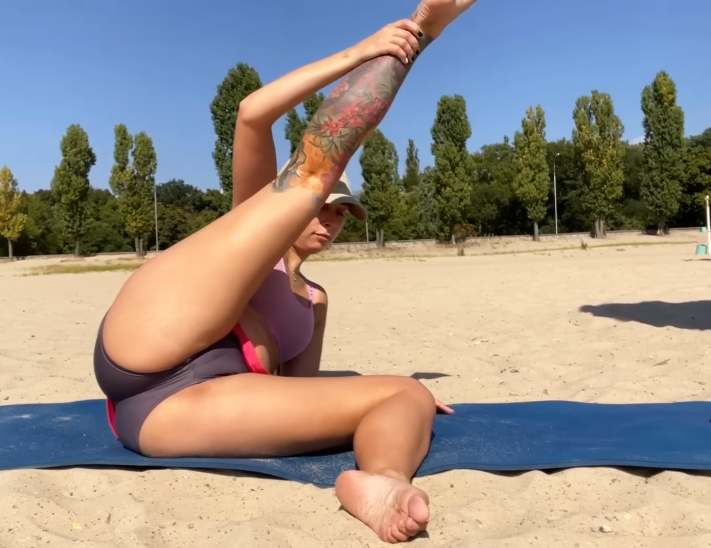
After the intensity of splits and oversplits, the body needs time to recover. The cool-down phase includes gentle movements that soothe the legs and hips. Reclined stretches, soft twists, and light shaking of the legs help release residual tension and restore balance.
This phase is essential for preventing soreness and supporting muscle recovery. It also provides an opportunity to reflect on the practice and appreciate the progress made, regardless of depth achieved.
A brief relaxation at the end allows the nervous system to settle fully. Practitioners are encouraged to notice the sensations in their legs—often a mix of warmth, openness, and lightness.
Long-Term Benefits of Leg Stretch Yoga
Consistent practice of Splits for STRETCH LEGS. Oversplits. Workout STRETCH Legs Yoga offers numerous long-term benefits. Improved flexibility enhances posture, gait, and overall movement efficiency. Athletes may notice better performance and reduced risk of injury, while everyday practitioners experience less stiffness and greater comfort in daily activities.
Beyond the physical, the practice builds confidence. Each session reinforces that progress comes from dedication, not comparison. Flexibility becomes a personal journey rather than a competition.
A Practice of Patience and Progress
This leg-stretching yoga workout is a reminder that the body responds best to kindness and consistency. Splits and oversplits are not achieved overnight, but with regular practice, mindful effort, and respect for individual limits, remarkable progress is possible.
Splits for STRETCH LEGS. Oversplits. Workout STRETCH Legs Yoga offers a balanced, educational, and empowering approach to leg flexibility. It invites practitioners to stretch deeply, breathe fully, and trust the process—one mindful stretch at a time.