The rain had been falling since dawn, turning the narrow village road into a ribbon of mud. People gathered under old umbrellas and plastic sheets, whispering softly as they waited. At the center of the crowd stood a man with tired eyes and hollow cheeks. His clothes were worn thin, his hands rough from years of labor. Beside him sat a black-and-white dog, calm and loyal, his tail resting on the wet ground. No one knew that this moment would leave a scar on every heart present.
The man’s name was Somchai. He lived on the edge of the village with his wife and young son in a small house built from wood and rusted tin. Somchai had never complained about his life. He worked hard every day, carrying bricks at construction sites, fixing nets for fishermen, or harvesting rice when the season allowed. It was never much, but it was honest work. What made the struggle bearable was his family—and his dog, Bao.
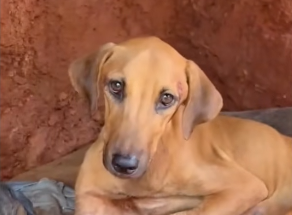
Bao had come into Somchai’s life five years earlier, when Somchai found him tied to a tree, abandoned and shaking. The dog was thin, frightened, and covered in scars. Somchai had untied him, offered him water, and whispered gently until the trembling stopped. From that day on, Bao followed him everywhere, as if he had finally found a reason to live. The dog guarded the house, played with Somchai’s son, and waited faithfully every evening at the road’s edge for Somchai to return from work.
Then tragedy struck.
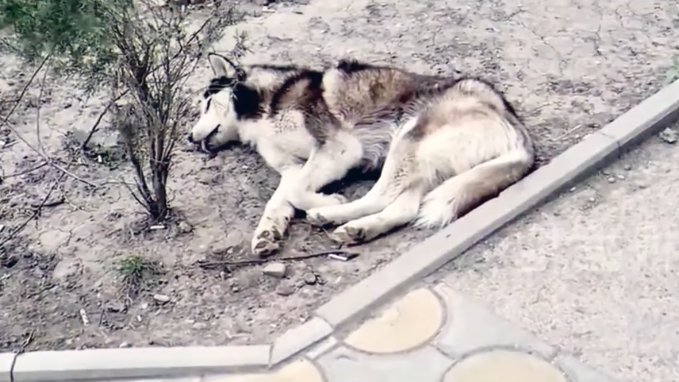
Somchai’s son, Arun, fell ill. At first it was just a fever, then weakness, then pain so intense that the boy cried through the night. The local clinic did what it could, but the doctor soon told Somchai the truth: Arun needed surgery in the city, and it had to be done soon. The cost was more money than Somchai could earn in many years.
That night, Somchai sat on the floor holding his son as he slept. Bao lay nearby, his head on his paws, watching silently. Somchai felt helpless. He had no land to sell, no savings to borrow against. He sold his tools, his small television, even the bed they slept on. Still, it wasn’t enough. Each day Arun grew weaker, and each day the clock seemed to tick louder.
In his desperation, Somchai heard about a man who bought trained dogs for guarding factories. Good dogs fetched a decent price. The thought pierced his heart like a knife. Bao was not property. Bao was family. But when Somchai looked at his son’s pale face, he knew what he had to do.
On the morning of the sale, Somchai bathed Bao carefully, drying him with an old towel. He cooked rice mixed with meat—something Bao rarely had—and fed him by hand. Bao wagged his tail happily, licking Somchai’s fingers, unaware that this was a farewell. When Somchai tied the rope around Bao’s neck, the dog followed obediently, trusting as always.
At the meeting place, the buyer examined Bao’s body, his teeth, his legs. Bao stood still, glancing occasionally at Somchai for reassurance. Somchai’s chest tightened. The buyer nodded and pulled out a stack of money.
As the buyer reached for the rope, Bao suddenly froze.
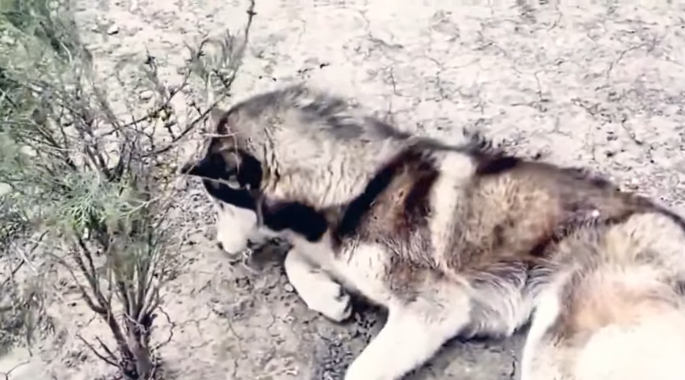
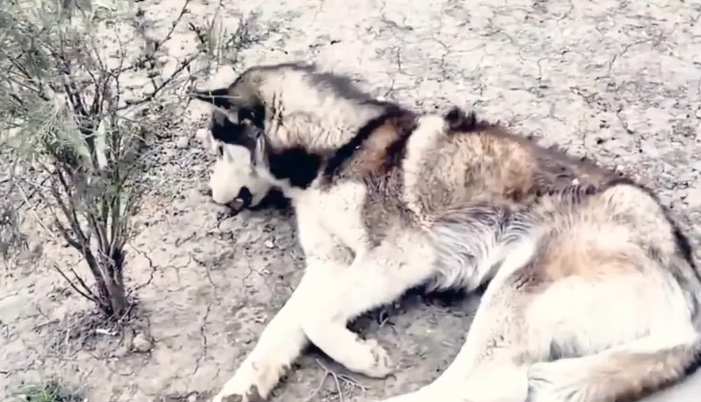
He looked up at Somchai, his eyes filled with confusion. Slowly, as if his heart had understood before his mind, Bao stepped closer. Then he bent his front legs and knelt in the mud. A low cry escaped his throat—a sound so full of sorrow that it silenced the rain itself. Tears streamed from Bao’s eyes, falling onto Somchai’s feet. He pressed his forehead against Somchai’s legs, shaking as if begging not to be left behind.
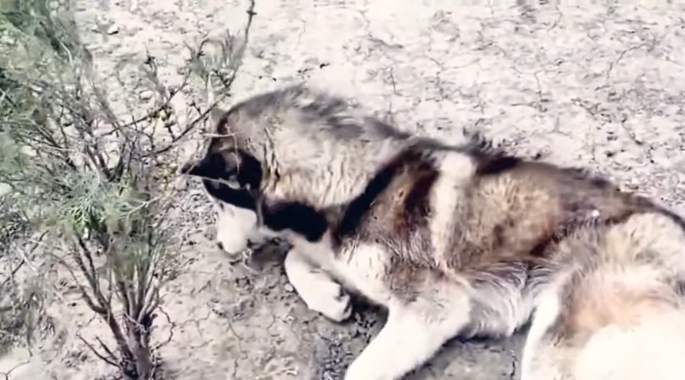
The crowd gasped. Some turned away, unable to watch. Somchai dropped to his knees, clutching Bao’s head. His tears mixed with the rain as he whispered apologies he knew would never be enough. “I love you,” he sobbed. “Please forgive me. I have no choice.”
Bao cried harder, his body trembling, yet he did not resist. He did not growl. He did not bite. He simply cried, knelt, and loved.
When the buyer finally led Bao away, the dog looked back again and again, his eyes locked on Somchai’s face. Somchai stood frozen, the money heavy in his hands, his heart feeling as though it had been torn from his chest.
The surgery saved Arun’s life.
Weeks later, Arun was able to sit up, then walk, then laugh again. Somchai thanked the heavens every day. But at night, when the house grew quiet, the absence of Bao echoed loudly. No soft paws on the floor. No warm body curled at the door. Arun often asked for Bao, and Somchai would turn away so his son wouldn’t see him cry.
One evening, months later, Somchai returned from work to find a familiar shape sitting outside his house. For a moment, he thought he was dreaming.
“Bao?” he whispered.
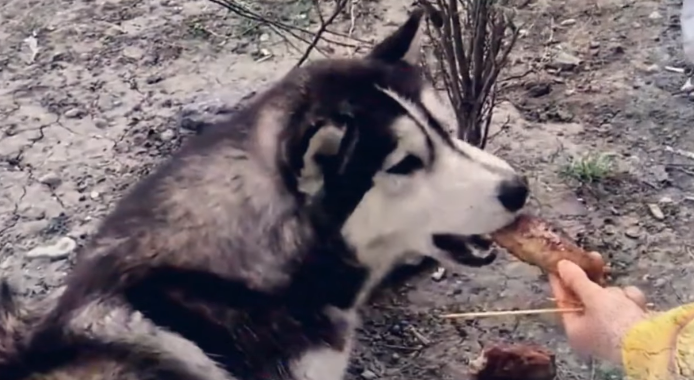
The dog’s ears perked up. He turned, and in an instant, he was running. Bao leapt into Somchai’s arms, crying and barking at the same time, his tail wagging wildly. Somchai fell to his knees, laughing and crying as he held the dog he thought he had lost forever.
Behind Bao stood the buyer, looking uncomfortable but kind. He explained that Bao had never adjusted. He refused to guard, refused to bond, refused to stop waiting by the gate every night. When the man learned the real reason Bao had been sold, he couldn’t keep him any longer.
“Some loyalty,” the man said softly, “cannot be bought.”
Arun came outside and laughed as Bao knelt in front of him, licking his hands joyfully. This time, there were no tears—only happiness.
Sometimes, the deepest love is proven not by what we keep, but by what we are willing to give up. And sometimes, when love is pure and true, it finds its way back—stronger than ever.