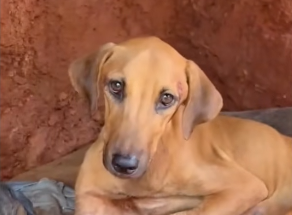
The small crowd at the edge of the dusty village road did not know why the man hesitated. They saw only a thin figure holding a frayed rope, a brown dog sitting obediently at his feet, and a stranger waiting with folded arms and money in hand. But inside the man’s chest, a storm raged—one made of love, fear, and a pain so deep it felt like it would split him apart.
The man’s name was Dara. He lived with his wife and young daughter in a single-room wooden house near the rice fields. Life had never been easy for them, but it had been honest. Dara worked wherever he could—harvesting crops, fixing fences, carrying sacks at the market. On most days, his reward was just enough rice to fill their bowls and a little fish to share. Through all those days, one constant remained by his side: a dog named Lucky.
Lucky had been with Dara since he was a pup, found shivering in the rain near a roadside ditch. Dara had wrapped the trembling puppy in his own shirt and carried him home. From that day on, Lucky followed him everywhere. He guarded the house at night, walked beside Dara to work, and waited patiently outside the clinic when Dara’s daughter was born. Lucky was not just a dog; he was family.
Then sickness came, quietly at first. Dara’s daughter, Sreyneang, began to grow weak. Her laughter faded into coughs, her bright eyes dulled by pain. The local clinic did what it could, but soon the doctor shook his head and spoke words Dara dreaded: she needed treatment in the city, treatment that cost more money than Dara had ever held in his hands.
Dara sold what little they owned. He sold his old bicycle, his tools, even his wedding ring. Still, it wasn’t enough. Each night, as Sreyneang slept fitfully, Lucky lay by her side, resting his head near her small hand, as if guarding her dreams. Dara watched them and felt his heart twist. He prayed for a miracle, but miracles did not seem to visit poor men often.
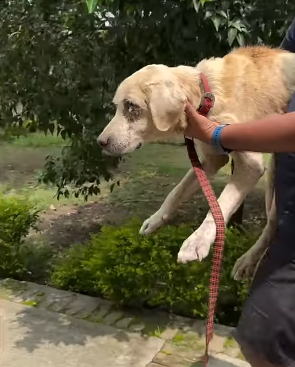
One evening, as the sun dipped low and painted the sky red, Dara made the hardest decision of his life. He had heard of a trader who bought strong dogs for guarding warehouses in the city. Lucky was healthy, loyal, and intelligent—worth more money than anything Dara owned. The thought made him feel sick, but the image of his daughter’s fragile body pushed him forward.
The next morning, Dara washed Lucky carefully, brushing his fur and feeding him the last good meal they had. Lucky wagged his tail, sensing something unusual but trusting as always. When Dara tied the rope around Lucky’s neck, the dog followed happily, unaware that this walk would change everything.
At the meeting place, the trader examined Lucky with a cold, practiced eye. He nodded, counted the money, and held it out. Dara’s hand shook as he reached for it. Before he could speak, Lucky seemed to sense the truth. The dog looked up at Dara, his eyes wide and confused. Then, slowly, something heartbreaking happened.
Lucky stepped forward, bent his front legs, and knelt.
A soft whimper escaped his throat. Tears welled in his eyes and rolled down his muzzle, darkening the dust beneath him. He pressed his head against Dara’s knees, crying in a way no one there would ever forget. It was as if Lucky understood everything—that he was being given away, not because he was unloved, but because love demanded sacrifice.
The crowd fell silent. Even the trader shifted uncomfortably. Dara dropped to his knees, clutching Lucky’s head, his own tears falling freely now. “I’m sorry,” he whispered again and again. “I’m so sorry. Please forgive me.”
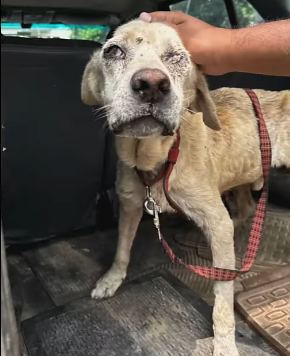
Lucky licked Dara’s hands, his tail giving a weak wag despite his sobs. He did not resist when the trader gently pulled the rope, but he turned his head back again and again, looking at Dara as if to say, I trust you. Whatever happens, I trust you.
When the trader finally led Lucky away, Dara stood frozen, the money heavy in his pocket and his heart unbearably light, as if something vital had been torn from it. He returned home alone. That night, the house felt empty. The floor where Lucky usually slept was cold. Sreyneang stirred in her sleep and whispered the dog’s name. Dara had no answer.
The money paid for Sreyneang’s treatment. Days turned into weeks, and slowly, she began to recover. Color returned to her cheeks. Her laughter came back, weak at first, then stronger. Dara should have been happy—and he was—but joy walked hand in hand with grief. Every smile reminded him of the price he had paid.
Months passed. One afternoon, as Dara worked near the market, he heard a familiar bark. His heart skipped. He turned slowly, afraid to hope. There, standing at the edge of the crowd, was Lucky.
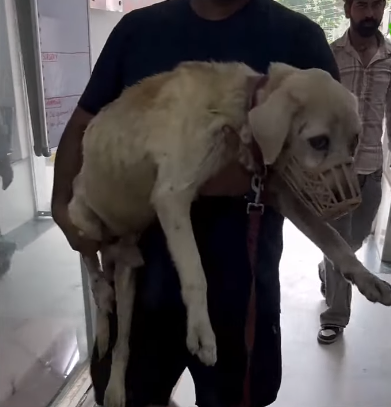
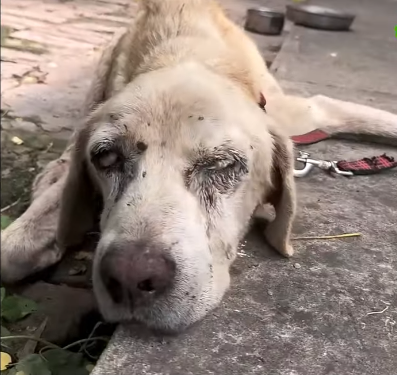
The dog was thinner but unmistakable. The moment their eyes met, Lucky broke free and ran, faster than Dara had ever seen him move. He leapt into Dara’s arms, crying and barking all at once, covering his face with frantic kisses. Dara laughed and cried, holding Lucky as if afraid he might vanish.
Behind them stood the trader, smiling softly. He explained that Lucky had refused to work. He would not eat properly, would not guard, would not bond with anyone else. When the trader learned why Dara had sold him, something stirred in his heart. Business suddenly seemed less important than loyalty like that.
“I think,” the trader said gently, “he belongs with you.”
Dara tried to refuse, ashamed he had nothing to offer. But the trader shook his head. “You already paid,” he said. “With love.”
That evening, Lucky walked home beside Dara once more. Sreyneang, now strong enough to stand, ran to greet them. Lucky knelt again—not in sorrow this time, but in joy—licking her hands as she laughed.
Sometimes love means holding on. Sometimes it means letting go. And sometimes, when the heart is pure, love finds its way back home.