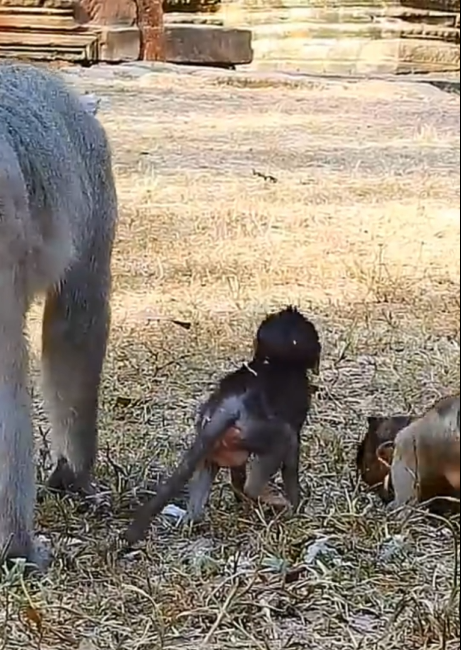
In the wild, life for monkeys is often a delicate balance of hierarchy, social interaction, and survival instincts. Among the many fascinating aspects of primate behavior is the interplay between dominant males, younger members, and infants. Sometimes, this balance is disrupted by anger, aggression, or frustration, and unfortunately, the consequences can affect the most vulnerable members of the troop—the baby monkeys. Observing these dynamics offers insights into social structure, survival strategies, and the emotional complexity of these intelligent creatures.
Dominance is a central element in many monkey species. Male monkeys often assert their authority over a troop, establishing clear social hierarchies to maintain order and control access to resources such as food, mates, and territory. This hierarchy is enforced through displays of strength, vocalizations, and, at times, physical aggression. While dominance ensures stability and reduces constant conflict among adults, it can have unintended consequences for the youngest and least experienced members of the troop.
Baby monkeys, by nature, are curious, playful, and inexperienced. Their small size and lack of understanding of social boundaries make them particularly vulnerable when adult males express anger or frustration. For example, if a dominant male perceives a threat to his authority—whether from a rival, a younger male, or even a baby inadvertently getting in his way—the reaction can be swift and intimidating. Even minor missteps by infants, such as accidentally stepping on the male’s tail or touching his belongings, can trigger an exaggerated response, leaving the baby frightened or distressed.
One common scenario involves food competition. Adult males often guard high-value food sources, such as fruit-laden trees or water access points. Baby monkeys, naturally drawn to curiosity and exploration, may approach these areas without understanding the rules of hierarchy. A sudden appearance of an infant near the feeding site can provoke an angry reaction from the adult male. He may vocalize loudly, chase the baby away, or even use a swat to enforce boundaries. Although the male’s intention is to maintain order, the baby monkey often bears the emotional brunt of the aggression, experiencing fear, confusion, and sometimes minor injury.
The emotional response of baby monkeys to adult anger is striking. Infants are highly sensitive to cues such as body posture, vocal tone, and facial expressions. When a male monkey displays aggression, the baby often reacts with alarm—freezing, crying, or attempting to flee. These behaviors are natural survival mechanisms; by showing submission or retreating, the baby signals that it does not challenge the adult male. However, repeated exposure to such episodes can lead to heightened stress levels, which may affect the infant’s development, social confidence, and willingness to explore its environment.
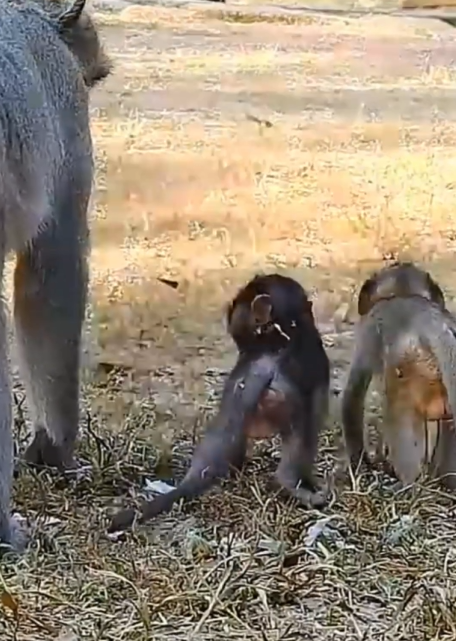
Interestingly, not all responses from adult males are purely aggressive. Some angry displays function as teaching moments, albeit harsh ones. In many monkey species, young individuals learn the boundaries of acceptable behavior through observation and experience. When a male expresses frustration or dominance, infants witness first-hand the consequences of crossing social norms. Over time, these encounters help baby monkeys understand their place within the troop, navigate hierarchy safely, and develop strategies for coexistence with stronger adults. While it may appear cruel from a human perspective, this dynamic is essential for the social education of young monkeys.
In addition to dominance and teaching, male anger can also arise from protective instincts or resource scarcity. Males may become frustrated when resources are limited or when competition threatens access to food or mates. Baby monkeys, with their natural curiosity, may inadvertently become obstacles during these tense moments. For example, an infant reaching for the same fruit as the dominant male may provoke a defensive response. The male’s behavior, while aimed at securing his needs, can create stressful experiences for the baby, highlighting the intricate balance between survival instincts and social relationships.
The consequences for baby monkeys extend beyond immediate fear or discomfort. Chronic exposure to aggressive displays can impact social development and confidence. Infants who repeatedly experience anger from dominant males may become overly cautious, hesitant to interact with peers, or reluctant to explore new areas. Conversely, some infants may develop adaptive strategies, such as seeking protection from their mothers, older siblings, or other supportive troop members. These coping mechanisms illustrate the remarkable resilience and intelligence of young monkeys, allowing them to navigate a complex social world despite occasional adversity.
Mother monkeys play a crucial role in mitigating the effects of male anger. Protective and attentive, mothers often position themselves between the infant and the angry male, providing a buffer that reduces the likelihood of physical harm. Mothers also offer comfort, grooming, and reassurance after stressful encounters, helping the baby recover emotionally. This maternal support is critical for building the infant’s confidence and resilience, ensuring that temporary exposure to anger does not leave lasting trauma. The mother’s role underscores the importance of social bonds and caregiving in primate societies.
It is also worth noting that baby monkeys are not passive in these situations. Infants quickly learn to read the cues of dominant males and adapt their behavior accordingly. They may freeze, retreat, or seek higher ground to avoid confrontation. Some even engage in playful distraction tactics, redirecting the adult’s attention or hiding behind other troop members. These behaviors demonstrate early problem-solving skills, situational awareness, and emotional intelligence. While the baby suffers the immediate consequences of anger, it also develops tools for navigating social challenges in the future.
The presence of anger and its impact on infants also highlights the importance of observing primate behavior safely and respectfully. Humans can learn much about social hierarchy, emotional regulation, and resilience by watching these interactions. However, it is crucial to avoid interference. Approaching too closely or attempting to intervene can escalate stress, provoke aggression, and disrupt natural learning processes. Observers are reminded to maintain distance, respect boundaries, and appreciate the natural dynamics that govern primate societies.
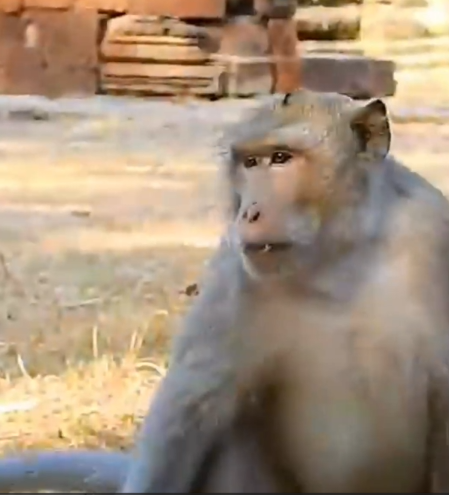
Beyond the immediate troop, these interactions have broader implications for understanding social evolution. Aggression, dominance, and hierarchy are not unique to monkeys; they exist in many social mammals, including humans. Observing how infants respond to male anger provides insight into early socialization, the development of coping strategies, and the role of mentorship and protection in shaping behavior. It illustrates how survival, learning, and emotional growth are intertwined, revealing the complex balance between authority and nurture in social species.
Despite the challenges, it is important to recognize the resilience and adaptability of baby monkeys. While they may suffer temporary fear or discomfort when males express anger, these experiences often contribute to their long-term development. They learn to navigate hierarchy, seek protection, and understand social cues—all essential skills for survival and thriving within the troop. Observers can marvel not only at the intensity of these interactions but also at the capacity for learning, adaptation, and growth that emerges from them.
In conclusion, the scenario described by “Oh, the Male Monkey Is Angry, and the Baby Monkey Is Suffering the Consequences” reflects the intricate balance of primate social life. Dominance, aggression, and teaching coexist in a system where the young must learn, adapt, and grow. Male anger, while potentially intimidating, is often a part of social structure and survival strategy. Baby monkeys, vulnerable yet intelligent, experience the immediate consequences but also gain valuable lessons in social navigation, resilience, and emotional intelligence.
These dynamics are both fascinating and instructive. They show how social hierarchies are maintained, how emotional responses shape behavior, and how care, protection, and adaptation work together to ensure survival. While the baby monkey may momentarily suffer, it is also learning, observing, and developing skills that will serve it throughout life. The story is a vivid reminder of the complexities of nature, the resilience of young minds, and the interplay between authority, aggression, and growth in the animal kingdom.
In essence, these experiences are a natural part of life for monkeys. They reveal not just challenges but opportunities for development. The baby monkey’s journey, though marked by occasional discomfort, is also filled with learning, care, and adaptation. Through these early encounters with anger and dominance, it begins to understand its place within the troop, build strategies for safety, and cultivate the emotional intelligence necessary to thrive in a complex social world.