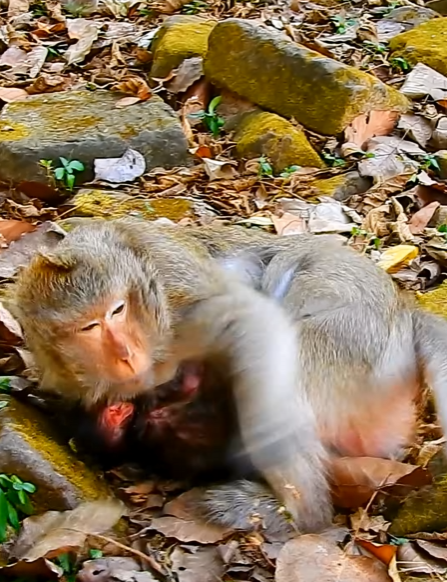
Deep in the lush, green forest, where the sun filters through thick leaves and the air is filled with the calls of countless creatures, a family of monkeys lives a life both simple and complex. Among the branches of towering trees, vines twisting in every direction, and dappled sunlight playing across the forest floor, the small drama of daily life unfolds. At the heart of this story is the tender relationship between a baby monkey and its mother—a bond that is central to the survival, learning, and emotional growth of the little one.
The baby monkey is barely a few months old, a tiny bundle of fur, curiosity, and energy. From the moment of birth, its world has been defined by the warmth, protection, and guidance of the mother. She carries him carefully, moving through the trees with a balance and agility that seems effortless to human eyes but is the product of years of instinct and practice. The baby clings to her belly or back, tiny hands gripping fur, tail curling for balance, and eyes wide with wonder at the moving world around him. The forest is vast, full of colors, sounds, and textures, and through his mother’s presence, the baby feels safe enough to begin exploring it.
Life in a monkey troop is social and dynamic. Every movement, every sound, every small action has meaning. Monkeys are intelligent, observant, and emotionally expressive. The baby monkey is learning these lessons from the very beginning. The mother is both protector and teacher. She watches not only for predators or dangers but also monitors how her infant interacts with the environment and other troop members. She subtly guides him, allowing small explorations while ensuring that he stays safe. Even a short climb to a branch slightly farther away becomes a lesson in coordination, trust, and confidence.
One of the most striking aspects of the baby-mother relationship is the importance of touch and grooming. From birth, grooming is a vital practice in monkey life. The mother uses her hands and teeth to carefully comb through the baby’s fur, removing tiny debris and parasites. This action is not merely functional; it is deeply comforting. The rhythmic movement, the warmth of her body, and the gentle sound of her voice-like calls provide security. Grooming teaches patience, trust, and attentiveness, and for the baby, it is a moment of connection that strengthens their bond.
As the days progress, the baby becomes more curious and independent. He begins to stretch his limbs, testing balance and muscle strength. He tentatively reaches for nearby leaves, feeling their texture and movement. The mother allows these small experiments, remaining close but not interfering. In these moments, she teaches an invaluable lesson: the world is to be explored, but with awareness, caution, and respect for boundaries. Every small attempt at independence is met with subtle guidance—a soft call, a nudging tail, or the steady presence of her gaze.
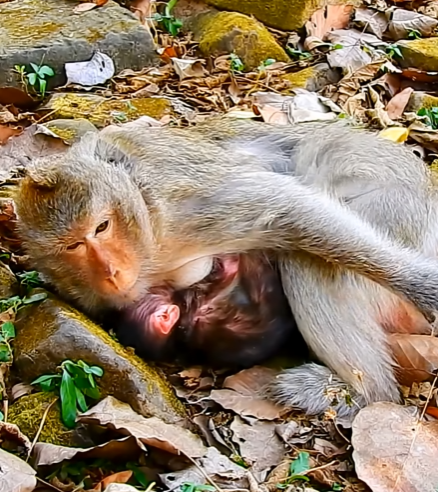
Emotion is an integral part of monkey life, and the baby monkey is already learning how to navigate it. Moments of fear, frustration, or discomfort are natural and necessary for growth. When the baby slips slightly on a branch or encounters something unfamiliar, he looks instinctively to his mother for reassurance. She responds with calm and confidence, offering comfort and physical support if needed. These interactions teach the baby that emotions are manageable, that support is available, and that mistakes are part of learning. Over time, this emotional education forms the basis of social intelligence, resilience, and trust.
Feeding is another central component of the mother-baby relationship. Nursing provides not only nutrition but also warmth, rhythm, and emotional security. The baby often feeds while clinging to the mother, a practice that strengthens the bond and ensures his survival. The act of breastfeeding is intertwined with touch, eye contact, and subtle communication. Even when the baby is drowsy or distracted, the mother responds to small cues, adjusting her position, maintaining a steady presence, and providing reassurance. This constant attunement fosters trust and a sense of safety, crucial for the infant’s growth and confidence.
The baby’s curiosity eventually leads to interactions with other young monkeys. Play is essential for development—it teaches coordination, social skills, and emotional resilience. However, the mother carefully monitors these interactions. She allows playful exchanges but steps in if the baby is overwhelmed or at risk. These lessons are vital: the infant learns boundaries, negotiation, and the give-and-take of social life. The mother models appropriate responses to both excitement and conflict, showing that care, patience, and understanding are as important as strength and agility.
Over time, the baby begins to mimic the behaviors of older troop members. He observes eating patterns, grooming techniques, and methods of communication. The mother’s presence provides a safety net as he experiments with new actions. She occasionally demonstrates or guides, ensuring that learning is gentle, deliberate, and safe. This combination of observation, guidance, and trial-and-error is crucial for the baby’s development, shaping the skills he will need to survive and thrive within the troop.
The forest itself is both a playground and a classroom. The baby experiences changes in terrain, weather, and light. He learns to navigate narrow branches, avoid obstacles, and anticipate the movement of others. The mother’s steady presence allows him to take risks safely. Her eyes, always alert, communicate reassurance without intruding. Each small success builds confidence, while each minor misstep becomes a teaching moment. Over time, the baby develops agility, coordination, and situational awareness—all skills essential for a life in the forest.
Emotional bonding is reinforced in quiet moments, too. The mother and baby share time resting together, listening to the sounds of the forest, and observing the movement of the troop. These moments of stillness are as important as play or feeding. They provide the baby with a sense of rhythm and continuity, teaching him to interpret the world not only through action but also through observation and patience. Emotional intelligence, trust, and attachment are all nurtured in these calm, intentional spaces.
As the baby grows, he begins to show personality traits. He expresses curiosity, playfulness, stubbornness, and sometimes even sulking. These emotions are natural and important for development. When he sulks or resists, the mother responds with a combination of patience and gentle guidance, teaching him how to express feelings appropriately and how to regulate emotions. Through these interactions, the baby learns empathy, social cues, and the subtle dance of communication within the troop.
The mother, in turn, exhibits remarkable resilience and adaptability. Her day is filled with vigilance, movement, and care, yet she balances her own needs with those of her baby. She forages for food, engages with other troop members, and navigates dangers—all while maintaining close attention to her infant. This balance demonstrates the depth of maternal instinct and the complexity of monkey social life. Survival in the forest depends not only on physical skill but also on emotional intelligence and social cohesion, and the mother embodies all of these qualities in her daily actions.
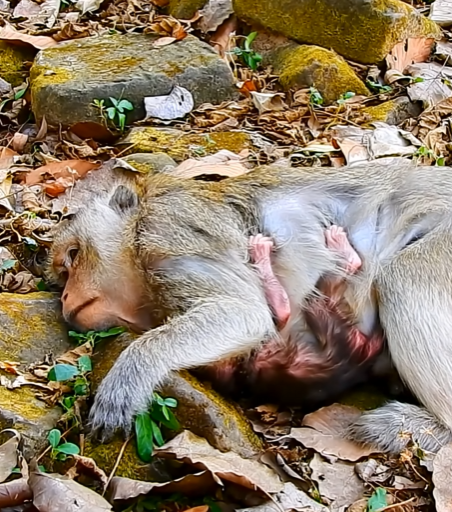
The bond between baby and mother is evident in their synchronized movements. When the baby climbs, she moves to maintain proximity. When he sleeps, she remains near, body coiled protectively around him. The subtle touch of a tail, a gentle nudge, or a grooming gesture communicates reassurance, love, and safety. In this way, the mother is both teacher and protector, guiding the baby through a world that is simultaneously beautiful, challenging, and full of learning opportunities.
Over weeks and months, the baby’s confidence grows. He begins to explore further from his mother, climbing higher, leaping longer distances, and interacting more with other troop members. Yet, the bond remains strong. The mother remains a constant presence, providing support when needed but allowing independence to flourish. This balance of attachment and autonomy is crucial for the baby’s development, ensuring that he grows both strong and socially adept.
The life of monkeys is a delicate combination of instinct, learning, and emotional connection. Observing the daily interactions between a baby monkey and his mother reveals a complex world where nurturing, guidance, and trust are central. Every movement, every touch, every vocalization is part of a larger conversation about survival, social cohesion, and emotional well-being. Through the mother’s care, the baby learns not only the skills to navigate the forest but also the emotional intelligence to interact successfully with others.
In conclusion, the life of monkeys is a tapestry woven with movement, emotion, and connection. The relationship between a baby monkey and his mother is central to this experience, providing safety, guidance, and love. From feeding and grooming to play, exploration, and quiet observation, the mother nurtures the baby’s physical, emotional, and social development. The bond between them teaches patience, resilience, and trust—qualities that will serve the baby throughout his life. In watching this relationship, we glimpse the remarkable intelligence, empathy, and complexity of the animal world, reminding us that the lessons of care, attachment, and learning are universal, transcending species.