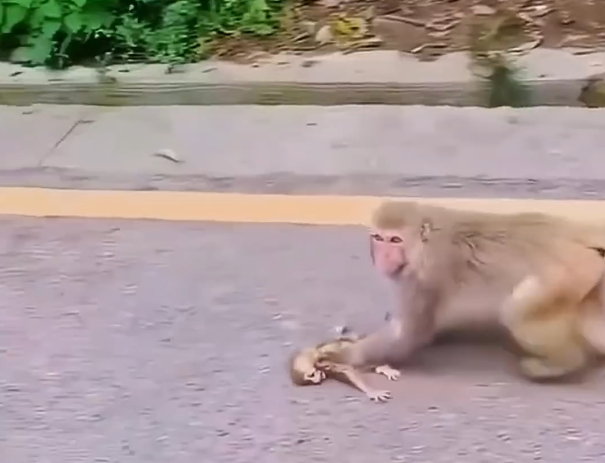
At first glance, it can be shocking. A mother monkey pushes her baby away, ignores its cries, or seems rough as the baby clings desperately to her fur. To human eyes, it may look cold, even cruel. Viewers often ask, Why does a mother monkey treat her baby like this? The answer lies not in a lack of love, but in the complex, instinct-driven world of animal behavior—where survival, learning, and long-term care matter more than momentary comfort.
To understand a mother monkey’s actions, we must step out of human emotion for a moment and into the natural rules that guide animal life.
In the wild, motherhood is not about constant softness. It is about preparing a baby to survive in a dangerous, unpredictable world.
From the moment a baby monkey is born, its mother is responsible for keeping it alive. She provides warmth, milk, protection, and guidance. In the early days, she holds her baby constantly. The baby clings to her chest or back, nursing frequently and rarely leaving her body. During this stage, the bond is intense and visibly affectionate. Grooming, cuddling, and constant contact dominate their interaction.
But this stage cannot last forever.
As the baby grows stronger, heavier, and more curious, the mother’s behavior begins to change. This is where many people become confused or upset. The baby wants to cling all the time. The mother begins to resist.
This is not rejection—it is teaching.
In monkey societies, independence is essential. A baby that clings too long becomes a liability, not just to itself, but to the entire troop. Predators, territorial fights, and food competition require agility and awareness. A baby must learn to move on its own, recognize danger, and interact with others.
When a mother monkey pushes her baby away or refuses constant contact, she is encouraging exploration. She is saying, in the language of instinct, “You must learn to stand on your own.”
This can look harsh.
A baby monkey may cry loudly when the mother moves away. It may reach out, squeal, or chase after her. Sometimes the mother ignores these cries. Sometimes she gives a quick warning nip or swat—not to harm, but to set boundaries. These actions are brief, controlled, and purposeful.
In animal behavior, boundaries are education.
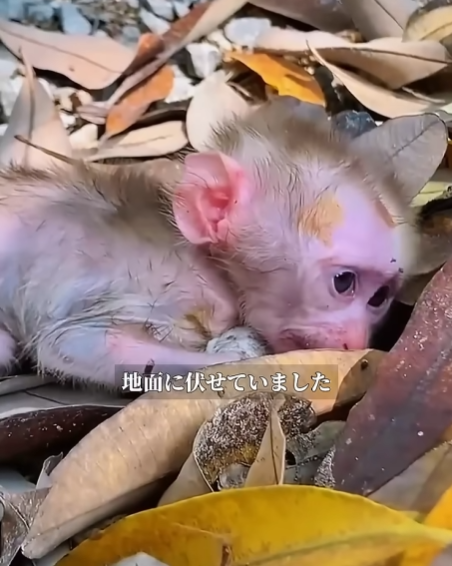
Another reason a mother may treat her baby “roughly” is weaning. Nursing takes enormous energy. As the baby grows, it must transition to solid food. The baby resists this change, because milk is comforting and easy. The mother resists the baby, because her body needs recovery and the baby needs nutrition beyond milk.
This struggle is normal.
The baby pulls at the mother, trying to nurse. The mother pushes the baby away, moves, or distracts it. To humans, this may look like neglect. In reality, it is a necessary step toward health and survival. A baby that does not learn to eat independently will not survive in the wild.
Sometimes, the mother even leaves the baby temporarily.
This is one of the most misunderstood behaviors. Viewers may see a baby monkey alone and assume abandonment. But often, the mother is nearby—watching, listening, ready to intervene if danger appears. She allows short separations so the baby learns confidence and awareness.
In monkey life, constant supervision is not possible. A baby must learn quickly.
Social structure also plays a role. Monkeys live in groups with complex hierarchies. A baby must learn how to behave not just with its mother, but with others. If a baby becomes too dependent, other monkeys may react aggressively. The mother’s distancing helps integrate the baby into the troop safely.
Interestingly, the way a mother treats her baby can also depend on stress.
If food is scarce, predators are nearby, or the troop is under threat, the mother may appear more impatient or strict. This does not mean she loves her baby less—it means survival pressure is higher. Stress changes behavior in all animals, including humans.
In some cases, a mother monkey may seem unusually cold or detached. This can happen if the baby is weak, sick, or unlikely to survive. In the wild, investing all energy into a baby that cannot live may endanger the mother and future offspring. This is one of the hardest truths of nature.
It is not cruelty. It is biological reality.
That said, most mother monkeys are deeply bonded to their babies. Even when they push them away, they watch closely. When danger appears, the mother reacts instantly. She grabs the baby, shields it, or attacks threats without hesitation. The bond never disappears—it simply changes form.
One of the clearest signs of maternal care is grooming. Even when a mother limits physical clinging, she often grooms her baby. Grooming reduces stress, removes parasites, and reinforces emotional connection. It is a quiet, powerful expression of love in monkey society.
Another misunderstood behavior is discipline.
A mother may bite lightly, hit briefly, or vocalize sharply at her baby. These actions are quick and controlled. They are not abuse. They are corrections—similar to how adult monkeys discipline each other. The baby learns social rules: what is allowed, what is dangerous, what is unacceptable.
Without this discipline, a baby monkey would grow into an adult that cannot function in the troop.
Human observers often project emotions onto animals based on facial expressions or crying sounds. A baby monkey’s cry sounds heartbreaking. But crying does not always mean suffering—it often means frustration. The baby wants something it cannot have. Learning to cope with that frustration is part of development.
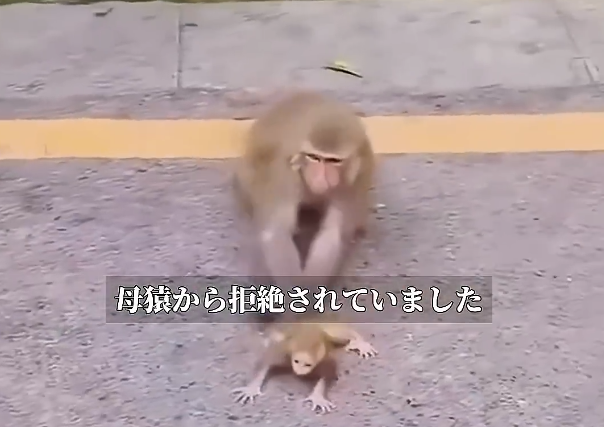
In the context of #AnimalProduction or wildlife content, these moments are often edited or presented without explanation, leading to misunderstanding. Viewers may see a short clip of a mother pushing her baby and assume the worst. But animal behavior cannot be understood in seconds—it requires context.
The life of monkeys is built on balance.
Too much protection creates weakness.
Too much distance creates danger.
A good mother finds the middle ground instinctively.
There are also differences between species. Some monkey species are more tolerant and gentle. Others are more strict and hierarchical. What looks harsh in one species may be completely normal in another. Environment, troop size, and individual personality all influence maternal behavior.
Even within the same species, mothers are not identical. Some are more patient. Some are more firm. Just like humans.
What never changes is the goal: survival.
When you see a mother monkey treating her baby in a way that seems confusing or upsetting, it helps to ask a different question. Not “Why is she being mean?” but “What is she teaching?”
Often, the answer is strength.
Sometimes, it is independence.
Sometimes, it is awareness.
Sometimes, it is resilience.
These lessons are taught early because the wild does not wait.
The most powerful evidence of a mother’s love appears in moments of danger. When predators approach, mothers risk their lives. When the troop fights, mothers shield their babies. When chaos erupts, babies are the first priority.
That is love—expressed not through constant comfort, but through fierce protection and preparation.
In the end, a mother monkey treats her baby the way nature has shaped her to. Not to hurt, not to reject, but to prepare. What looks harsh through human eyes is often the very reason that baby will grow up strong, capable, and alive.
Understanding this helps us respect wildlife more deeply—not by forcing human emotions onto animals, but by appreciating the wisdom of nature as it is.
Because in the life of monkeys, love is not always gentle—but it is always purposeful.