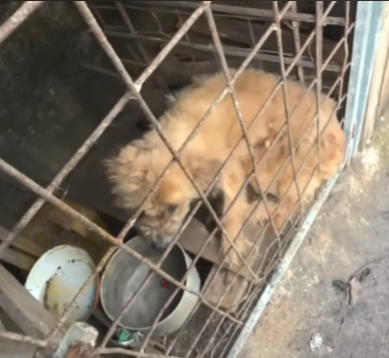
He didn’t look like a dog anymore when they first found him. Curled in the corner of an abandoned shed, half-hidden beneath broken boards and old trash, his body blended into the dirt and darkness. His fur was stiff with grime, tangled into hard clumps that pulled painfully at his skin. The smell of filth clung to him so heavily it filled the air before he even moved. Hunger had hollowed him out, leaving a fragile frame that barely rose and fell with each breath.
Yet he was alive.
For weeks—maybe months—this dog had survived in conditions no living creature should endure. There was no clean water, no proper shelter, no reliable food. Rain leaked through the roof and turned the ground beneath him into mud. Insects crawled through his fur. Cold nights forced him to curl tighter into himself, using his own thin body for warmth. Hunger became a constant ache, then a numbness. Filth became normal. Pain became routine.
And still, he held on.
No one knew how he ended up there. Maybe he was abandoned when caring for him became inconvenient. Maybe he was never truly wanted. Whatever the reason, the result was the same: a living being left to slowly disappear.
When rescuers opened the shed door, light spilled in, sharp and sudden. The dog didn’t run. He didn’t bark. He didn’t even lift his head at first. Survival had taught him that movement wasted energy, and energy was something he couldn’t afford to lose.
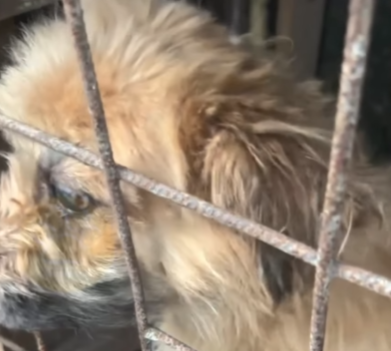
One rescuer knelt down and spoke softly. The dog’s eyes opened—a dull brown, clouded with exhaustion and uncertainty. Fear flickered there, but not aggression. He had no strength left for that. When a gentle hand reached toward him, he flinched, then froze, bracing for pain that never came.
That moment changed everything.
They carried him out carefully, supporting his body so his weak legs didn’t dangle. He weighed almost nothing. Dirt fell from his fur in small showers as he moved. Outside, fresh air touched his lungs, and he breathed a little deeper, as if his body recognized something different—something better.
The ride to safety was quiet. Wrapped in a blanket, he lay still, eyes open, watching the world pass by through half-closed lids. Cars, trees, sky—things he may not have seen clearly in a long time. He didn’t know where he was going, but for the first time, he wasn’t alone.
At the rescue center, the staff paused when they saw him. Even among experienced animal caregivers, his condition was shocking. Severe malnutrition. Dehydration. Skin infections hidden beneath layers of filth. Mats so tight they pulled at his flesh with every movement. The vet examined him carefully, speaking in calm tones, outlining a long road ahead.
But first, there was something he needed more than medicine.
A bath.
The water was prepared warm—not hot, not cold—just right. Steam rose gently from the tub. The room was quiet, peaceful. When they placed him near the water, he stiffened. His body remembered cold rain, filthy puddles, discomfort. He tried to pull away, confusion and fear mixing in his tired eyes.
They went slowly.
A hand dipped into the water first, letting him see it wasn’t dangerous. Then another hand touched his shoulder, steady and reassuring. When the first cup of warm water poured over his back, he flinched hard, muscles tightening. But then… he relaxed.
Something unexpected happened.
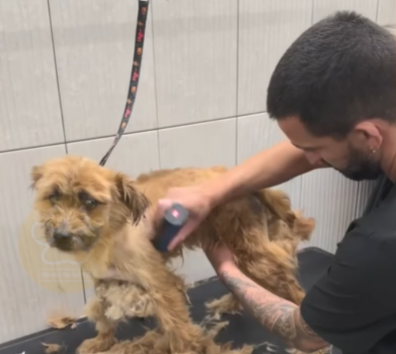
The warmth soaked through his filthy fur and reached his skin, and his body responded in a way it hadn’t in a long time. His breathing slowed. His head lowered. He didn’t resist anymore. He simply stood there, letting the water wash over him, as if surrendering to comfort he never knew existed.
As the dirt loosened, the water turned dark, carrying away layers of neglect. The smell began to fade. Mats were carefully worked through, some cut away to relieve the painful pulling. Underneath, skin appeared—red, irritated, but alive. With each rinse, more of the dog beneath the filth was revealed.
His eyes softened.
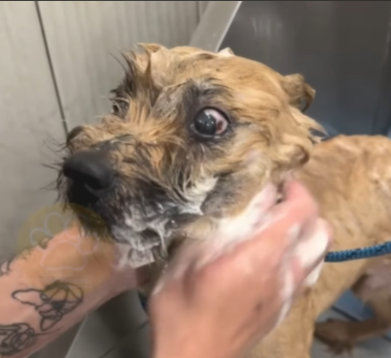
When gentle soap was massaged into his coat, he closed his eyes completely. Not from exhaustion this time, but from relief. Warm water. Gentle hands. No rushing. No harm. It was the first time his body had known care instead of survival.
By the end of the bath, the dog looked smaller—and somehow bigger at the same time. Smaller without the weight of filth dragging him down. Bigger because his presence was finally visible. Wrapped in a clean towel, he was lifted and held close. He leaned into the warmth instinctively, pressing his head against the rescuer’s chest.
That was the moment everyone knew: he understood something had changed.
After the bath came food—small portions, carefully measured. His stomach couldn’t handle much at first. He ate slowly, cautiously, as if afraid the food might disappear if he rushed. Each bite was a victory. Each swallow, a step away from hunger.
Days passed, and the transformation continued.
With clean bedding, warmth, and regular meals, his body began to respond. He slept deeply, no longer needing to stay alert for danger. His ribs were still visible, his strength still limited, but his eyes grew brighter. His tail gave small, uncertain wags when familiar caregivers entered the room.
Trust was rebuilding itself.
Medical treatments addressed infections and parasites. His skin began to heal. New fur grew in soft patches where mats had been removed. Slowly, carefully, he learned that hands could mean comfort, not pain. That voices could be gentle. That the world was not only cold and dirty.
One morning, he stood up on his own and stretched.
It was a simple movement—something healthy dogs do without thought—but for him, it was monumental. Muscles stiff from neglect loosened. His body remembered how to exist without constant discomfort. The room filled with quiet smiles.
As weeks turned into months, the dog who once survived filth and hunger began to discover joy.
He learned what toys were, even if he didn’t quite understand how to play at first. He learned that grass felt good under his paws. He learned that sunlight could be warm without being harsh. He learned that baths, once frightening, could be followed by cuddles and treats.
Most importantly, he learned that he was safe.
Eventually, a family came to meet him. They sat on the floor, letting him approach at his own pace. He sniffed, hesitated, then leaned into them, tail wagging with quiet confidence. He wasn’t the same dog who had been pulled from the shed. He was stronger now—inside and out.
The day he left the rescue center, he paused at the door and looked back. Not in fear. Not in uncertainty. But with calm acceptance. His past was behind him. His future waited.
Now, when he gets a bath, it’s routine. Warm water, gentle soap, soft towels. He stands patiently, sometimes even closing his eyes again, remembering—perhaps without realizing it—that this warmth once saved him.
His story is not just about survival. It’s about transformation. About how compassion can pull a living soul out of filth and hunger and give him dignity again. About how a warm bath can be more than cleanliness—it can be the first step into a safe, loving life.
He survived when he shouldn’t have had to.
And now, finally, he is living.