In a quiet corner of a rural village, where banana trees leaned lazily toward the sun and the air carried the scent of damp earth, a small drama unfolded that few humans ever notice. High in the branches, a baby monkey clung uncertainly, its tiny fingers trembling as it tried to follow the rest of the troop. Life in the wild teaches lessons quickly, and not all of them are gentle. The little monkey, smaller and weaker than the others, struggled to keep up. Its cries were soft, almost lost among the rustling leaves.
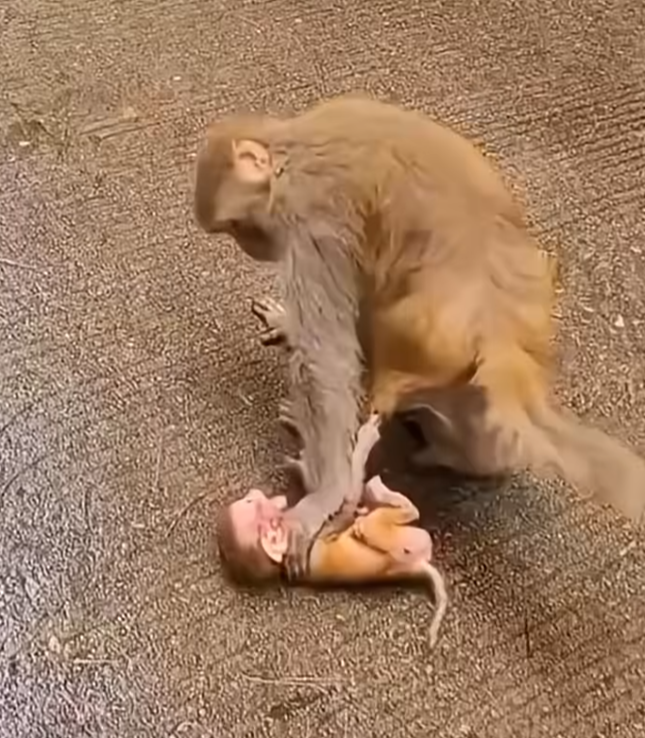
Among monkeys, mothers are usually fierce protectors. But sometimes stress, lack of food, or fear can change behavior in ways that are hard to understand. On that day, the baby’s mother pushed it away repeatedly, refusing to let it nurse or cling to her. Each attempt the baby made to get close was met with rejection. Confused and frightened, the little one fell to the ground, landing in a patch of grass at the edge of the village.
Watching from a distance was a man named Dara, a farmer known for his quiet nature and gentle heart. He had grown up alongside the forest, learning to respect animals and the balance of nature. Dara was not the kind of man who interfered without reason. He understood that wild animals live by their own rules. But as he watched the baby monkey struggle, something inside him stirred. The tiny creature cried softly, looking up toward the trees where its mother remained, unmoved.
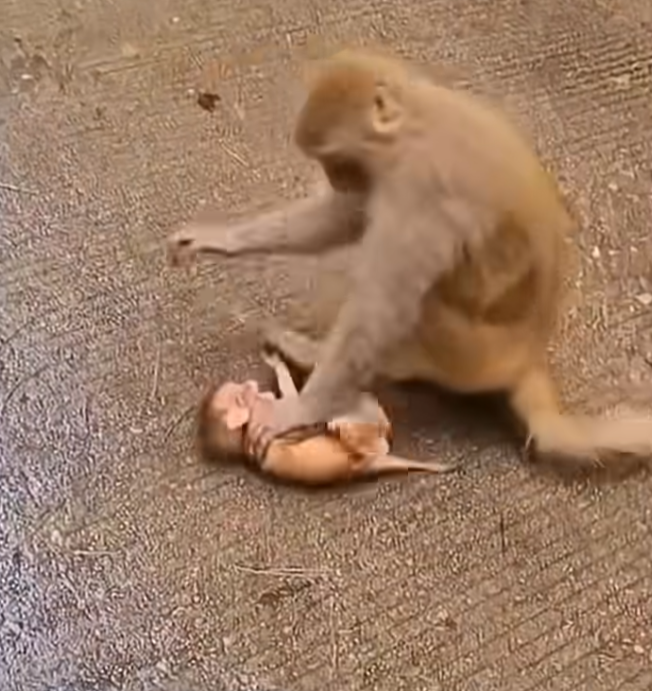
Dara waited. He told himself that perhaps the mother would return, that this was just a moment of discipline or confusion. Minutes passed, then longer. The baby monkey tried to climb but slipped again and again. Ants crawled near its feet. The sun grew hotter. Still, the mother did not come.
That was when Dara made a choice—one guided not by instinct alone, but by compassion.
Slowly, calmly, he approached. He crouched low, speaking softly, careful not to frighten the baby. The monkey looked up with wide, unsure eyes, its small chest rising and falling quickly. Dara extended his hand, not to grab, but to offer support. The baby hesitated, then reached out, wrapping its fingers around his thumb with surprising strength.
In that simple moment of contact, trust was born.
Dara gently lifted the baby and wrapped it in a clean cloth. He brought it to his home, a modest wooden house with open windows and the sounds of village life drifting in. He knew the risks of caring for a wild animal, but he also knew that leaving the baby alone would almost certainly lead to tragedy.
The first days were not easy. The baby monkey cried often, searching for its mother. Dara fed it carefully, following advice from a local wildlife volunteer. He kept the baby warm at night and close during the day, allowing it to cling to his shirt as it slept. Slowly, the cries softened. The baby began to relax, to observe, to play.
What surprised Dara most was how quickly love filled the space between them.
The baby monkey followed him everywhere, learning his routines, watching as he worked in the garden or prepared simple meals. It learned the sound of his footsteps and the calm rhythm of his voice. Dara never treated the monkey as a toy or a possession. He treated it as a life that had been entrusted to him, even if only for a short time.
Over time, the baby grew stronger. Its fur became shinier, its movements more confident. It laughed—a light, breathy sound—when Dara gently tickled its belly or offered it fruit. The house, once quiet, now echoed with small, joyful noises.
But Dara knew that love also means knowing when to let go.
As weeks passed, he began bringing the baby closer to the forest edge again, allowing it to see and hear other monkeys from a safe distance. At first, the baby clung tightly, unsure. But curiosity soon replaced fear. It watched the troop, copying their movements, responding to their calls.
One afternoon, something remarkable happened. The troop approached closer than before. Among them was the baby’s mother. She paused, watching from a branch above. The baby froze, then reached out instinctively, making a small call it had not used in weeks.
The moment was fragile, filled with uncertainty.
Dara stayed still, his heart pounding. He did not push, did not interfere. He simply allowed space for nature to decide. The mother descended slowly. She examined the baby, sniffed, touched. The baby responded with soft sounds, pressing close.
This time, the mother did not push it away.
With careful movements, she allowed the baby to climb onto her back. The troop shifted, preparing to move on. Before disappearing into the trees, the mother turned once more, looking toward Dara. There was no fear in her eyes—only something that looked like understanding.
Dara stood there long after they were gone, his arms feeling strangely empty. He missed the baby already. But his heart was full.
In rescuing the baby monkey, Dara did not seek praise or recognition. He acted out of kindness, guided by empathy and patience. His story reminds us that love does not always mean keeping what we save. Sometimes, love means protecting, nurturing, and then trusting the world to continue what we began.
In a place where humans and animals share the same land, one small act of compassion created a bridge between species. A baby monkey was given a second chance. A man was reminded of the quiet power of kindness. And somewhere in the forest, a young monkey learned that even in moments of rejection, love can still be found—sometimes from the most unexpected place.