I thought I was prepared when I walked into the shelter that afternoon. I told myself I was just going to look. Maybe donate some supplies. Maybe walk a dog or two. I had rehearsed the excuses in my head—my apartment was small, my schedule unpredictable, my life already full. I didn’t need a dog. I certainly didn’t need the responsibility that came with one.
But life has a way of unraveling our plans the moment we say, “I’m fine the way things are.”
The shelter smelled like disinfectant and damp concrete, layered with something heavier—hope mixed with heartbreak. Dogs barked from different directions, some excited, some desperate, some quiet in a way that felt louder than noise. I walked past kennel after kennel, smiling politely, nodding at volunteers, my heart slowly tightening with every pair of eyes that followed me.
And then I saw him.
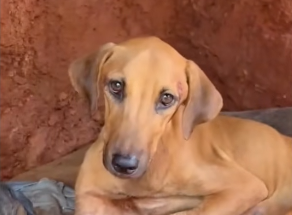
He wasn’t barking. He wasn’t jumping at the gate. He wasn’t trying to impress anyone. He was sitting in the back corner of his kennel, watching everything with tired, observant eyes. His fur was uneven, like it hadn’t known regular grooming in a long time. His ears drooped low, not with fear exactly, but with resignation.
He looked like a dog who had learned not to expect much.
I stopped walking.
He noticed me immediately, lifting his head just slightly. Our eyes met, and something passed between us that I still struggle to explain. Not excitement. Not instant love. Just recognition. Like two souls quietly acknowledging each other’s presence.
A volunteer noticed me lingering. “That’s Milo,” she said softly. “He’s been here a while.”
“How long?” I asked.
She hesitated. “Long enough.”
She told me his story in fragments. Found wandering alone. No microchip. No one came looking. He was gentle, she said. House-trained. A little shy. Overlooked because he wasn’t flashy, wasn’t young, wasn’t loud.
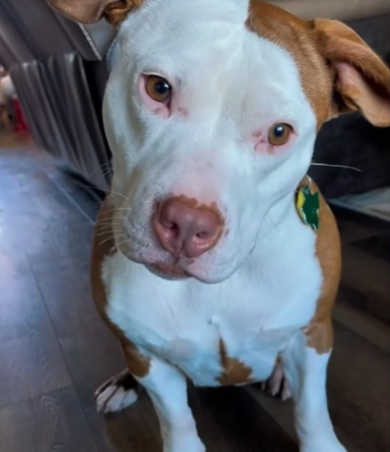
I knelt down in front of the kennel. Milo stood up slowly and walked toward me. He didn’t rush. He didn’t flinch. He pressed his nose gently against the bars, then sat down again, waiting.
That was it.
I don’t remember making the decision. I only remember signing papers with shaking hands and thinking, What am I doing? As if some part of me already knew that everything was about to change.
The ride home was quiet. Milo curled up in the back seat, glancing at me occasionally as if to make sure I was still there. I talked to him the entire way—about nothing, about everything. He listened without judgment, eyes soft, ears twitching at the sound of my voice.
When we got home, I opened the door and stepped aside. “This is it,” I said, trying to sound confident. “Your home.”
Milo didn’t move.
He stood there, leash loose, body still. He sniffed the air cautiously, then looked back at me. I realized in that moment how terrifying change can be—even when it’s good. Especially when it’s good.
“It’s okay,” I whispered.
Eventually, he took one careful step inside. Then another.
The first few days were harder than I expected.
Milo barely ate. He followed me everywhere, not out of affection but out of fear—like he was afraid I might disappear if he took his eyes off me. At night, he paced, unable to settle, waking at every sound. When I left for work, even for short periods, I returned to find him sitting by the door, waiting.
I worried constantly. Was I doing this right? Was I enough for him? Had I made a mistake?
But slowly, something began to shift.
It happened in quiet moments. A sigh when he finally fell asleep. A tentative tail wag when I came home. The way he leaned into my leg while we stood at the kitchen counter, not asking for anything, just needing closeness.

One evening, as I sat on the couch reading, Milo jumped up beside me without hesitation. He circled twice, then lay down with his head resting on my thigh. His body relaxed completely, as if he had been holding tension for years and finally let it go.
I felt something break open in my chest.
From that moment on, the changes came quickly.
Milo discovered toys and didn’t know what to do with them at first. He sniffed them suspiciously, then barked in surprise when one squeaked. He learned the joy of morning walks, stopping to smell everything as if the world was brand new. He learned that food would come every day, that hands were gentle, that voices didn’t have to mean danger.
And I learned too.
I learned patience in a way I never had before. I learned to slow down, to notice small victories. I learned that healing isn’t loud—it’s quiet and incremental and deeply personal.
What I didn’t expect was how much Milo would change me.
Before him, my life was structured but empty in ways I hadn’t acknowledged. I worked, scrolled, slept, repeated. I filled my days but not my heart. Milo gave my routine meaning. He made mornings something to look forward to. He made coming home feel like returning to something that mattered.
He also forced me to confront parts of myself I had ignored.
There were nights when Milo would whimper softly in his sleep, paws twitching, breath uneven. I would wake up and sit with him until he calmed, wondering what memories haunted him. In those moments, I recognized my own unspoken fears, my own past hurts. Somehow, caring for him helped me care for myself.
Weeks turned into months.
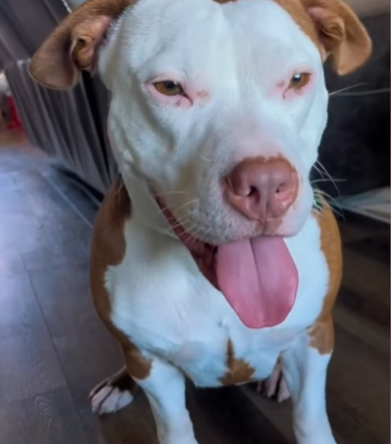
The dog who once sat silently in the back of a kennel now greeted the world with confidence. His fur grew healthier. His eyes grew brighter. His tail wagged freely. Strangers commented on how calm he was, how connected he seemed to me.
They didn’t know the journey behind that calm.
One afternoon, we returned to the shelter—not to adopt again, but to donate supplies. Milo walked in beside me, tail high, curious and alert. As we passed the kennels, dogs barked and jumped, just as they had the day I met him.
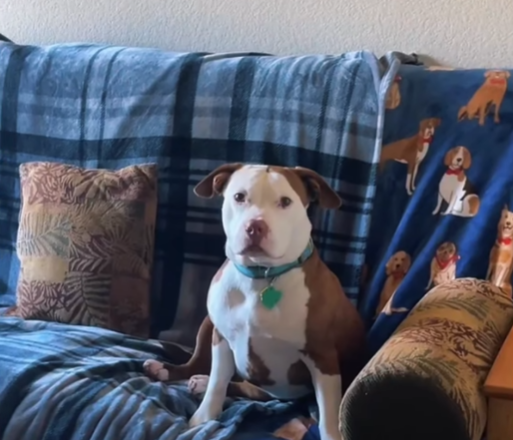
Milo paused.
He looked around slowly, then leaned into my leg.
I knelt down and hugged him, overwhelmed by the realization of how far he had come—and how close I had been to walking away that first day.
Bringing home a shelter dog didn’t just give Milo a home.
It gave me purpose.
It taught me that love doesn’t always arrive in perfect timing or ideal circumstances. Sometimes it comes quietly, sitting in the corner, waiting to be noticed. Sometimes it asks for patience instead of passion, consistency instead of excitement.
And sometimes, when you choose to open your door to a broken soul, you don’t just change their life.
You change your own.
Today, Milo sleeps curled at my feet as I write this. His breathing is steady, peaceful. He trusts this world now. He trusts me.
I brought home a shelter dog thinking I was rescuing him.
What happened next changed everything—because in ways I never expected, he rescued me too.