Deep in the heart of a dense tropical forest, where sunlight filtered through towering trees and dappled the forest floor with golden patterns, life thrived in its most chaotic and fascinating forms. Birds called melodiously from the treetops, insects buzzed and hummed among leaves, and the wind whispered softly through the canopy. Among all these creatures, the monkeys were some of the most expressive, intelligent, and mischievous. Within a particular troop of long-tailed macaques, a story of cunning, survival, and wit was about to unfold—a tale that would mark the lives of both the clever and the bold.
At the center of this story was a young monkey named Liko. Small, brown-furred, and quick-witted, Liko had earned a reputation among his peers as one of the cleverest of his generation. From the moment he could climb, he had observed the world carefully, learning the patterns of other monkeys, the movement of predators, and the hidden secrets of the forest. His mother often watched him with pride, knowing that Liko’s intelligence and alertness would keep him safe in the unpredictable jungle.
However, not all monkeys in the troop shared Liko’s playful and observant nature. Among them was a larger, more aggressive monkey named Karo. Karo had earned a reputation as the “bad guy” of the troop. Bullying younger monkeys, stealing their food, and asserting dominance wherever he went, Karo thrived on intimidation. Despite his size and strength, he lacked the subtle intelligence that made Liko clever. He relied on fear and aggression rather than thought and strategy.
The story began one morning when the troop moved to a new clearing abundant with fruiting trees. The sunlight filtered through the leaves, highlighting the ripe figs, mangoes, and small berries scattered across branches. Monkeys of all ages explored cautiously, balancing skillfully on branches to reach the sweetest fruit. Liko, always observant, waited patiently on a sturdy limb, calculating the best route to reach the ripest figs.
Karo, noticing the cluster of fruit Liko had his eye on, decided to assert dominance. With a loud screech and a show of aggression, he lunged toward the branch where Liko sat, attempting to scare him away and claim the prize for himself. Other monkeys watched quietly, understanding that confrontations like these were common, but often unpredictable.
Liko’s quick mind immediately assessed the situation. He recognized that raw strength would not overcome Karo’s aggression, but cleverness and strategy might. Instead of panicking or retreating, Liko used his knowledge of the branches and vines to his advantage. He leapt sideways onto a neighboring branch, causing Karo to overextend and lose balance slightly. Karo roared in frustration but regained his footing, his sharp eyes fixed on Liko.
The clever monkey’s next move involved deception. Liko reached toward a small, hollow branch filled with figs and pretended to struggle to reach the fruit. Karo, misled by the act, lunged again, hoping to seize the prize. At the precise moment, Liko shifted his weight, causing Karo to slip slightly and scatter a handful of figs to the ground. Quickly, Liko scooped up a few figs for himself and darted onto another branch, grinning at the frustrated Karo below.
Karo’s aggression escalated. He chased Liko across branches, swinging from vines and screeching loudly. The other young monkeys watched in awe and fear, impressed by Liko’s quick thinking and the “bad guy’s” relentless pursuit. Liko used every bit of knowledge he had gained from observing the troop: he avoided weak branches, utilized swinging vines, and even used the shadows of leaves to obscure his movements. The forest became a playground for a game of wit versus strength.

At one point, Liko reached a particularly dense section of the forest where vines crisscrossed in a complex network. He paused, calculating the best route to escape Karo. The larger monkey followed aggressively, confident that his strength would allow him to dominate. Liko suddenly leapt onto a thin vine that bent under his weight but snapped back with perfect timing. He swung like a pendulum, landing safely on a thick branch on the other side. Karo, too heavy for the maneuver, overshot the landing and ended up tangled briefly in the vines, screeching in embarrassment as Liko continued on, triumphant.
Other monkeys in the troop began to notice Liko’s cleverness. Younger ones looked on with admiration, while older ones nodded with respect. Karo, meanwhile, struggled to regain his composure, his pride wounded. He realized that brute strength alone was not enough to dominate someone who combined agility with intelligence. The forest had taught Liko a lesson that would last a lifetime: cleverness and observation often triumph over aggression.
The chase continued deeper into the forest. Liko led Karo on a twisting path through narrow branches, low-hanging vines, and over streams. Every move was calculated to confuse and tire the larger monkey. At one point, Liko dropped a small, lightweight fruit onto a branch near Karo. Distracted, Karo lunged for the fruit, allowing Liko to leap farther ahead. The chase became a lesson in strategy, teaching both the young monkeys watching and Karo himself the value of thinking before acting.
Eventually, the chase brought them to a small clearing where a fallen tree had created a natural bridge over a stream. Liko paused, feigning hesitation, while Karo closed in, ready to assert dominance one last time. With precise timing, Liko jumped onto the fallen tree, balancing with skill, and then used a nearby vine to swing to a higher branch. Karo, unwilling to risk the unstable branch, stopped at the edge, breathing heavily, frustrated and defeated. Liko, safe above, glanced back and gave a soft chirp of triumph.
From that day forward, the troop recognized a new hierarchy—not one based solely on strength, but on intelligence, agility, and the ability to navigate challenges creatively. Liko had proven that being clever and resourceful was as important as being strong. Even the adults acknowledged his quick thinking, and the younger monkeys often sought him out to observe how he handled tricky situations.
Karo, while still aggressive, began to learn from his defeats. He observed Liko carefully, noticing how planning, patience, and observation gave the clever monkey an advantage. Slowly, he adapted, understanding that intimidation alone was insufficient in a world that demanded strategy and wit. In many ways, the encounter transformed both monkeys: Liko gained confidence in his abilities, and Karo gained insight into the value of thinking before acting.
Beyond the chase and the rivalry, there was another lesson in the story—one about community and social learning. Other monkeys in the troop absorbed the events, learning from both Liko’s clever maneuvers and Karo’s mistakes. Youngsters began to imitate Liko, practicing careful leaps, vine swings, and calculated decisions. Even older juveniles and adults sometimes observed the interactions, gaining subtle reminders that intelligence and observation were essential survival tools.
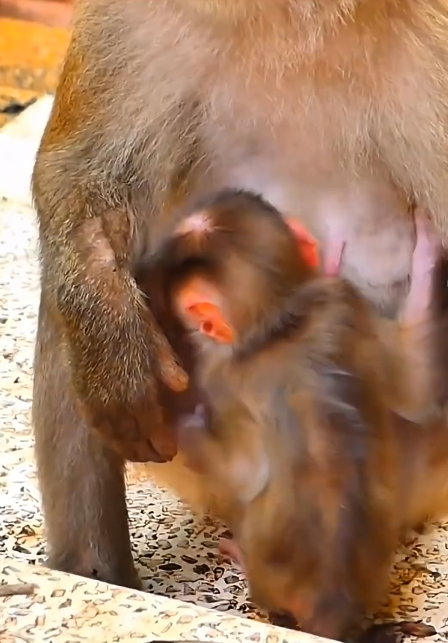
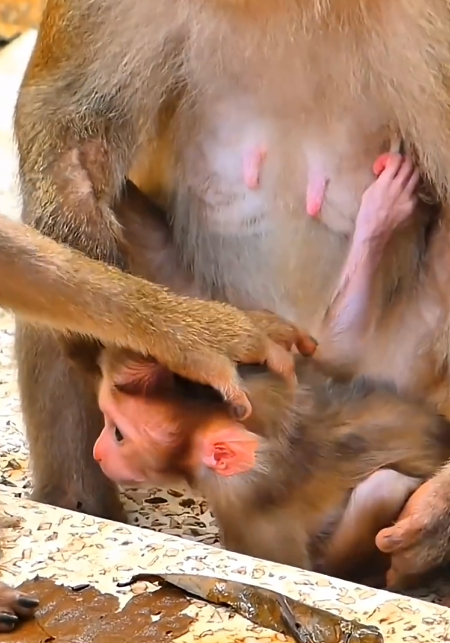
Later that afternoon, after the excitement had settled, Liko rested on a sturdy branch with his mother nearby. She groomed him carefully, removing leaves and small insects from his fur. He nuzzled her chest, calm and content after the morning’s trials. Mira’s eyes reflected pride, not just in his safety but in the cleverness he displayed. She understood that intelligence was as crucial as strength, and Liko had learned to combine both in a way that would serve him well for life.
Meanwhile, Karo sat alone, reflecting on his failure. Though frustrated, he began to understand that aggression without strategy could backfire. Over time, he slowly adjusted his behavior, learning to respect the clever monkeys in the troop. Though he remained larger and stronger, his approach became more calculated, more cautious, and occasionally cooperative. The forest, in its own way, had taught him humility and the importance of observation.
In the following days, Liko continued to display his cleverness in smaller ways—finding hidden fruit, avoiding minor conflicts, and even helping younger monkeys navigate tricky branches. Karo, now slightly less aggressive, sometimes observed him from a distance, a silent acknowledgment of the lessons learned. The dynamic between the “bad guy” and the clever monkey became a defining story within the troop, a tale shared through chirps, gestures, and the behaviors of others.
The forest, alive with constant movement and learning, remained a place where intelligence, strategy, and social awareness determined success as much as strength. Liko’s story was not just about outsmarting Karo—it was about understanding the rhythms of the forest, observing carefully, and acting with purpose. Every branch, vine, and clearing became a classroom, every encounter a lesson, and every choice a step toward survival and growth.
By sunset, the troop gathered in the safety of higher branches. Liko nestled against Mira, tired but proud, while Karo lingered nearby, quietly reflecting. The forest glowed in golden hues, the rustle of leaves and distant birdcalls creating a serene backdrop. Observers could see that intelligence, courage, and cleverness were not just survival tools—they were pathways to respect, admiration, and personal growth.
As night fell, the lesson of the day settled into the troop’s collective memory. The clever monkey had triumphed not through aggression, but through careful planning, observation, and quick thinking. The “bad guy” had learned that strength alone could not dominate a mind that thought ahead. And the younger monkeys, watching closely, absorbed one of the most important lessons the forest could offer: brains often win over brawn.
In this small, vibrant community, life continued—full of challenges, excitement, and learning. The story of Liko and Karo became a legend among the troop, told through gestures, mimicry, and the playful interactions of future generations. The forest itself seemed to acknowledge the clever monkey, as if rewarding his intelligence with continued safety, abundant fruit, and the admiration of peers.
Thus, the tale of the “bad guy” and the clever monkey remained not just a story of rivalry, but a lesson in courage, intelligence, and survival. It reminded all who observed—or later heard the story—that cleverness, patience, and strategic thinking are invaluable, sometimes more important than brute strength. And in the heart of the forest, where every day presented new challenges and opportunities, these lessons would endure for generations to come.