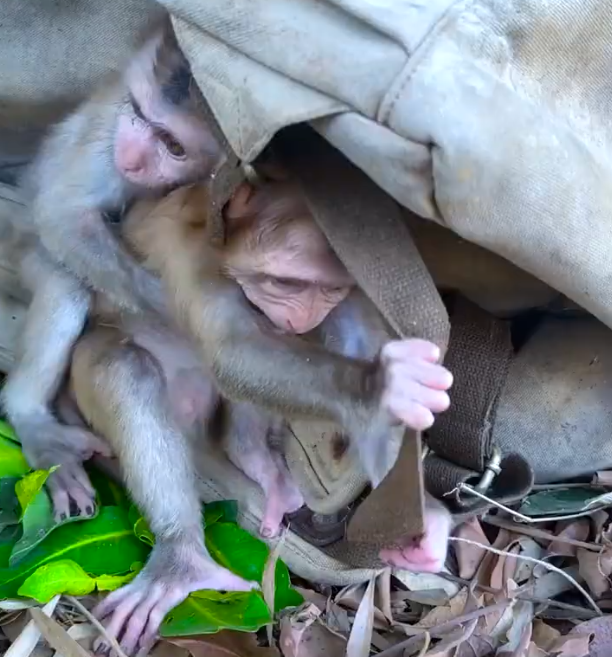
In the dense canopy of a tropical forest, where sunlight filtered through layers of leaves and painted the ground with dancing patterns of light and shadow, life unfolded in its natural rhythm. Among the lush greenery, a troop of long-tailed macaques made their home, moving with agility, curiosity, and a social complexity that reflected both intelligence and playfulness. At the heart of this troop were two young monkeys, children of the forest, who had become inseparable companions.
Liko and Kima, both toddlers in monkey terms, were of the same age and shared an unspoken bond. Their mothers often sat nearby, foraging or resting, but the two young monkeys preferred to spend their days exploring and playing together. The forest was their playground: branches were ladders, vines were ropes, leaves became props for their imaginary games, and small clearings were arenas for playful contests. They moved at their own pace, free from the strict rules that governed the adults, yet always mindful of the rhythms and dangers of the jungle.
Morning arrived with a golden glow, casting warm light across the leaves and highlighting the fine textures of bark and moss. Liko, the slightly bolder of the two, spotted a low-hanging branch adorned with ripe figs. His eyes sparkled with excitement. “Come on, Kima!” he squeaked, motioning toward the branch. Kima, more cautious but equally curious, tilted her head, considering the challenge. She followed Liko carefully, observing how he approached the branch and tested his balance.
Their mothers watched from nearby, alert but relaxed. They had learned that these play sessions were essential for growth and learning. The young monkeys developed coordination, problem-solving skills, and social bonds through play, and these lessons were often as valuable as any direct instruction. Liko and Kima, aware of the forest around them but not yet fully understanding its dangers, were guided by instinct, curiosity, and a shared sense of adventure.
Reaching the branch, Liko demonstrated how to pluck a fig carefully, tearing it open with tiny but deft fingers. Kima observed, then attempted the same, occasionally fumbling but learning quickly from her friend’s example. The figs, sweet and juicy, rewarded their efforts, and the two toddlers nibbled while swinging lightly from the branches, enjoying the fruits of their exploration.
As the morning progressed, their play became more elaborate. Liko discovered a long vine dangling from a tree trunk. With a mischievous glint in his eye, he grabbed it and swung gently back and forth, testing the strength of the vine and his own balance. Kima, fascinated, clutched a nearby branch and observed, then gathered the courage to join in. Soon, they were swinging side by side, laughing in the language of monkeys—a series of chirps, squeaks, and playful shrieks that echoed through the forest.
The adults nearby remained vigilant, their eyes scanning the canopy and forest floor for any signs of predators or dangers. Yet, they allowed the children to explore, understanding that independence in small doses was crucial for developing confidence, agility, and problem-solving abilities. Liko and Kima moved at their own pace, sometimes bold, sometimes hesitant, but always together, learning from each other and from the forest itself.
After swinging from the vine, the young monkeys discovered a small clearing where the sunlight streamed through in golden shafts. Here, the forest floor was soft with moss and fallen leaves. They rolled, tumbled, and chased one another, giggling and squealing in pure joy. The forest seemed to embrace their play, each rustle of leaves, each birdcall, and each breeze providing a soundtrack to their adventure.
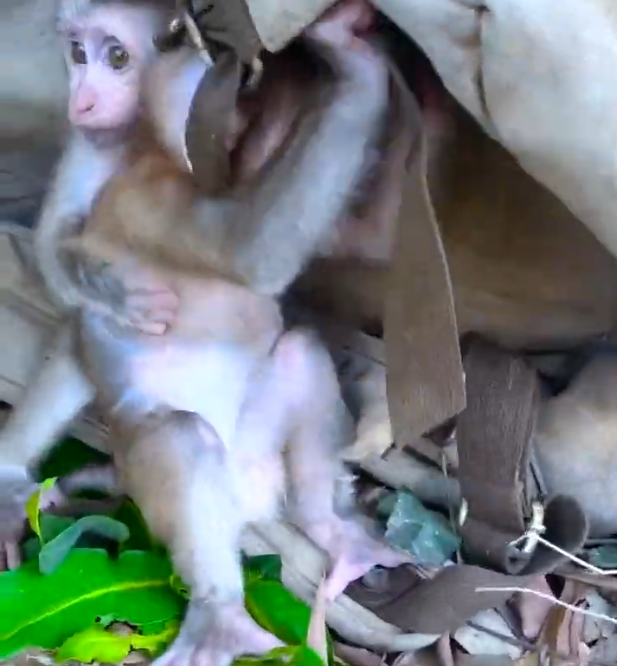
At one point, Kima spotted a shiny insect crawling along a leaf. She pointed it out to Liko, who crouched down for a closer look. Their fascination with the tiny creature reflected the curiosity that drove all their explorations. Carefully, they observed its movements, learning about the world through direct interaction. This curiosity, tempered by caution, allowed them to develop knowledge of their environment while having fun.
The morning wore on, and the sun climbed higher, warming the branches and leaves. Liko and Kima took a break, sitting side by side on a sturdy branch. They nibbled on figs, their small hands sticky with juice, and occasionally brushed crumbs from one another’s fur in playful gestures. These moments of rest were as important as the more energetic play, allowing them to catch their breath and absorb the sensory richness of the forest around them.
As the day continued, their play evolved. They began inventing games, using leaves, sticks, and small fruits as props. Liko created a pretend game of hunting, stalking imaginary prey through the underbrush while Kima, acting as both scout and opponent, devised clever ways to outmaneuver him. Their interactions were a mixture of cooperation, competition, and negotiation—a microcosm of the social skills that would guide them throughout life.
Occasionally, one of the juveniles would misstep, slipping on a branch or falling into a patch of leaves. But their mothers had taught them that minor errors were part of learning. Liko and Kima quickly adapted, helping each other regain balance, sharing warnings, and offering gentle nudges of encouragement. Their play was not just fun—it was a form of education, a way to prepare for the complexities of forest life.
In the mid-afternoon, they discovered a small, clear stream flowing through the forest. The water glimmered in the sunlight, and the soft murmur of flowing water added a calming backdrop to their energetic play. Liko dipped a tiny hand into the water, watching the ripples spread outward. Kima followed, splashing gently and squeaking with delight. The stream became another playground, a source of sensory exploration, and a natural stress reliever. They experimented with tossing small stones, watching leaves float downstream, and observing tiny aquatic creatures that scuttled along the edges.
The mothers remained nearby, occasionally dipping a hand into the water to cool themselves or to wash a paw, silently teaching by example. The children mirrored these actions, learning through observation and imitation. The interplay of curiosity, mimicry, and guided independence was a hallmark of their early development.
As the afternoon sunlight softened, Liko and Kima ventured toward a small grove of fruiting trees. They climbed, leaped, and explored at their own pace, savoring each moment. Occasionally, they paused to rest, nibble on fruits, or simply observe the forest. These pauses were essential, allowing them to process their experiences, reflect on new discoveries, and bond with one another.
Through it all, the two children maintained a rhythm uniquely their own. They were not hurried by adults, nor were they constrained by rules. Their play was organic, flowing naturally from curiosity, friendship, and the joy of being alive in a safe environment. They laughed, they stumbled, they explored, and they learned—all at the pace that felt right for them.
By late afternoon, shadows lengthened and the forest took on a golden glow. Liko and Kima had grown tired but content, their energy spent on games, exploration, and learning. They sat side by side on a low branch, watching the sunlight filter through leaves, their small bodies relaxed. The forest, alive with the gentle sounds of wind, water, and distant animals, provided a perfect environment for rest and reflection.
The mothers approached, calling softly. Liko and Kima responded, climbing toward them with a mix of reluctance and eagerness. They were tired, but the day had been rich with experiences. The mothers groomed them gently, removing dirt and leaves from their fur, and offered small pieces of fruit as a reward for their energy and curiosity. The children accepted gratefully, basking in the warmth of maternal care.
As evening fell, the troop gathered in higher branches to rest. Liko and Kima nestled close to their mothers, feeling the security and comfort of being surrounded by family. The forest, now quiet except for the occasional call of nocturnal animals, offered a peaceful backdrop for the day’s end. The children’s play had been a mixture of adventure, discovery, learning, and joy—all balanced by periods of rest and guidance.
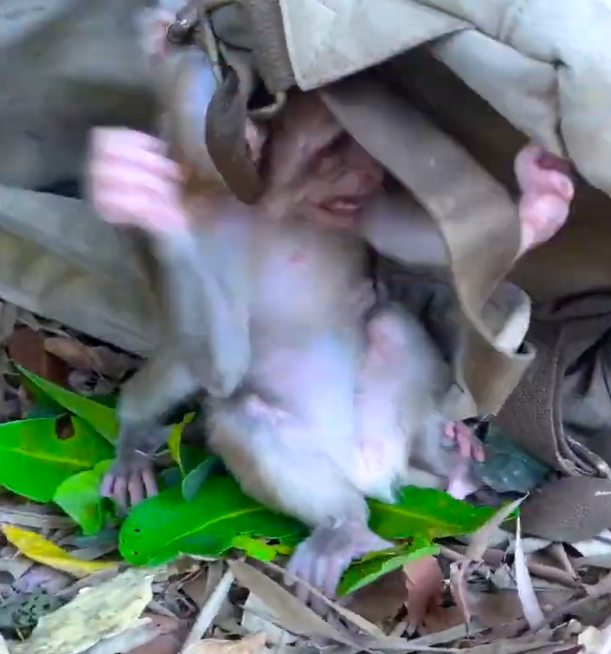
The bond between Liko and Kima had deepened through shared experiences. They had learned from each other, challenged each other, and grown together. Play, at their own pace, had become a medium for emotional growth, physical development, and social learning. It was a reminder that in life, moments of exploration, curiosity, and joy are as important as lessons, rules, and guidance.
Through these playful interactions, they developed essential life skills: coordination, problem-solving, empathy, communication, and the ability to navigate complex environments. Each leap, each chase, each pause to observe the world around them contributed to a foundation for future resilience and adaptability.
As night fell, the two young monkeys drifted into a peaceful sleep, snuggled against their mothers, their tiny bodies rising and falling with gentle breaths. The forest embraced them, its canopy swaying softly in the night breeze, leaves whispering in a lullaby of life and continuity. Liko and Kima had spent the day playing at their own pace, and in doing so, they had discovered the beauty of freedom, friendship, and the natural rhythm of life.
The mothers remained vigilant, watching over their young with pride and care. They understood that these moments of independent play were vital, shaping the children into skilled, confident, and socially adept members of the troop. Through exploration, laughter, and gentle guidance, the forest taught lessons that words could not convey—lessons of patience, observation, empathy, and joy.
In the lives of Liko and Kima, the forest was both playground and classroom. Each day brought new discoveries, new challenges, and new opportunities for growth. Their pace, dictated by curiosity and friendship rather than urgency or competition, allowed them to absorb the lessons of the forest fully, to build strong bonds, and to experience the richness of life in a natural environment.
And so, as the moon rose over the canopy and stars twinkled in the clear night sky, the two children slept soundly, dreaming of the next day’s adventures. The forest, alive with the gentle rhythm of life, whispered its enduring lesson: every child—human or monkey—thrives best when allowed to explore, learn, and play at their own pace.
In this forest, Liko and Kima had discovered not just fun, but freedom, friendship, and the joy of growing together. And in watching them, one could feel a sense of calm, inspiration, and gentle reassurance: life, at its best, unfolds beautifully when allowed to progress at its own pace.