In the quiet heart of a lush, vibrant forest, the world moved with a gentle rhythm. Sunlight filtered through the dense canopy, casting dappled patterns on the forest floor, while the soft rustling of leaves in the breeze created a calming symphony. It was a sanctuary of life, where nature thrived in harmony and the bonds between mother and child were celebrated not just among humans, but across countless species.
Among the forest’s many inhabitants was a family of deer, graceful and serene. The mother, named Luma, stood tall and elegant, her coat gleaming in the soft sunlight. Her eyes, deep and expressive, radiated warmth and vigilance. Beside her pranced her fawn, a young, energetic creature named Kiko, whose tiny hooves barely made a sound as he danced across the soft grass. The bond between Luma and Kiko was unbreakable. Every movement, every glance, spoke of care, trust, and deep affection.
Morning in the forest was a ritual of peace. Luma led Kiko to a clearing near a gentle stream, where the water sparkled as it tumbled over smooth stones. The fawn nibbled curiously at tender shoots of grass while his mother grazed calmly nearby. The air was filled with the soft hum of life—birds singing in the treetops, insects buzzing lazily, and the distant chatter of other forest animals. Each sound combined to create a natural melody that had the power to soothe even the most restless of minds.
Watching Luma and Kiko together was a lesson in tranquility. The mother’s presence offered a sense of security that allowed the fawn to explore the world without fear. He bounced and leaped, then returned to his mother’s side to brush against her warmth and feel her protective embrace. For anyone witnessing this scene, it was impossible not to feel a wave of relaxation wash over them. Stress seemed to melt away in the presence of such pure, unspoken affection.
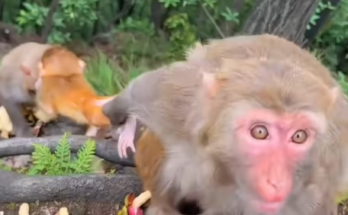
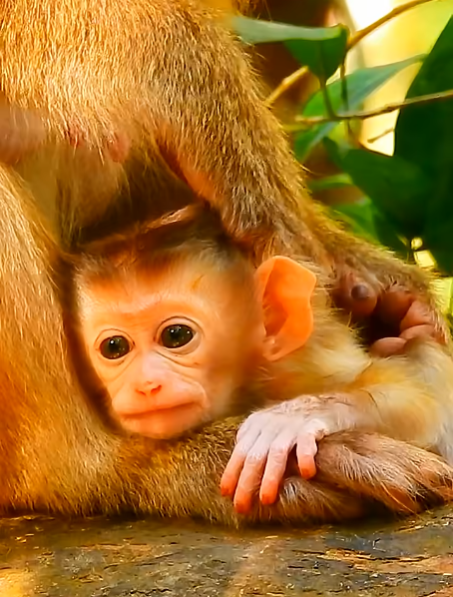
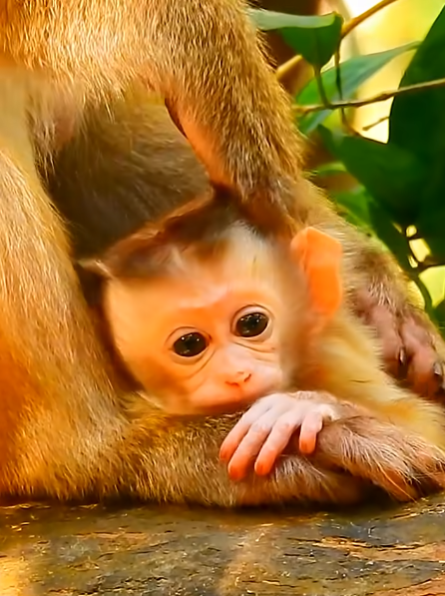
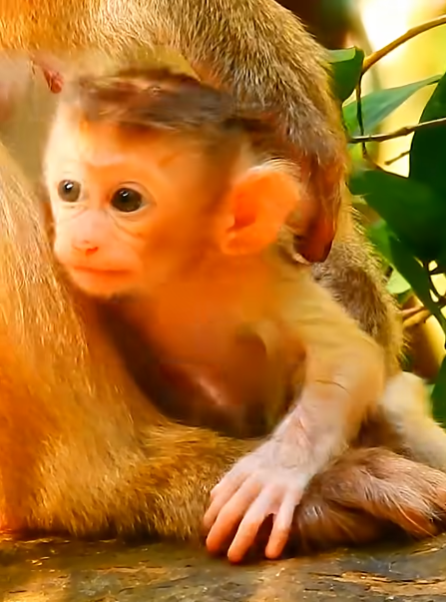
Nearby, a family of monkeys added another layer to the forest’s symphony. A mother macaque, soft-furred and vigilant, held her baby close to her chest as they perched on a low branch. The infant monkey clung tightly, peering around with wide, curious eyes. Every so often, the baby would reach out to touch its mother’s face, eliciting gentle coos and affectionate nuzzles in return. Their quiet play was a visual balm, a reminder of the beauty of maternal love in its simplest form.
The scene shifted to a pond where a mother duck glided gracefully across the water, her ducklings following in a perfectly straight line behind her. The little ones paddled energetically, but never strayed far from their mother’s side. She quacked softly, guiding them around small ripples and occasional floating leaves. Watching them, it was easy to feel the tension in one’s own life ease. The rhythm of their movement mirrored the gentle flow of the water, teaching a silent lesson about patience, care, and the calming effect of presence.
Across the forest, other animal families were engaging in similar rituals of bonding and care. A mother rabbit watched over her litter, twitching her nose as the kits explored their burrow. A mother cat groomed her kittens, licking each tiny head with precision, while they purred and nuzzled into her fur. Even the birds above seemed to participate in this natural orchestra, flitting from branch to branch as if to celebrate the joy of maternal love.
As the morning continued, the forest revealed its own stress-relieving qualities. Sunlight warming the body, the gentle sound of flowing water, and the soft rustle of leaves created a natural ambiance that encouraged mindfulness. For humans observing the forest, the experience was therapeutic. The sight of mothers and their young—so attuned to each other, so immersed in the present moment—served as a mirror for our own need to connect, to nurture, and to pause in a world often filled with chaos.
Luma and Kiko moved to a patch of soft moss, where the fawn lay down beside his mother, legs tucked beneath him. Luma rested her head gently on Kiko’s small frame, eyes half-closed in contentment. The fawn nuzzled her neck, and together they remained perfectly still, breathing in rhythm with the forest around them. The simplicity of the moment—a mother, her child, and the quiet beauty of nature—was a profound demonstration of stress relief. The very act of observing it could lower tension, slow racing thoughts, and bring a sense of calm to anyone who paused to watch.
Nearby, the mother macaque had found a comfortable branch to settle on, pulling her baby close. The infant nestled into her chest, eyelids heavy with drowsiness. Occasionally, the baby would stretch, yawning, then curl back into the safety of its mother’s embrace. The gentle rocking motion of the branch in the breeze mimicked a lullaby, lulling both baby and observer into a state of tranquility. There was a lesson in this simplicity: love, care, and physical presence are powerful antidotes to stress and anxiety.
In the pond, the mother duck continued her graceful patrol with her ducklings, guiding them through gentle currents. The little ducks occasionally splashed, sending ripples across the water, but they never strayed far from her side. Watching the effortless coordination, the silent communication, and the protective instincts of the mother was mesmerizing. It reminded all who observed that relaxation and peace often come from trust, connection, and the rhythmic patterns of life.
As midday approached, the forest became a living meditation space. Sunlight streamed through the canopy in golden shafts, highlighting the mother and baby animals in various stages of play, rest, and bonding. A mother elephant nearby allowed her calf to explore the forest floor under her careful watch, the young one’s tiny trunk reaching out curiously toward every leaf, branch, and stone. Her presence was calming not only to her baby but also to any onlooker.
Across the landscape, nature’s sounds blended into a gentle symphony. Birds sang, water flowed, leaves rustled, and the occasional distant roar or call of larger animals reminded the observer that life, in all its forms, carries energy and harmony. Watching mothers care for their young provided a natural demonstration of patience, attentiveness, and mindfulness. Each act of grooming, feeding, or protective nuzzle contributed to a sense of serenity.
For humans who might find themselves in stressful situations, these moments offer profound lessons. Stress relief does not always require artificial interventions. Observing the natural world—the gentle interactions between mother and child animals, the rhythm of life, the care, and attention given without expectation—can recalibrate the mind. It reminds us of the importance of presence, nurturing, and connection.
As the afternoon sun began to descend, casting long shadows across the forest, the mothers and babies continued their routines. The fawn slept beside Luma, the baby monkey nuzzled against its mother, the ducklings paddled alongside their mother, and the elephant calf dozed lightly under the watchful eye of its mother. Every creature, from the smallest bird to the largest mammal, seemed to embrace the rhythm of rest, guided by maternal care.
Luma shifted slightly, nudging Kiko to encourage stretching. He yawned, curled up briefly, then hopped to a patch of wildflowers, sniffing and exploring under his mother’s attentive gaze. Each moment reinforced the trust between mother and child and highlighted the importance of safe exploration for growth and learning. Observers could draw parallels with their own lives—how nurturing environments allow for curiosity, learning, and stress-free exploration of the world.
Meanwhile, the baby monkey in the trees yawned, blinked slowly, and nestled deeper into its mother’s chest. The gentle rocking of the branch, the warmth of her fur, and the rhythmic sound of her heartbeat provided a natural lullaby. The scene demonstrated a universal truth: relaxation and stress relief are often found in the simplest forms of connection, especially between mother and child.
In the water, the ducklings had settled into a calm pattern, following the subtle guidance of their mother. The smooth gliding of the water, the quiet quacking, and the coordinated movements created a hypnotic rhythm that seemed to ripple outwards, influencing the energy of the surrounding forest. Anyone observing would feel a natural calm, a reduction in anxiety, and a sense of being grounded in the present moment.
As the sun began to set, painting the sky in shades of gold, orange, and pink, the forest seemed to exhale. Mothers and babies alike found cozy resting spots: the fawn tucked under Luma’s warmth, the baby monkey curled against its mother, the ducklings huddled near their mother in a small pond alcove, and the elephant calf resting with its mother nearby. These moments were not just rest; they were demonstrations of care, trust, and the quiet power of maternal love to soothe, protect, and relax.
Observers, human or otherwise, could not help but feel the serenity. The forest, alive with gentle motion and loving care, offered a form of natural therapy. Stress melted away as eyes lingered on the small acts of tenderness, the rhythmic movements, and the deep bond that connected mothers to their children. It was a reminder that relaxation is often best found not in isolation, but in connection—whether with nature, family, or the living world around us.
Night fell, and the forest became enveloped in the soft sounds of nocturnal life. Crickets chirped, distant frogs croaked, and the leaves whispered in the cool evening breeze. Luma and Kiko lay together in their clearing, the fawn’s tiny body pressed close to his mother’s. The baby monkey and its mother slept perched on the branch above, safe and secure. Even the ducklings had found a quiet nook in the pond, still and warm under their mother’s watchful eye.
The forest, with its mothers and babies, had completed another day of life, growth, and connection. Every interaction, every gentle touch, every shared moment of curiosity and care, contributed to a tapestry of relaxation and stress relief. For any observer, witnessing this harmony was a powerful reminder: peace and calm often come from love, presence, and the unspoken bonds that unite the living world.
In the life of the forest, these moments repeated endlessly. Mother animals taught, protected, and nurtured their young, creating cycles of care that sustained generations. And in these interactions, there existed a natural form of stress relief—an inherent, calming power rooted in the simple beauty of life, love, and connection.
Watching the mother and baby animals, one could feel a sense of awe and serenity, as if the forest itself whispered: Slow down, breathe, and appreciate the gentle rhythms of life.
Even as night deepened, the bond between mother and child remained unbroken, a testament to the power of nurturing, care, and presence. Beautiful mothers with their beautiful babies—graceful, tender, and attentive—offered the perfect example of relaxation, stress relief, and the profound impact of love on life itself.