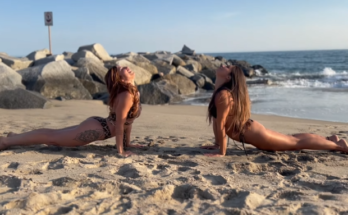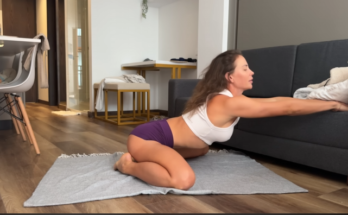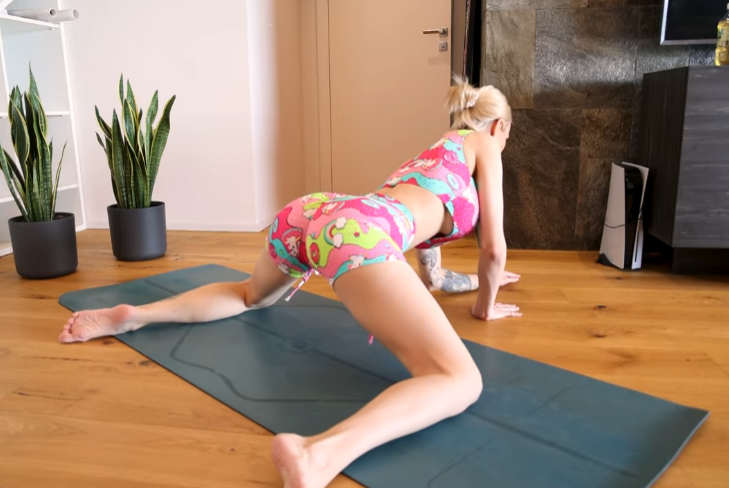
Yoga is more than movement. It is an expression of breath, intention, emotion, and inner awareness. When yoga becomes art, each pose transforms into a living sculpture, each transition into a story, and each breath into a quiet prayer. Practicing a yoga art performance at home allows you to move beyond routine exercise and enter a space where contortion, spiritual flow, and full body stretching unite as one deeply personal experience.
This is not about perfection or extreme shapes. It is about presence. It is about honoring the body’s intelligence and allowing movement to rise from within. Whether you are an experienced yogi or someone exploring expressive movement for the first time, this practice invites you to turn your home into a sacred stage and your body into a vessel of graceful strength and surrender.
Creating the Sacred Space at Home
Before movement begins, the environment matters. Choose a quiet area where you can move freely. Soft natural light is ideal, but gentle lamps or candles can also create a calm atmosphere. If you enjoy music, select something slow, instrumental, or ambient—sounds that encourage inward focus rather than distraction.
Take a moment to clear the space, both physically and energetically. Roll out your mat. Sit or stand comfortably. Close your eyes. Place one hand on your heart and one on your belly. Take three deep breaths, inhaling through the nose and exhaling slowly through the mouth.
Set an intention. It may be gratitude, healing, creativity, or simply awareness. This intention becomes the soul of your yoga art performance.
Yoga as Moving Meditation
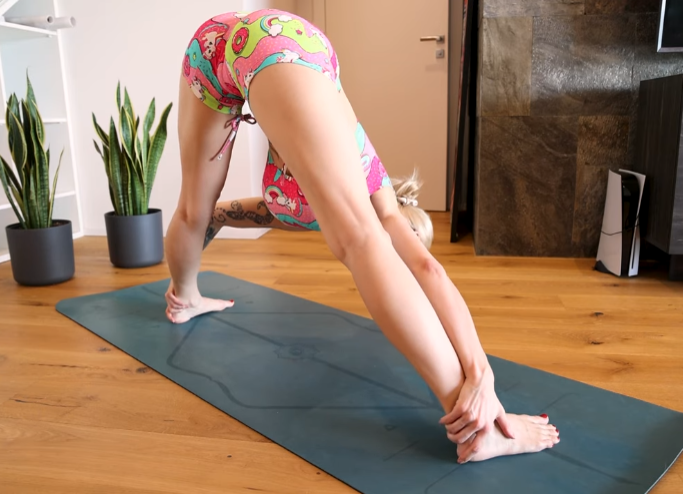
In an artistic yoga flow, movement is guided not by counts or rules, but by breath and feeling. Each inhale creates expansion, and each exhale invites softness. Contortion elements are approached gently, with respect for the body’s limits. There is no force—only listening.
Begin standing in Mountain Pose. Feel your feet grounded, your spine tall, your shoulders relaxed. With an inhale, slowly lift your arms overhead as if drawing energy from the earth. With an exhale, let your arms float down, palms facing the ground, releasing tension.
Repeat this several times, letting the motion become fluid and expressive. Allow your arms to move like water, your spine to sway softly. This is the beginning of spiritual flow—where the mind quiets and the body begins to speak.
Opening the Spine: The Pathway of Energy
The spine is the central channel of energy in yoga. Gentle spinal movements awaken the nervous system and prepare the body for deeper stretches.
Flow into Cat-Cow on hands and knees. Inhale, arching the spine and lifting the heart. Exhale, rounding the spine and drawing the chin toward the chest. Move slowly, exaggerating each motion. Feel how breath travels along the spine, like light flowing through a channel.
From here, transition into a seated spinal wave. Sit cross-legged, hands resting on knees. Roll the spine forward on the inhale and round back on the exhale. Let the movement be expressive and intuitive, almost dance-like.
These waves soften the body and open the gateway for deeper contortion-inspired shapes.
Contortion with Consciousness
Contortion in yoga art is not about pushing the body into extreme shapes. It is about entering deep backbends and stretches with awareness, control, and reverence.
Move into a low lunge. One knee down, one foot forward. Lift your arms and gently press the hips forward. As you inhale, lift the chest. As you exhale, allow a soft backbend to emerge. Keep the breath slow and steady.
From here, transition into Camel Pose if comfortable. Kneel upright, place hands on the lower back or heels, and open the heart upward. Let the head drop back only if the neck feels safe. This posture symbolizes vulnerability and trust—opening the heart to life.
Hold for a few breaths, then slowly rise, bringing hands to the heart. Pause. Feel the echo of the pose within your body.
Artistic Floor Flow: Grace and Strength
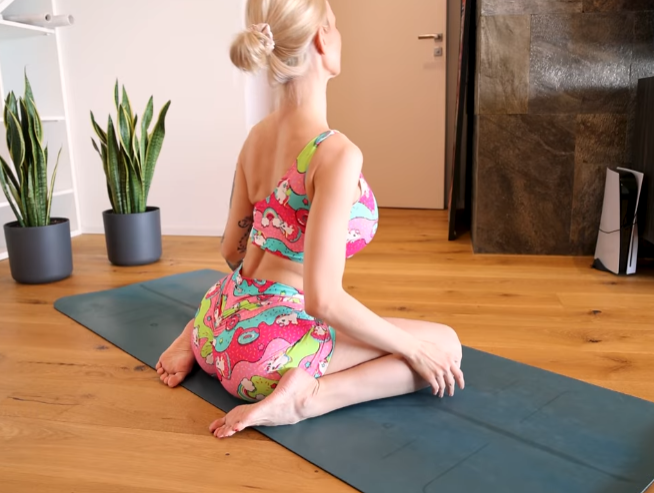
Lower yourself to the mat and begin a fluid floor sequence. Roll onto your side, extending one arm overhead, creating a long arc through the body. Let the legs follow naturally. This spiral movement connects the upper and lower body in harmony.
Move into Cobra or Upward-Facing Dog, lifting the chest while grounding through the hands and tops of the feet. Instead of holding rigidly, explore small, graceful shifts—turning the head, circling the shoulders, breathing into the heart space.
Transition into Child’s Pose, resting the forehead on the mat. This moment of surrender balances the intensity of backbending. Allow gratitude to arise for your body’s strength and flexibility.
Full Body Stretching Through Expression
Extend one leg out to the side and move into a seated side stretch. Reach the opposite arm overhead, creating a long line of energy from fingertips to toes. Breathe into the side body, an area often neglected yet deeply expressive.
Flow into a wide-legged seated forward fold. Let the spine lengthen before folding. The goal is not to reach the floor, but to release tension and invite openness.
Add gentle circular movements of the torso, exploring your range freely. This is where yoga becomes dance—where intuition guides form and form expresses emotion.
Inversions and Trust
If your practice allows, introduce a gentle inversion such as Shoulder Stand, Legs-Up-the-Wall, or a supported Headstand. Inversions reverse the flow of blood and energy, bringing clarity and calm.
As you invert, imagine letting go of worries, fears, and expectations. Allow gravity to support you. Trust the earth beneath you. Even a simple inversion can feel deeply spiritual when approached with awareness.
Hold for a few breaths, then transition out slowly, honoring the nervous system.
Closing the Performance: Integration and Stillness
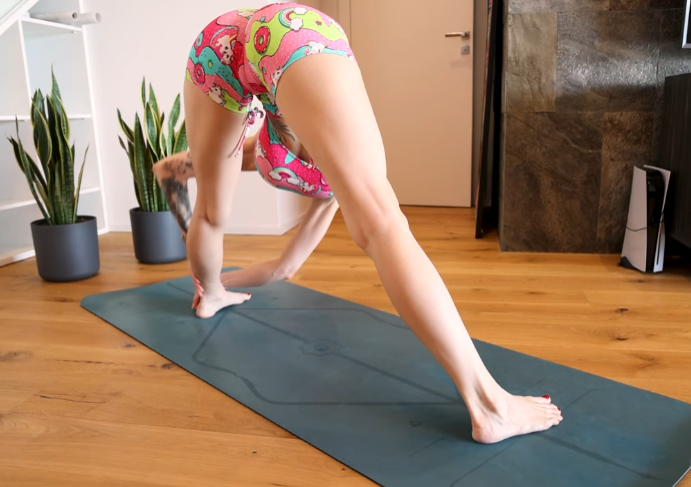
Lie down in Savasana. Allow your body to fully relax. Feel the breath moving effortlessly. Notice the sensations left behind by movement—warmth, openness, calm.
Place one hand on your heart again. Acknowledge your practice not as a workout, but as an act of self-expression and self-love.
This final stillness is as much a part of the performance as any pose. It is where integration happens, where the body absorbs the benefits of the practice and the mind settles into peace.
The Spiritual Essence of Yoga Art
A yoga art performance at home is not meant for an audience. It is a dialogue between body and soul. Contortion becomes a metaphor for resilience, flexibility becomes a symbol of adaptability, and flow becomes a reminder that life is meant to be experienced, not controlled.
When practiced regularly, this kind of yoga nurtures not only physical flexibility but emotional freedom. It teaches patience, compassion, and deep listening. It transforms the home into a sanctuary and the body into a canvas of living art.
Final Reflection
Yoga art is not about how far you bend or how beautiful your pose looks. It is about how present you are within each movement. It is about honoring your body’s wisdom and allowing your spirit to guide the flow.
Each time you practice, you create something unique—an unrepeatable expression of breath, movement, and awareness. That is the true art of yoga.
Move slowly.
Breathe deeply.
Flow honestly.
And let your yoga at home become a sacred, spiritual performance of full body stretching and inner connection.