In the heart of a lush, sprawling jungle, where sunlight filters through towering trees and the air buzzes with the songs of birds and insects, lived a baby monkey named Kiko. Small, agile, and impossibly curious, Kiko had already earned a reputation among the jungle residents as the most mischievous little creature they had ever seen. Though his fur was soft and golden, and his eyes sparkled with innocence, those who had experienced his antics knew that behind that adorable exterior was a mind brimming with mischief.
From the moment he had learned to crawl and swing from the branches, Kiko had a fascination with the world around him. Everything was a new puzzle, every object a potential toy, and every creature a candidate for playful trouble. Unlike older monkeys, who were content to groom, forage, and rest, Kiko lived for adventure and chaos.
The Early Escapades
Kiko’s first acts of mischief were gentle enough—stealing bananas from the mother monkeys, teasing the birds perched above him, or sneaking into other monkey families’ gatherings. Yet, even in those early days, it was clear that he was special. While other baby monkeys followed their mothers’ rules obediently, Kiko tested boundaries at every opportunity.
One sunny morning, Kiko spotted a colorful parrot perched on a branch just above his head. He studied it intently, then, with a gleeful squeal, leaped upward, causing the bird to squawk and flap frantically. Kiko tumbled backward into a pile of dry leaves, scattering them everywhere, while the parrot glared at him before flying off in indignation. The other monkeys watched, half horrified, half amused, as Kiko sat up, laughing uncontrollably at his own chaos.
It was moments like these that defined Kiko’s personality. His antics were never mean-spirited; they were the natural curiosity and playful energy of a baby discovering the world. Yet, the combination of cleverness and daring meant that he often left a trail of exasperation behind him.
Mischief in the Canopy
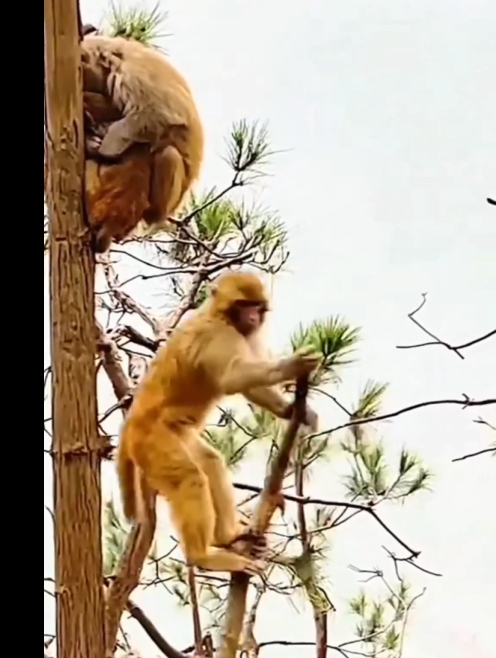
Kiko’s mischief was not confined to the forest floor. The jungle canopy became his playground, a complex network of branches and vines that he navigated with breathtaking agility. From above, he could watch every movement, plan his pranks, and launch surprises at unsuspecting jungle residents.
One afternoon, Kiko decided to target the older monkeys lounging on a high branch. They were grooming each other lazily, enjoying the warm sun, when Kiko silently crept behind them. With a quick flick of his small hands, he shook the branch just enough to make them lose their balance. A chorus of startled squeaks filled the air as the older monkeys scrambled to regain footing, while Kiko dangled from another branch, giggling uncontrollably.
Even the elders of the troop had to admit, begrudgingly, that Kiko had a rare talent. He was clever, fast, and fearless, all qualities that, in moderation, could make him a natural leader. Yet, in these early days, he preferred mischief to responsibility, delighting in the chaos he could create with a well-timed prank.
Mischief Meets Curiosity
Kiko’s mischief often blended with curiosity, leading him into both trouble and adventure. He was endlessly fascinated by objects humans had left at the edge of the jungle: plastic bottles, shiny wrappers, and scraps of fabric. To Kiko, these were treasures—mysteries waiting to be explored.
One day, he discovered a small tin box discarded near a human campsite. He pried it open with his nimble fingers and found inside a collection of small, round objects. Kiko batted them around, scattering them across the forest floor. As he played, he noticed a line of ants approaching, attracted by the scent of food remnants in the tin. The ants swarmed over his treasures, and Kiko leaped back in alarm, then laughed at the unexpected outcome.
His mother, watching from a nearby branch, sighed with a mixture of exasperation and affection. Kiko had a habit of turning even the most ordinary object into a source of entertainment—and sometimes, chaos. Yet, it was impossible to stay angry for long. His laughter was infectious, and his boundless energy reminded the troop of the joy in curiosity and play.
The Great Banana Heist
Perhaps Kiko’s most legendary act of mischief occurred during the “Great Banana Heist.” The older monkeys of the troop had carefully stored a stash of ripe bananas for the afternoon feast. They had hidden them high in the canopy, assuming no baby could reach the cache. Kiko, however, had other ideas.
He spent the morning observing the older monkeys, studying their movements and noting the location of the bananas. With careful planning, he climbed silently through the branches, avoiding detection. Then, with a combination of speed and daring, he swooped in, grabbed a banana, and darted off before anyone could react.
The older monkeys shouted in alarm, chasing him through the trees, but Kiko was too quick, too clever. He leapt from branch to branch, twirling the banana in his hands, giggling at the frustrated cries of his elders. When he finally landed safely on a lower branch, he sat munching contentedly, completely unconcerned by the chaos he had caused.
The Great Banana Heist became a story told and retold within the troop, a testament to Kiko’s ingenuity, daring, and playful spirit. He had proven that even the smallest monkey could outwit the largest and most experienced members of the troop.
Mischief with a Heart
Despite his constant antics, Kiko’s mischief was never cruel. He did not harm other animals intentionally, though he certainly startled them, and he always seemed to know when to stop. His mischief was playful, exploratory, and, in many ways, a form of learning.
Kiko’s mother often followed him quietly, keeping him safe while allowing him to explore. She understood that his curiosity and cleverness were strengths, even if they caused occasional headaches. When Kiko fell or got stuck in an awkward situation, she was always nearby to help, her gentle presence a reminder that love and safety accompanied every adventure.
For example, one day Kiko found himself tangled in a curtain of vines, dangling helplessly above the forest floor. He squealed in frustration, realizing his cleverness had gotten him into trouble. His mother arrived swiftly, untangling him with practiced care. She hugged him, nuzzled his cheek, and, after ensuring he was safe, let him go with a gentle scolding. In moments like these, Kiko learned that mischief was fun, but caution and care were important too.
Mischief as a Teacher
Kiko’s antics taught the troop important lessons as well. The older monkeys learned to be more vigilant, the younger monkeys found inspiration in his courage, and even the jungle birds seemed to anticipate his playful disruptions. In a way, Kiko’s mischief created a dynamic environment that encouraged attention, adaptability, and problem-solving among the jungle residents.
His mother understood this, watching with a mix of pride and exasperation. She knew that Kiko’s cleverness and playful nature were part of his growth. She also knew that one day, when the time came, he would channel his energy and intelligence in ways that were more than just playful pranks. For now, she allowed him freedom, supervision, and, most importantly, love.
Mischief and Curiosity Beyond the Troop
Kiko’s mischief was not limited to the troop alone. He often ventured to the edges of the jungle, where humans lived. He was fascinated by the strange objects and scents he encountered there, and his curiosity often led to humorous encounters.
One day, Kiko found a shiny, colorful bag near a human campsite. He tugged and pulled, eventually spilling its contents—a collection of small trinkets, wrappers, and food scraps—into the grass. The humans, discovering the mess, shouted in surprise. Kiko, perched high in a tree, squealed with delight at their reactions, completely unaware of any wrongdoing.
Through these adventures, Kiko learned about cause and effect, curiosity, and cleverness. He also discovered that his mischief could influence the world around him, even beyond the jungle. Yet, no matter where he went, he always returned to his mother, seeking comfort, guidance, and the warmth of her embrace.
Mischief as Growth
Every act of mischief was a step in Kiko’s development. His cleverness, daring, and curiosity were all tools that prepared him for life in the jungle. Each prank, theft, or playful attack on an unsuspecting animal taught him problem-solving, strategy, and agility.
Yet, Kiko’s growth was not just physical or intellectual; it was emotional. Through his mother’s guidance, he learned empathy, respect for others, and the importance of timing and judgment. Mischief was not merely chaos—it was learning, exploration, and connection.
Kiko’s mother often reminded him gently, “Curiosity and cleverness are gifts, but always remember to care for others.” Over time, he began to understand the balance between fun and responsibility, mischief and kindness.
The Legacy of a Mischievous Monkey
As Kiko grew older, his reputation as a mischievous monkey spread far and wide. Animals told stories of his antics, humans whispered of the clever little monkey who stole fruit and tumbled through trees, and the jungle echoed with his playful squeals.
Yet, beneath all the mischief was a heart full of curiosity, courage, and love for his family. His mother, ever watchful, knew that his playful nature would one day transform into wisdom, leadership, and cleverness that could benefit the entire troop.
For now, Kiko remained the baby monkey, the mischievous spirit of the jungle. He swung from branch to branch, explored new corners of the forest, and turned every ordinary day into an adventure. His mischief brought laughter, lessons, and a sense of wonder to all who observed him, proving that even the smallest creatures can leave the largest impression.
Conclusion
The mischief of the baby monkey, Kiko, is a celebration of curiosity, playfulness, and the joy of discovery. His pranks, cleverness, and daring antics may frustrate, surprise, and sometimes startle, but they are all part of a journey of growth and learning.
Through his mischief, Kiko demonstrates that exploration, creativity, and play are essential parts of life. With the guidance and love of his mother, he learns the balance between chaos and care, fun and responsibility, curiosity and empathy.
In every tumble, every stolen banana, and every cheeky squeal, Kiko embodies the spirit of youth—the wild, uncontainable, and endlessly curious heart of the jungle. And through it all, the bond with his mother remains his anchor, reminding him that no matter how mischievous he becomes, he is always loved, guided, and cared for.
Kiko’s story reminds us that mischief is not mere trouble; it is a form of learning, connection, and joy—a celebration of life itself, guided always by love.