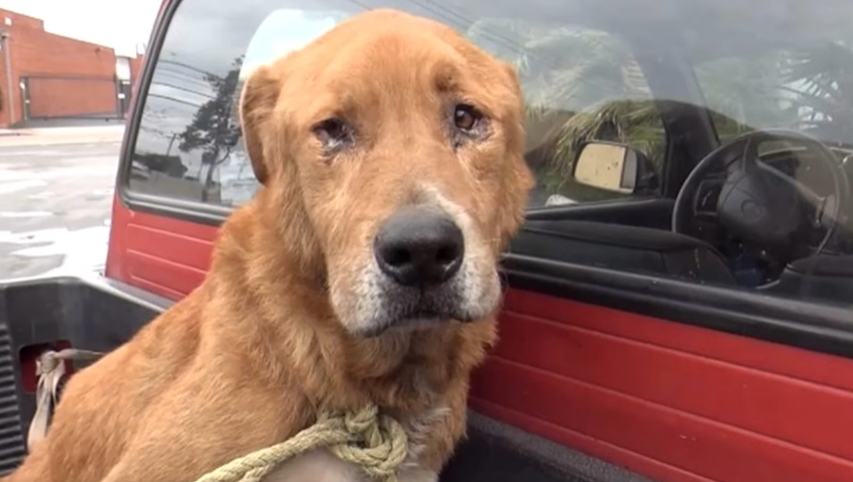
Every morning, just as the sun began to rise and paint the quiet street with soft golden light, the dog sat in the same place. He curled his tired body beside the old bus stop at the edge of town, right where his family had once told him to “stay.” His fur was once a beautiful golden-brown, but now it was dusty and rough, tangled from days of sleeping on concrete and dirt. Yet his eyes—oh, his eyes—still shone with hope. They followed every passing car, every moving shadow, every familiar sound, as if any moment his family might come back for him.
The dog did not know the word abandoned. All he knew was waiting.
Weeks ago, life had been different. He remembered the warmth of a small house, the smell of cooked rice and meat, the laughter of children who pulled gently at his ears and hugged him around the neck. He remembered a man who patted his head and called him a “good boy,” and a woman whose footsteps he could recognize even from another room. He remembered sleeping curled at their feet, feeling safe, feeling loved. To him, that was his entire world.
Then one afternoon, they had taken him for a ride.
The dog loved rides. He had pressed his nose against the window, letting the wind rush over his face, ears flapping with joy. The road stretched endlessly ahead, and he believed they were going somewhere exciting together, just like before. When the car stopped near the quiet road and the old bus stop, his tail wagged. He jumped out happily, sniffing the ground, exploring new smells. But when he turned around, the car door closed. The engine started.
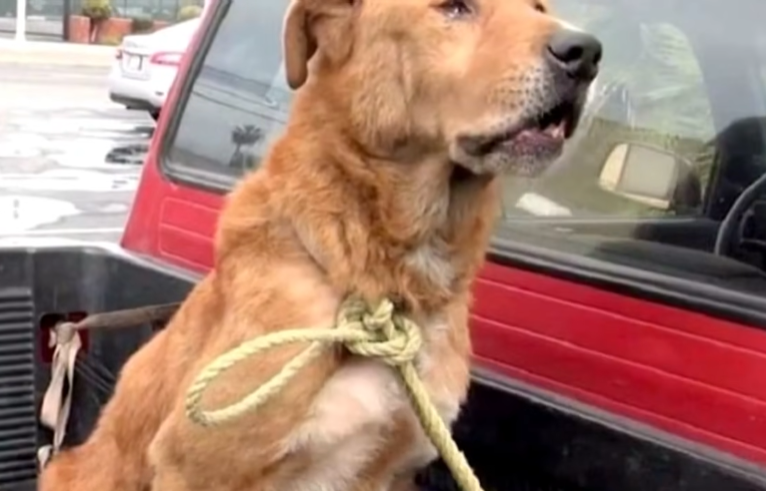
He ran after it, barking once, then twice, confused. The car slowed for a moment, and he felt relief flood his small heart. They’re coming back, he thought. But the car only paused long enough for the dust to settle—then it drove away.
The dog stood frozen. He waited. Surely this was a mistake.
At first, he was calm. His family had told him to “stay,” so he stayed. He sat by the bus stop, ears perked, tail resting neatly on the ground. He believed they would return in minutes. When minutes turned into hours, hunger crept in, but hope was stronger. He watched the road, memorizing every sound of approaching engines.
As night fell, fear began to whisper in his chest. The streetlights flickered on, and the world felt much larger and colder than before. Strange noises echoed from the distance—barking dogs, passing trucks, footsteps of people who did not look at him. Still, he did not move. His family would not find him if he left.
The next morning, hunger gnawed at his stomach. His throat was dry. But the dog still sat there, tail wagging weakly at every car that slowed down. Sometimes people passed by. Some glanced at him with curiosity, others with pity. A few shook their heads and walked on. One old man tossed him a small piece of bread. The dog ate it gratefully, then returned to his spot, sitting straight, eyes locked on the road.
Days passed.
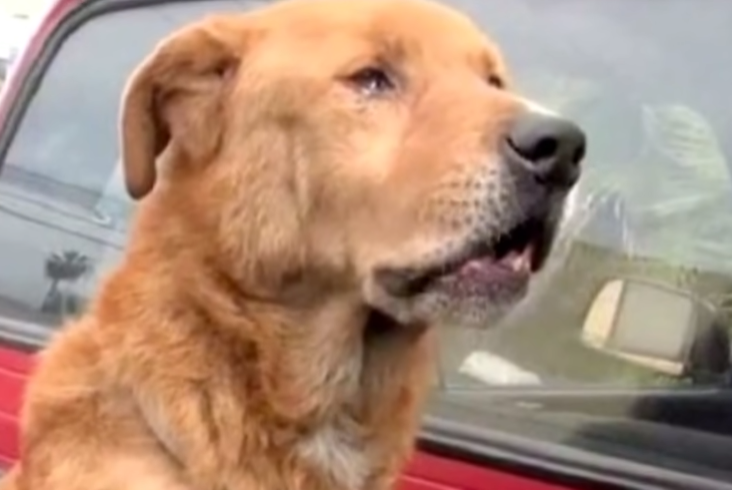
Rain came one evening, heavy and cold. Water soaked his fur, chilling him to the bone. He shivered beneath the bus stop roof, curling into a tight ball, but he never left. The road became muddy, and his paws were stained with dirt. His once-bright coat dulled. Still, every time a car approached, he stood up, ears alert, heart pounding with hope.
Sometimes, he imagined he saw them.
A white car passed by, and he jumped up, tail wagging wildly. He ran a few steps, barking joyfully—then stopped. It wasn’t them. The car disappeared into the distance, leaving behind silence and dust. The dog slowly walked back to the bus stop and lay down, resting his head on his paws. His eyes filled with something heavy and wet, but he did not cry. Dogs do not understand betrayal the way humans do. They only understand loyalty.
And he was loyal.
His body grew thinner. His ribs began to show beneath his fur. Fleas made his skin itch, and small wounds appeared on his paws from walking on rough ground. Still, he refused to leave. Hunger, pain, and exhaustion were nothing compared to the fear that if he left, his family would return and not find him.
At night, he dreamed.
In his dreams, he was back home. The children laughed as he chased a ball across the yard. The man scratched behind his ears. The woman called his name, her voice warm and familiar. In his dreams, there was food, safety, love. When he woke up, the cold ground beneath him reminded him of reality. But even then, he lifted his head and looked toward the road.
One afternoon, a young woman stopped near the bus stop. She crouched down a few meters away, careful not to scare him. She spoke softly, her voice gentle like a breeze. The dog watched her cautiously. His tail twitched. He wanted to trust her—but trust, once shaken, takes time to rebuild.
She held out some food. The smell made his stomach ache with longing. Slowly, he approached, step by step, eyes never leaving the road behind her. He ate quickly, then backed away, returning to his place. The woman noticed how he kept looking at the road, waiting.
“He’s waiting for someone,” she whispered to herself.
She came back the next day. And the next. Each time, she brought food and water. Each time, the dog accepted them politely, but he would not follow her. No matter how gently she called, no matter how kindly she smiled, he always returned to the bus stop.
Because his family had told him to stay.
People in the neighborhood began to notice him. Some felt sorry. Some shook their heads angrily, muttering about cruel owners. A few children left scraps of food. But no one was the family he waited for.
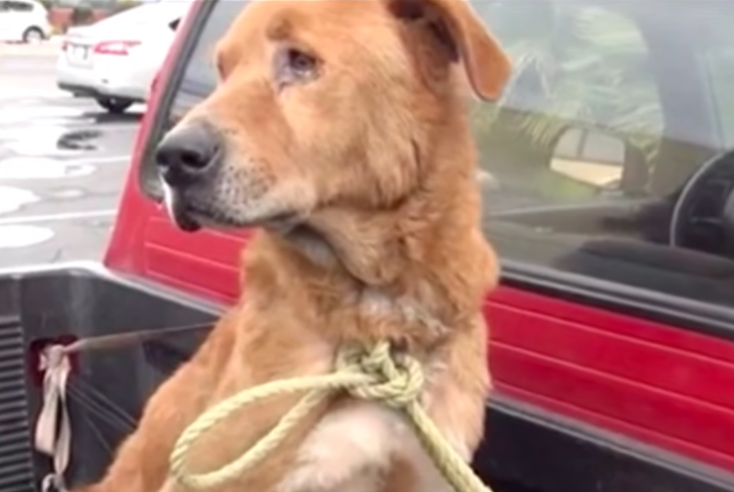
One evening, as the sky turned pink and orange, the dog struggled to stand. His legs trembled. Hunger and sickness had drained his strength. He lay down, breathing slowly, eyes half-closed—but still facing the road. Even in weakness, he waited.
The young woman returned and knelt beside him. This time, tears filled her eyes. She gently touched his head. The dog did not pull away. He was too tired. He looked at her, then looked back at the road, as if asking her to watch with him.
“They’re not coming back,” she whispered softly, her voice breaking. “But you don’t have to wait anymore.”
The dog did not understand her words. But he felt her kindness. For the first time, he allowed himself to lean slightly against her hand. Just a little.
That night, she made a decision.
The next morning, she returned with a blanket and a leash. She sat with him for a long time, letting him smell her, letting him decide. When she gently placed the leash near him, he hesitated. He looked at the road one last time. His eyes searched the distance, hoping—always hoping.
Nothing came.
Slowly, he turned back to the woman.
As she led him away, step by step, he glanced over his shoulder again and again, afraid that leaving meant betrayal. But deep inside, something new stirred—something fragile and unfamiliar.
Hope.
Not the hope that his old family would return—but the hope that perhaps love could find him again, in a different form.
And even as he walked away from the bus stop, part of him still waited. Because a dog’s heart, once given, never truly forgets.