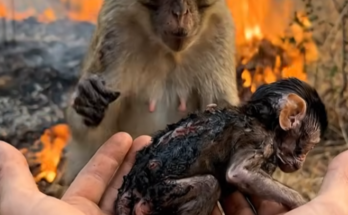
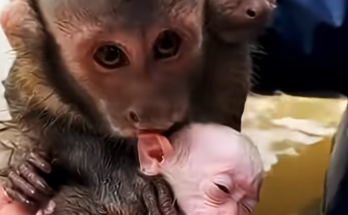
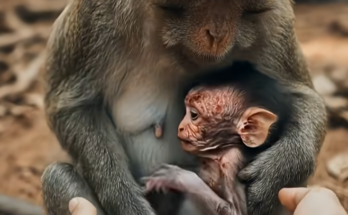
At the quiet corner of a small zoo, where tall trees cast gentle shadows over winding paths, lived an anxious little monkey named Milo. Milo was young, smaller than the others, with soft brown fur and wide, shining eyes that seemed to ask questions about everything around him. Visitors often stopped in front of his enclosure, smiling at how cute he looked as he clutched the wooden bars or hugged his own tail tightly. But behind that adorable appearance was a heart that often felt confused and uneasy.

The zoo was a place full of sounds and movement. Birds cried from above, children laughed nearby, and other animals called out in voices Milo did not always understand. For many animals, these sounds blended into daily life, but for Milo, they sometimes felt overwhelming. He would pace back and forth, pause suddenly, then jump to another branch as if startled by an invisible thought. Some visitors whispered, wondering why such a cute little monkey behaved so nervously.

Animal behavior can often look confusing to humans. People expect animals to act calm, playful, or predictable, especially in a zoo where food and shelter are provided. But animals, just like people, have emotions, memories, and personalities. Milo’s anxious behavior came from many small things combined: new environments, unfamiliar sounds, and the absence of his mother, who had been moved to another enclosure months earlier.
Every morning, the zookeeper named Lina arrived with fresh fruit. She had kind eyes and a gentle voice, and Milo trusted her more than most humans. When she approached, Milo would stop pacing and sit quietly, watching her every move. Lina noticed how he sometimes rocked slightly while sitting, or scratched the same spot repeatedly. These were signs of stress, but they were also signs that Milo was trying to comfort himself in the only ways he knew.

Across the zoo, other animals showed behaviors that visitors also found confusing. A parrot plucked its own feathers despite having plenty of space. A small dog at the petting area barked nonstop even when no one was near. A rabbit froze completely when children ran past its enclosure. Each of these animals had its own story, its own reasons. Animals do not always react to the world the way humans expect them to.
Milo’s enclosure had ropes, branches, and a small wooden house. Some days, he played happily, swinging and chasing falling leaves. On other days, he hid inside his house for hours, peeking out only when the zoo grew quieter. The changing moods puzzled visitors, but to Lina, they made sense. Milo was learning how to live in a busy place while carrying feelings he could not explain.
Cute pets and zoo animals often look like toys or cartoons to people, but they experience fear and confusion too. When a loud noise echoed through the zoo one afternoon, Milo screamed and clung to the highest branch. Children gasped, some laughing nervously, others feeling sorry for him. Lina quickly arrived, speaking softly until his breathing slowed. Moments like these showed how sensitive animals could be, even when they looked playful and strong.
Over time, Lina introduced small changes to help Milo feel safer. She added soft leaves to his sleeping area and placed food in puzzle feeders to keep his mind busy. She also spent extra minutes sitting near his enclosure, letting him watch her calmly. Slowly, Milo began to change. His pacing became less frequent, and his eyes seemed less filled with worry.
The zoo also educated visitors with signs explaining animal behavior. One sign near Milo’s enclosure read: “Animals feel stress and emotions. Please observe quietly.” Some visitors paused to read it, then lowered their voices. Children asked questions, and parents explained that animals could feel scared just like people. These small moments of understanding made a difference, not just for Milo, but for many animals in the zoo.
One sunny afternoon, Milo surprised everyone. Instead of hiding when a group of visitors arrived, he climbed down and sat near the front of his enclosure. He tilted his head, curious rather than fearful. A little girl smiled and waved gently. Milo did not panic. He watched, blinked, and then slowly reached out to touch a dangling rope. It was a small step, but an important one.
Confusing animal behavior often becomes clearer when humans take time to observe with kindness. Animals cannot explain their feelings with words, so they speak through actions. Pacing, hiding, vocalizing, or repeating movements are all ways animals communicate discomfort or uncertainty. When people misunderstand these signals, animals suffer silently.
Cute pets at home can show similar signs. A dog that chews furniture may be anxious. A cat that hides all day might feel unsafe. Like Milo, they need patience, routine, and gentle care. Understanding animal behavior is not about control, but about listening without words.
As weeks passed, Milo grew a little braver. He still had anxious moments, but he also discovered joy again—chasing insects, grooming his fur, and playing with enrichment toys. Lina smiled each time she saw him relax, knowing that healing took time.
Milo’s story reminded everyone at the zoo that animals are not decorations or entertainment alone. They are living beings with feelings shaped by their experiences. When humans choose empathy over curiosity alone, the zoo becomes not just a place to look at animals, but a place to learn respect.
In the end, the anxious little monkey taught a big lesson. Behind every confusing behavior is a reason. Behind every cute face is a heart that feels. And when people learn to understand animals with patience and care, both humans and animals can share a calmer, kinder world.