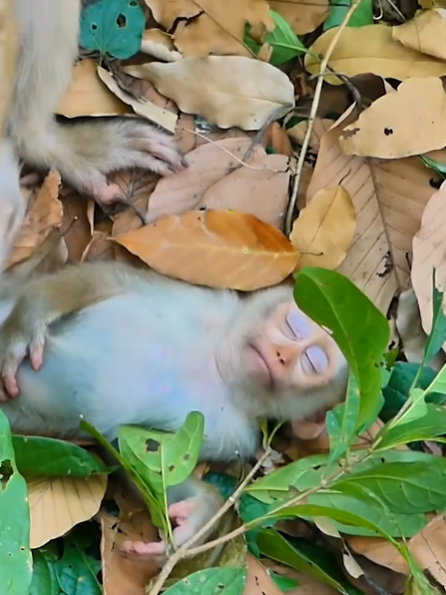
In the quiet moments of the forest, as the sun dips below the horizon and the vibrant chatter of the day gives way to the calm of twilight, monkeys prepare for one of the most essential activities of life: sleep. Observing monkeys at rest can be both fascinating and surprising. Casual viewers often wonder, “Do monkeys really sleep like that? Normally? And by themselves?” The answer, as it turns out, is nuanced, reflecting the diversity of species, environments, social structures, and individual habits. Understanding how monkeys sleep offers insights into their behavior, social bonds, and survival strategies.
First, it is important to recognize that not all monkeys sleep in the same way. There are two major groups of monkeys: Old World monkeys, native to Africa and Asia, and New World monkeys, found in Central and South America. While there are variations, there are general patterns in sleep behavior that are characteristic of these groups. Most monkeys are diurnal—they are active during the day and sleep at night. Their sleep is generally light and fragmented, rather than the long, deep sleep humans often experience, which allows them to remain alert to predators and environmental changes.
Observing a monkey sleeping alone is not uncommon, but it depends heavily on the species, age, and environment. Infant and juvenile monkeys almost always sleep close to their mothers or caregivers. This is crucial for warmth, security, and protection. A baby monkey curled into its mother’s chest or clinging to her back is a familiar and endearing sight. In these cases, the baby’s sleep is not only about rest—it is about comfort, bonding, and survival. The presence of the mother or another caregiver reduces stress hormones and provides a sense of safety, allowing the young monkey to rest more soundly.
As monkeys grow older, some species may begin to sleep alone or at a small distance from their mothers or peers. However, “alone” does not necessarily mean isolated. Many monkeys sleep in social groups, often huddled together in trees or on cliffs, where proximity provides warmth and protection. Social sleeping has many benefits: it reduces the risk of predation, reinforces social bonds, and allows individuals to share vigilance responsibilities. Even when one monkey appears to be sleeping by itself, nearby troop members are often within earshot or visible in peripheral vision, ready to respond to threats.
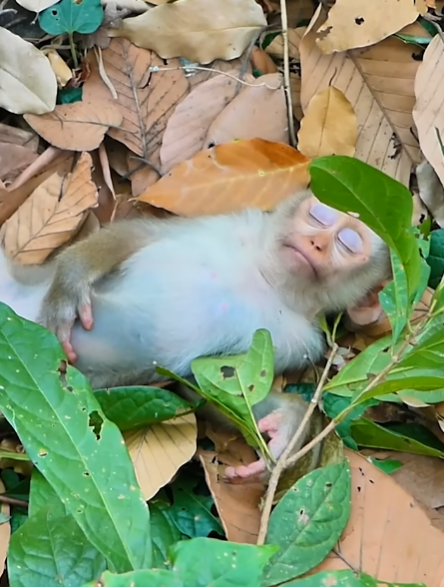
The position in which monkeys sleep can vary widely and is often surprising to human observers. Some monkeys curl into tight balls, tucking their tails around their bodies to conserve heat and protect vital organs. Others lie sprawled on branches, seemingly precarious but skillfully balanced, using their tails or limbs for stability. Some species, like capuchins and macaques, may sleep upright or lean against a branch or another monkey. The impression that a monkey is “sleeping strangely” is often just a reflection of how different their anatomy and instincts are from our own. What seems precarious or unusual to us is often entirely normal and safe for them.
Sleeping alone can be riskier, which is why social species rarely do it without cause. Predation risk is a major factor in sleep behavior. Monkeys in the wild must remain alert to snakes, birds of prey, and carnivorous mammals. Sleeping in groups provides a form of collective vigilance. If one monkey stirs or senses danger, it can alert the others. Even within a group, certain individuals may take shifts being more alert during rest periods. In captivity, where threats are minimal, monkeys may exhibit more relaxed sleeping behavior, sometimes sleeping alone in positions that would be too vulnerable in the wild.
Interestingly, some monkeys display a behavior known as “sentinel sleep,” where one member of the group remains partially awake while others rest. This demonstrates their evolutionary adaptation to danger and underscores the importance of safety in sleep. Even seemingly deep sleepers maintain a heightened state of awareness compared to humans. A monkey appearing to sleep alone may in fact be partially alert, listening for subtle environmental cues. This awareness ensures that even when solitary, the monkey has a greater chance of surviving potential threats.
Juvenile monkeys often experiment with sleeping positions and locations, which can appear strange to casual observers. Young monkeys may drape themselves over a branch, rest their heads on a sibling, or cling to the mother while extending limbs in odd angles. These behaviors are normal and part of their learning process. Young monkeys learn not only how to sleep safely but also how to navigate space, balance, and social dynamics. Their sleeping experiments are often a mix of comfort, curiosity, and trial-and-error—a baby monkey’s version of figuring out the world.
Another consideration is environmental conditions. Monkeys in warmer climates may stretch out more, lie on their sides, or sleep in exposed positions because the risk of hypothermia is low. In colder regions, they may curl tightly, huddle with troop members, or seek shelter in dense foliage. Sleeping alone in adverse conditions is unusual unless the monkey has a safe, concealed spot or is temporarily separated from the group. Seasonal changes, availability of food, and local predators all influence whether monkeys sleep alone or together, and in what positions.
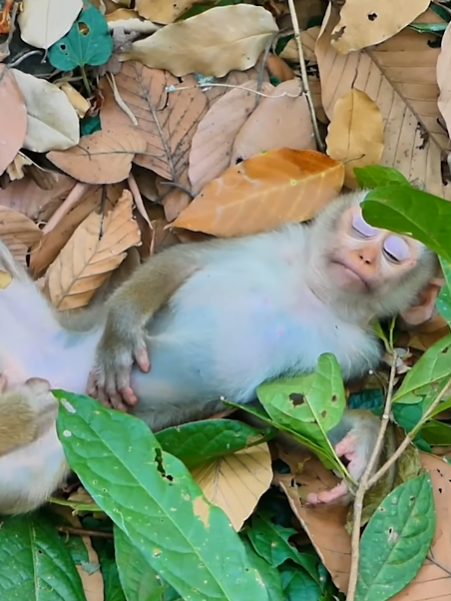
In captivity, monkeys often display more relaxed and unusual sleeping behaviors. Without the constant threat of predators, they may sleep sprawled on platforms, cages, or even on human-made furniture. They might appear to sleep in positions that seem precarious or solitary, but these behaviors are a reflection of comfort and security in a controlled environment. Observers sometimes mistake these positions as abnormal, but they are adaptations to safety, environment, and individual personality.
In summary, the question “Do monkeys sleep like that, normally, and by themselves?” does not have a one-size-fits-all answer. It depends on species, age, social structure, environment, and individual behavior. Young monkeys usually sleep close to their mothers or caregivers for warmth and protection. Adults in social species typically sleep in groups, although some may occasionally sleep alone in safe conditions. Sleeping positions can appear strange or precarious to humans, but they are perfectly adapted to the monkeys’ anatomy and instincts. Even when sleeping alone, monkeys maintain a level of alertness that ensures safety.
Observing monkeys sleep provides valuable insights into their behavior, social bonds, and survival strategies. It highlights the balance between rest and vigilance, the importance of maternal care, and the adaptability of these remarkable creatures. Whether curled tightly on a branch, draped over a sibling, or stretched comfortably in captivity, monkeys’ sleep habits reflect both their natural instincts and the safety of their environment.
Ultimately, yes—monkeys can sleep like that, sometimes alone, and sometimes in positions that look unusual to us. What may appear comical, precarious, or surprising is, for the monkeys, entirely normal. Their sleeping behavior is a blend of biology, instinct, and environmental adaptation—a testament to their intelligence, resilience, and evolutionary skill. Understanding these habits deepens our appreciation of monkey life and reminds us that what seems unusual from a human perspective may be perfectly natural in the animal kingdom.
In conclusion, whether in the wild or in captivity, monkeys have evolved sleeping behaviors that maximize comfort, safety, and social bonding. Young monkeys often cling to their mothers or siblings, learning security and social structure, while adults sleep in groups or occasionally alone depending on safety and environment. Observers might be amused or puzzled by the positions and locations they choose, but these are expressions of instinct and adaptation. By watching and studying these habits, we gain insight into the complexity and intelligence of monkeys—creatures who, like us, value rest, comfort, and security in their lives.