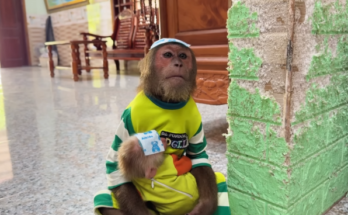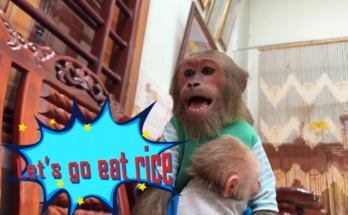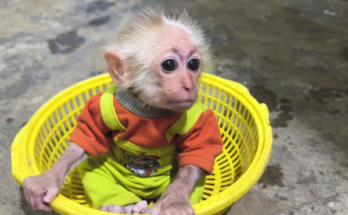
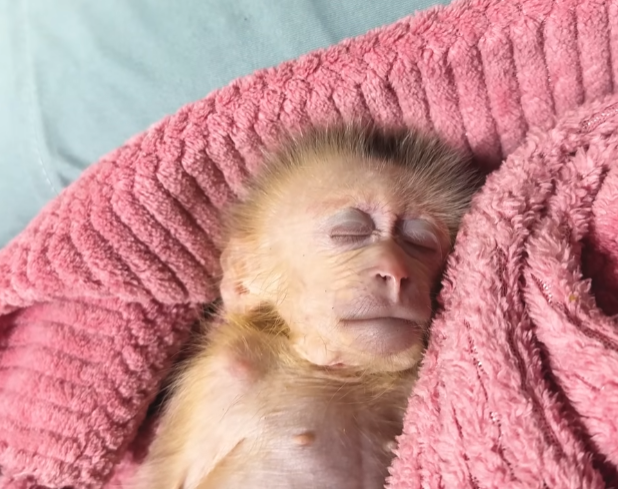
Morning arrived softly at the edge of the village, where mist still clung to banana leaves and the air smelled of earth and ripe fruit. While most monkeys were only beginning to stretch and yawn, Cutis was already awake. Today was not an ordinary day. A newborn baby monkey had arrived during the night, tiny and fragile, with eyes barely open and a weak cry that tugged at everyone’s heart. The mother was exhausted, her milk slow to come, and the baby needed help. Cutis knew exactly what he had to do.
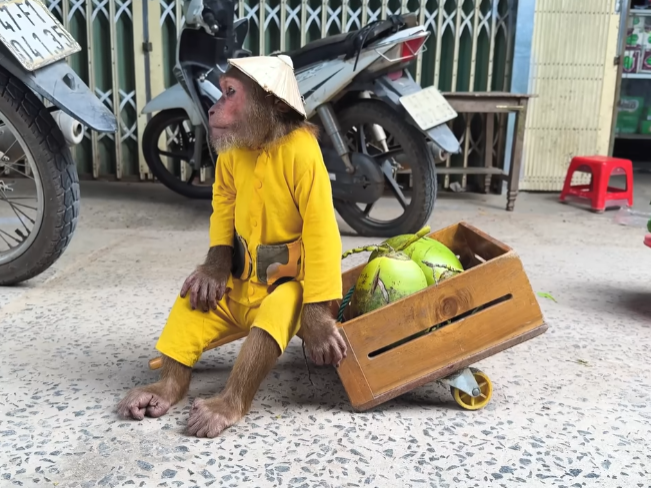
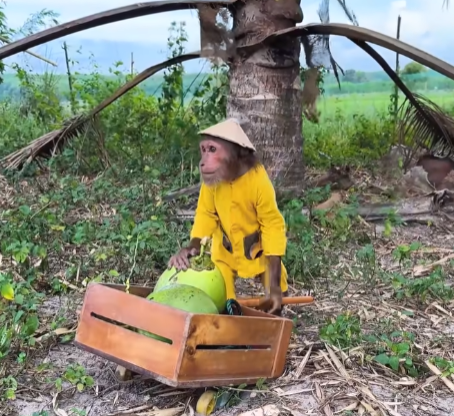
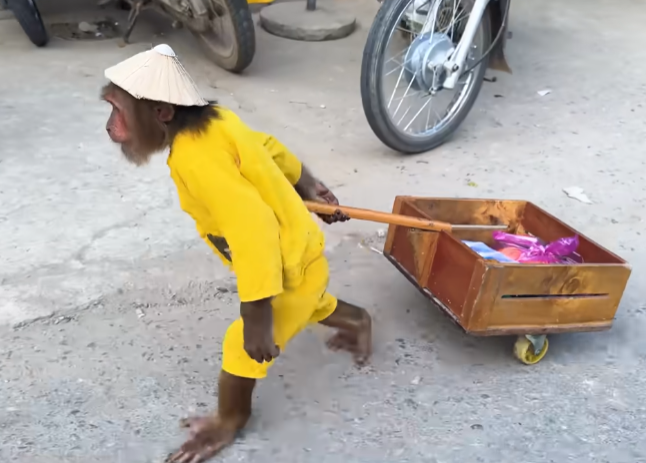
Behind an old wooden shed stood a small rickshaw—rusted, squeaky, but strong enough for one determined monkey with a mission. Cutis had used it before to carry fruit or leaves, but today he planned something bigger. He looked up at the tall coconut trees swaying gently in the breeze. Their crowns were heavy with large, green coconuts—valuable, nutritious, and perfect for selling at the market.
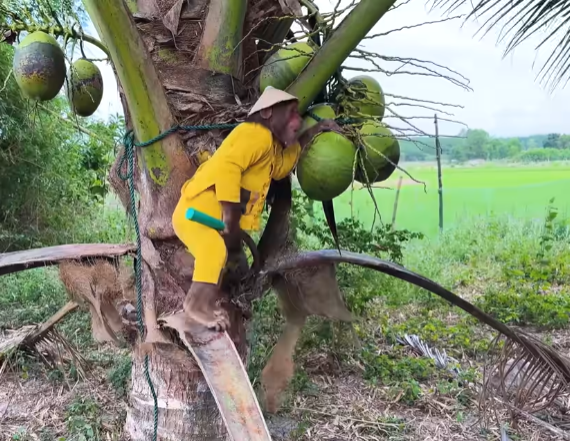
With practiced skill, Cutis climbed the tallest tree. His movements were careful and confident. One by one, he twisted the big coconuts free, letting them drop onto soft grass below. Thud. Thud. Thud. Each coconut hit the ground with a solid sound, like a promise. By the time the sun rose higher, Cutis had harvested more coconuts than anyone expected—round, heavy, and shining with fresh dew.
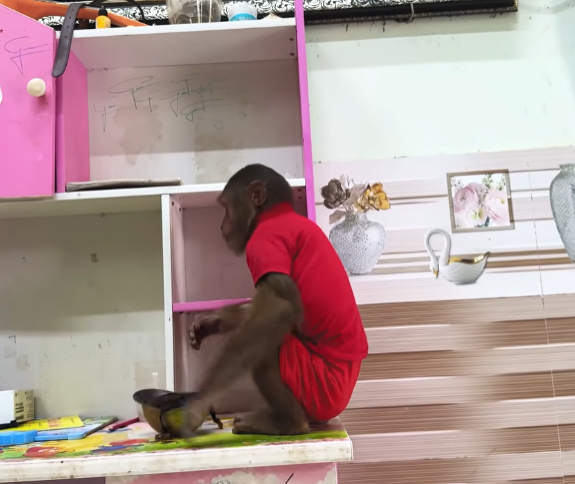
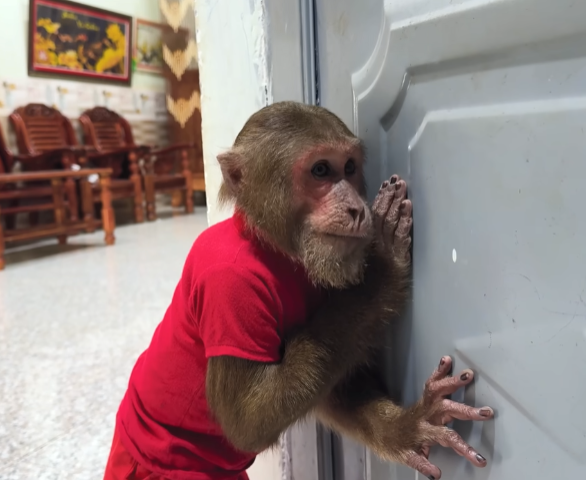
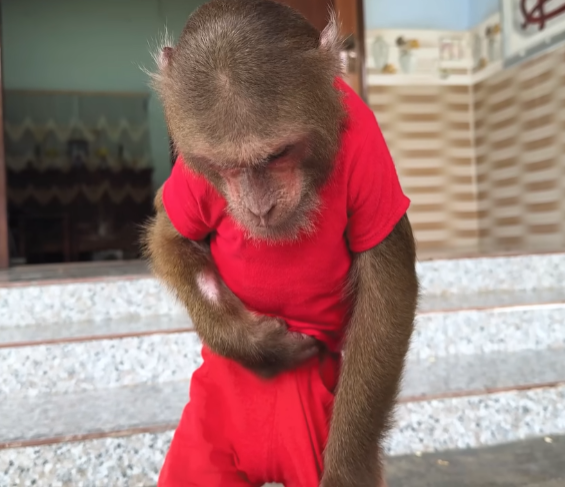
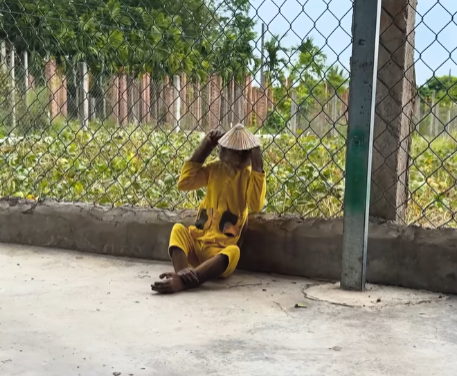
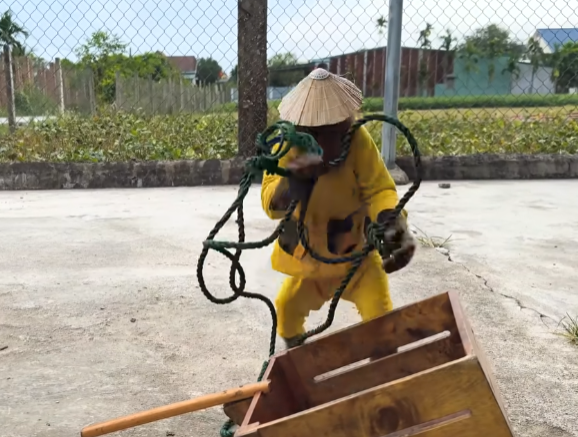
He loaded them onto the rickshaw, tying them securely with rope made from dried vines. The rickshaw creaked under the weight, but Cutis tightened his grip and smiled. This was important work. This was family work.
The journey to the market was long and dusty. Cutis pushed the rickshaw along the narrow road, passing rice fields, wooden houses, and curious villagers who stopped to stare. Some laughed softly in surprise. Others nodded with respect. It wasn’t every day they saw a monkey pushing a rickshaw full of coconuts like a hardworking trader.
At one point, the wheel got stuck in the mud. The rickshaw tilted dangerously. For a moment, it looked like everything would spill. Cutis dug his feet into the ground, muscles shaking, and with one final push, freed the wheel. He paused to catch his breath, wiped sweat from his brow, and continued forward. Giving up was not an option—not when a newborn life was waiting.
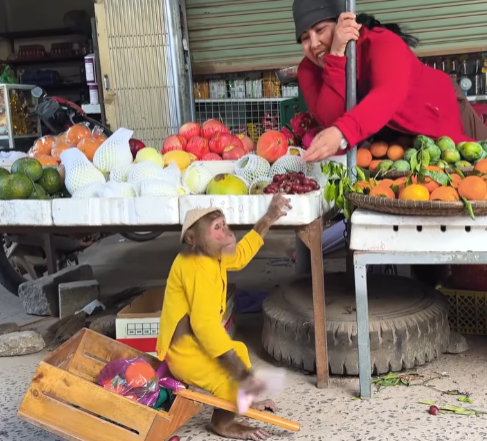
When Cutis finally reached the market, the place was already alive with sound. Vendors shouted prices, baskets overflowed with fruit, and the smell of cooked food filled the air. Cutis parked his rickshaw near the coconut sellers. At first, the humans were unsure. A monkey selling coconuts? But Cutis stood proudly beside his harvest, tapping the coconuts to show how fresh and heavy they were.

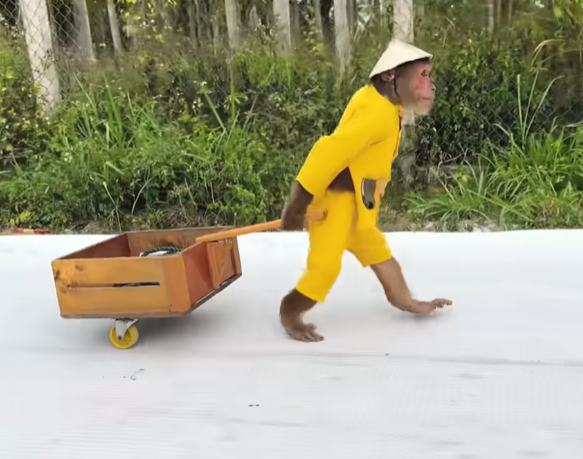
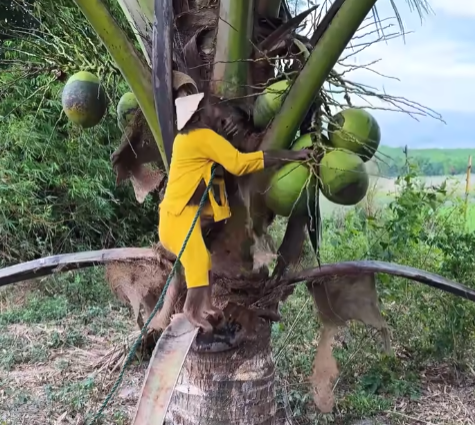
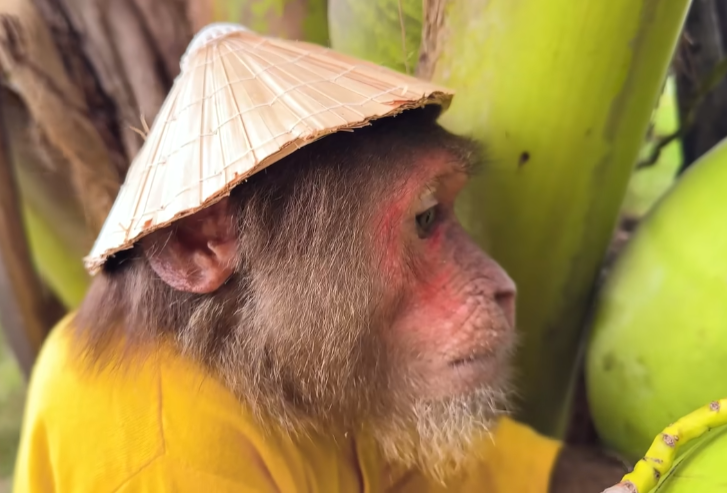
One by one, customers came. They checked the coconuts, nodded approvingly, and paid fair prices. The pile slowly grew smaller, while Cutis’s pouch filled with money. He counted carefully, remembering exactly what he needed. Not toys. Not treats. Milk.
With the last coconut sold, Cutis wasted no time. He hurried to a small shop at the edge of the market where milk was sold—fresh, clean, and safe for babies. He pointed, gestured, and even mimed feeding a baby. The shop owner’s expression softened with understanding. Carefully, the man poured milk into a sealed bottle and handed it over.
Cutis held the bottle like treasure.
The journey back felt longer, but Cutis moved faster, driven by urgency and love. The sun was now high, and heat shimmered on the road. Still, he pushed on, ignoring tired arms and aching legs. Every step brought him closer to the newborn baby monkey.
When he finally returned, the mother monkey looked up with worried eyes. The baby lay against her chest, tiny and weak. Cutis approached slowly, showing the bottle. The mother sniffed it, then looked at Cutis. There was trust in her gaze.
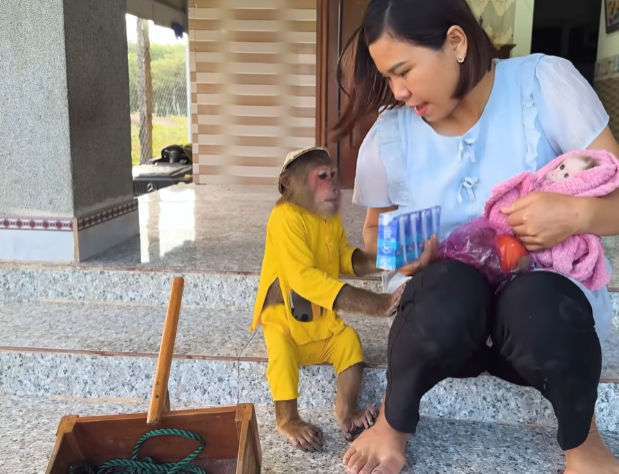
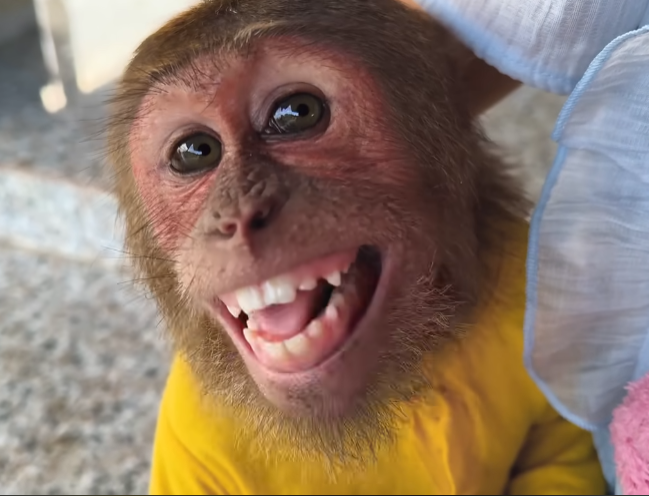
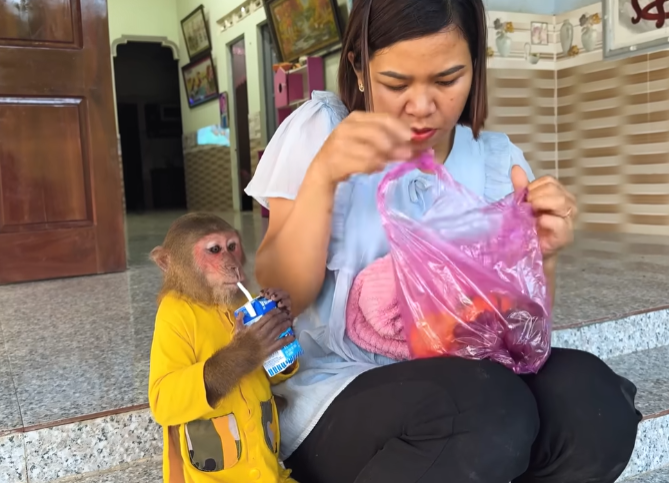
Gently, Cutis helped guide the bottle to the baby’s mouth.
At first, the newborn struggled. Then suddenly—suckling began. The baby drank eagerly, tiny hands trembling, eyes closing in relief. The mother let out a soft sound, half sigh, half cry. Other monkeys gathered quietly, watching in awe. No one spoke. This moment was sacred.
Cutis stayed close, holding the bottle steady, making sure the baby drank safely. When the baby finished, milk dribbled from its mouth, and it fell into a deep, peaceful sleep. The mother wrapped her arms around her child, her body finally relaxing.
The elders arrived soon after. They looked at the empty bottle, the tired but smiling Cutis, and the sleeping baby. They understood what had happened without a single word. Cutis had worked like a farmer, a trader, and a caretaker—all in one day.
As evening approached, Cutis sat quietly beside the mother and baby. He did not boast. He did not seek praise. He simply watched the baby breathe, small chest rising and falling, alive and safe.
That night, as the sky darkened and stars appeared, the story spread through the park and village alike. Cutis with the rickshaw. Cutis harvesting big coconuts. Cutis going to the market. Cutis buying milk. Cutis saving a newborn baby monkey.
And from that day on, whenever anyone spoke of true responsibility and love, they spoke of Cutis—the monkey who turned hard work into hope, and coconuts into life.