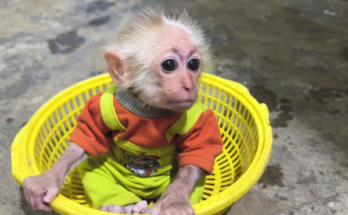
In the heart of a lush jungle, where the sunlight filtered through a dense canopy and the air hummed with life, a troop of monkeys carried on with their daily routines. From the smallest infants to the wise elders, each monkey had a role to play in the delicate balance of jungle life. But even in such a well-ordered society, chaos could erupt at any moment—especially when a mischievous little monkey crossed paths with a hot-tempered mother.
The story begins with a young monkey named Lilo. Lilo was curious, playful, and always full of energy, traits that made him beloved by the troop but sometimes landed him in trouble. He loved to explore, climb the tallest trees, and interact with every monkey he encountered. But today, his curiosity was about to meet a formidable obstacle: Zara, a mother monkey known throughout the troop for her short temper and fierce protectiveness over her baby.
Zara had been busy for most of the morning, tending to her infant, grooming its fur, and making sure it was fed and safe. She had little patience for disruption, especially when it involved someone interfering with her baby. Lilo, unaware of the tension he was about to create, bounded energetically from branch to branch, squealing with excitement as he discovered a cluster of ripe fruits dangling from a nearby tree.
When Lilo noticed Zara, he decided to have a bit of fun. With the playful innocence that only young monkeys can possess, he began teasing her from a distance. He swung from a vine, made exaggerated faces, and chattered loudly in a tone that mimicked the cries of a baby monkey. It was meant to be a joke—a harmless prank—but Zara immediately perceived it as a threat. Her protective instincts kicked in instantly.
Zara’s eyes narrowed, and her ears twitched sharply. She growled softly, a low warning sound that echoed through the nearby trees. Her infant clung to her chest, sensing the rising tension. Lilo, oblivious to the danger, continued his antics, laughing with his tiny squeaks and hopping closer, thinking Zara would eventually join in the playful energy.
But this was not a situation to laugh about. Zara leapt onto a higher branch, her movements swift and precise, positioning herself between Lilo and her baby. She bared her teeth, a clear sign that she was ready to defend her territory. Lilo paused, suddenly aware that his joke had gone too far. His heart raced as he realized he had accidentally crossed a line with one of the troop’s most formidable mothers.
In the jungle, respect for hierarchy is essential. Younger monkeys learn early that some adults are not to be trifled with. Lilo had underestimated Zara’s temperament, and now he had to face the consequences. Zara lunged toward him, a warning strike that narrowly missed but sent a jolt of fear through the little monkey. Lilo scrambled up a nearby tree, squealing in panic as he tried to escape her wrath.
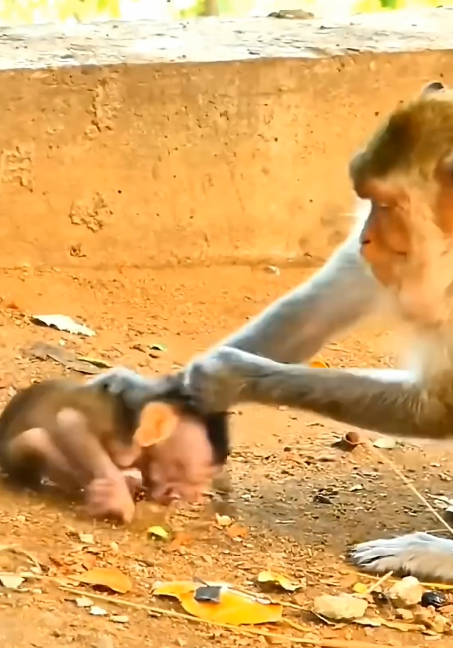
Other members of the troop quickly took notice. Elder monkeys watched from a distance, their eyes keen and experienced. They knew that conflicts like this could escalate rapidly if not managed carefully. Younger siblings of Lilo watched in fascination and terror, learning an important lesson about teasing, boundaries, and the dangers of angering a mother monkey.
Zara’s anger was not just about Lilo’s antics; it was about protection. In the wild, any perceived threat to a mother’s infant can be treated with extreme urgency. A moment of distraction, a misjudged play, or a misinterpreted gesture could put her baby at risk. Lilo’s teasing, though innocent in intent, triggered the natural instincts of defense, and Zara was prepared to make him understand the seriousness of his behavior.
Realizing that he needed a plan, Lilo tried to use his agility to his advantage. He darted between branches, attempting to put distance between himself and the angry mother. But Zara was quick and determined. She leapt from one tree to another with precision, always keeping an eye on him, making it clear that she was in control. Lilo’s energy was no match for her focus and experience.
The situation drew attention from nearby monkeys, who began to vocalize loudly. High-pitched calls, clattering of branches, and warning screams filled the air, creating a chaotic symphony that could be heard throughout the canopy. It was a typical jungle response to conflict—alerting others, establishing boundaries, and reinforcing social order.
Eventually, Lilo found himself on a narrow branch, too thin to hold both him and Zara. He froze, realizing that escape was no longer an option. Zara approached slowly, her eyes never leaving him, her growls soft but menacing. In that moment, Lilo understood the seriousness of the lesson he was about to learn.
Instead of attacking, Zara used a different approach. She banged her tail against the branch, a clear signal of warning and dominance. Lilo’s squeals turned into quiet murmurs as he lowered his head in submission. He knew that his teasing had been taken seriously, and the hot-tempered mother had shown him exactly why boundaries must be respected.
After a tense few minutes, Zara calmed slightly, retreating to a higher branch while keeping her baby close. Lilo, trembling but unharmed, realized that the danger had passed—but the lesson would stay with him forever. He had learned that curiosity and playfulness are important, but so are respect, awareness, and caution.
The troop gradually returned to normal, though the incident left a lasting impression. Younger monkeys whispered to one another, recounting the moment with wide eyes and exaggerated expressions. They would remember Lilo’s misadventure for months to come, using it as an example of what not to do when encountering a hot-tempered mother.
Later in the day, Lilo cautiously approached Zara and her infant, offering small gestures of peace. He presented a piece of fruit he had found, a symbolic apology in the language of monkeys. Zara sniffed the fruit, glanced at him, and, after a tense moment, allowed him to sit nearby—but not too close. Trust, once strained, must be rebuilt slowly. Lilo’s humility and understanding helped repair the social bond, reinforcing the lesson that mistakes are opportunities for growth.
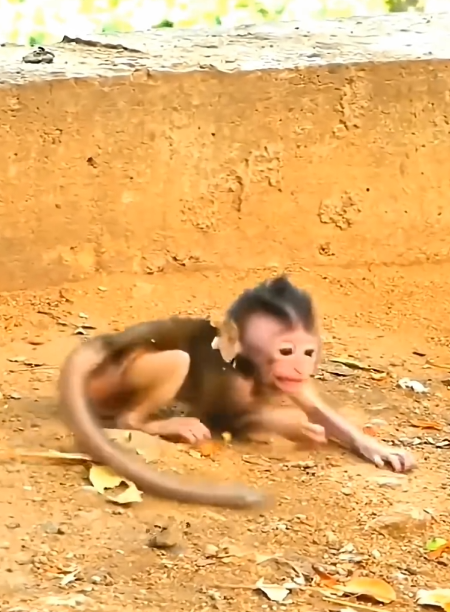
The incident also provided insight into the social dynamics of monkey life. Every troop has rules, whether explicitly taught or instinctively understood. Hierarchy, territory, and maternal protection shape interactions. Lilo’s playful misjudgment highlighted how quickly situations can escalate and how important it is to be aware of social cues.
By the evening, calm had returned to the jungle. The sun cast golden light over the treetops, and monkeys settled into their nests for rest. Lilo reflected, in his own way, on the day’s events. He had experienced fear, learned respect, and gained insight into the complexities of monkey society. Meanwhile, Zara remained vigilant, ensuring her baby slept safely, yet perhaps appreciating the value of teaching a young monkey an important lesson.
This story of a small, mischievous monkey accidentally teasing a hot-tempered mother illustrates the delicate balance of life in the wild. It reminds us that monkeys, like humans, live in a structured social world where actions have consequences. Curiosity and playfulness are essential for learning and growth, but understanding boundaries and respecting others is equally crucial.
In the end, life in the jungle is full of unexpected moments. Mistakes happen, tempers flare, and lessons are learned—often in dramatic, unforgettable ways. For Lilo, today was a day of adventure, fear, and enlightenment. For Zara, it was a day of protection, authority, and patience. And for the rest of the troop, it was another chapter in the endless story of survival, learning, and the sometimes hilarious, sometimes serious drama of monkey life.
Lilo would continue to play, explore, and grow, but the memory of teasing a hot-tempered mother would shape his future interactions. He had learned that humor and mischief must be balanced with awareness, and that respect for others—especially mothers with babies—is not just wise, but essential.
And so, the jungle returned to its rhythm: leaves rustling in the breeze, birds singing overhead, and monkeys swinging from branch to branch, each moment a delicate dance of curiosity, play, and survival. But the lesson of that day would not be forgotten, echoing in the canopy like a gentle reminder: in the life of monkeys, a little mischief can lead to a big lesson—especially when a hot-tempered mother is involved.