
The forest is alive with sounds: birds chirping, leaves rustling, insects buzzing, and monkeys chattering in high-pitched calls that echo through the canopy. Observing these creatures in their natural habitat, one cannot help but marvel at their intelligence, social complexity, and emotional depth. Monkeys are not merely playful animals; they are problem-solvers, caregivers, and keen observers of the world around them. It often makes people wonder: Can this happen with a monkey? Can they display behaviors that seem almost human, react in ways we didn’t expect, or even show feelings similar to ours? The answer, as scientists, wildlife enthusiasts, and everyday observers have discovered, is a resounding yes.
Monkeys exhibit a wide array of behaviors that can leave observers astonished. From the way they care for their young to their social hierarchies, emotional expressions, and problem-solving abilities, there is often a striking resemblance to human behaviors. One common area of amazement is how monkeys interact with their infants. Mothers show extraordinary patience, nurturing instincts, and guidance. They groom, carry, nurse, and teach their babies crucial survival skills. Observers often ask, Can a monkey feel the depth of love and care that humans do? The answer seems to be yes. A baby monkey clinging to its mother, squealing with joy, or seeking comfort during distress reveals that attachment, bonding, and emotional connection are very real in these primates.
Another example that sparks the question “Can this happen with a monkey?” is the expression of emotions beyond simple joy or fear. Monkeys display frustration, jealousy, anger, and empathy. For instance, young monkeys may cry or throw tantrums when denied food or attention, much like human children. Older monkeys often console distressed peers, sharing food or grooming them, which strongly suggests the capacity for empathy. Observers in the wild have documented monkeys reacting to the pain or distress of troop members, sometimes even attempting to help them. These behaviors are remarkable because they show that monkeys are capable of complex emotional responses that were once thought to be uniquely human.
Problem-solving and tool use further demonstrate that unusual or “human-like” behaviors can indeed happen with monkeys. Certain species, such as capuchins and macaques, are known to use sticks to extract insects from tree bark, stones to crack open nuts, and leaves as makeshift cups to drink water. In laboratory and wild observations alike, monkeys have displayed the ability to plan, learn from mistakes, and even teach younger troop members how to perform tasks. Witnessing such intelligence naturally leads to the question: Can monkeys think ahead and learn in ways similar to humans? The answer is unequivocally yes. Their actions suggest reasoning, memory, and observation skills that are highly sophisticated for non-human animals.
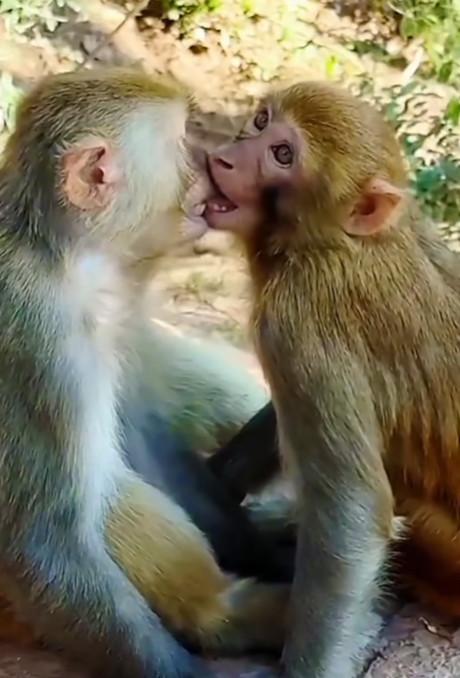
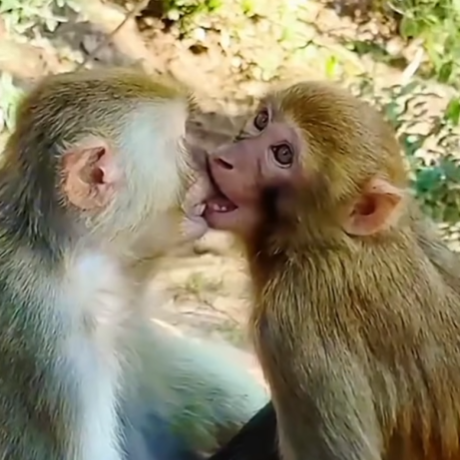
Social interactions within monkey troops also inspire wonder. Monkeys live in hierarchical societies, yet these hierarchies are flexible, negotiated, and maintained through both cooperation and conflict. Dominance is asserted through vocalizations, displays, or mild aggression, but alliances, friendships, and reciprocal grooming are equally important. It is not uncommon for monkeys to show reconciliation behaviors after a fight, such as grooming or offering gestures of appeasement. Witnessing these interactions often leaves humans asking, Can monkeys truly understand fairness, loyalty, and forgiveness? Studies in primatology confirm that many monkey species possess a nuanced understanding of social dynamics that mirrors human social interactions in many ways.
One particularly heartwarming scenario that makes people wonder, “Can this happen with a monkey?” involves acts of care toward the vulnerable. Baby monkeys, elderly members of the troop, or injured peers often receive attention and protection from others. For example, a mother may continue to carry and protect her injured offspring, while other troop members may share food or stand guard. Such acts are not instinct alone—they involve observation, empathy, and choice. In this way, monkeys display behaviors that are deeply compassionate, echoing the human capacity for caregiving and altruism.
Communication is another area where monkeys often astonish. Through a combination of vocalizations, gestures, facial expressions, and body postures, monkeys convey a wide range of messages: warnings of predators, calls for help, invitations to play, or signals of dominance. Some species have demonstrated the ability to understand complex sequences of calls, recognize individual voices, and even warn others about specific dangers in their environment. Observers often marvel at the complexity and question, Can monkeys truly communicate intentionally like humans do? While they do not have language in the human sense, their sophisticated communication system allows them to cooperate, teach, and maintain social bonds with remarkable efficiency.
Monkeys also display curiosity and playful experimentation, behaviors that seem almost magical to human observers. Young monkeys engage in games that involve balance, chasing, swinging, and problem-solving. They test boundaries, explore new objects, and learn from trial and error. Older monkeys, too, may manipulate their environment, fashioning tools or devising clever ways to access food. These behaviors often leave humans amazed and asking, Can monkeys experience curiosity and creativity in ways similar to us? The answer is yes—their playful exploration is a vital part of learning, social interaction, and adaptation to their environment.
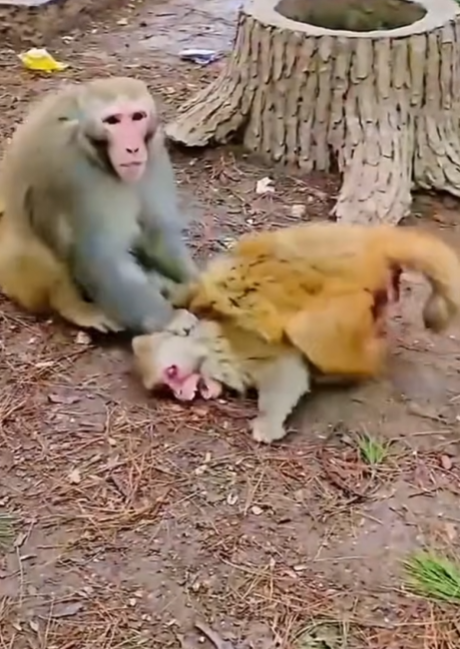
Another surprising aspect of monkey life that prompts the question “Can this happen with a monkey?” is their emotional response to loss or trauma. Monkeys have been observed mourning the death of a troop member, staying near the body, grooming it, or becoming quieter and more withdrawn. They remember past conflicts and show caution around individuals who have acted aggressively toward them. These reactions indicate a level of emotional depth, memory, and self-awareness that goes far beyond basic survival instincts. Observers often find themselves empathizing with these experiences, realizing that monkeys live rich emotional lives filled with grief, joy, fear, and attachment.
Mother-infant dynamics, in particular, provide some of the clearest evidence that monkeys can exhibit behaviors that seem extraordinary. A mother may spend hours grooming, carrying, and comforting her baby, teaching it essential survival skills, regulating its emotional state, and providing protection from predators. Observing a baby monkey throw a tantrum when denied food, only to be comforted moments later by the mother’s gentle grooming, reveals a complex cycle of emotion, discipline, and care. These interactions mirror human parenting in astonishing ways, prompting the question: Can monkeys experience and respond to love, frustration, and comfort like humans do? Evidence from field studies suggests that they can, displaying genuine attachment and responsiveness.
Even stranger, monkeys sometimes show problem-solving in social contexts that seem almost like planning or negotiation. For example, a monkey might cooperate with a peer to obtain food that is otherwise unreachable, demonstrating teamwork and patience. Older monkeys may teach these strategies to juveniles, passing knowledge down through generations. These behaviors highlight intelligence, social learning, and foresight, reinforcing the idea that monkeys are capable of thinking and planning beyond immediate needs.
Of course, not all surprising behaviors are positive. Monkeys can be aggressive, mischievous, and sometimes unpredictable. They may steal food, challenge dominant individuals, or engage in fights over territory. Yet even these behaviors are part of their learning process, helping them navigate the social hierarchy and develop problem-solving skills. Observing such interactions often leads humans to ask, Can monkeys understand consequences and adjust their behavior? The answer is clear: they do, through trial, error, and observation.
In conclusion, asking “Can this happen with a monkey?” is not only natural—it is essential to understanding their complex lives. Monkeys display intelligence, emotional depth, social awareness, and problem-solving abilities that often rival our expectations. They experience joy, anger, empathy, grief, and love. They communicate, cooperate, and teach. They explore, play, and learn from their environment and from one another. Observing them is a constant reminder that the animal kingdom is full of surprises, and that behaviors we once thought uniquely human—curiosity, compassion, creativity, and social intelligence—are present in these remarkable primates.
Every gesture, chirp, and movement in the life of a monkey tells a story of adaptation, learning, and emotion. When a baby clings to its mother, when a troop cooperates to solve a challenge, or when an individual shows empathy toward a distressed peer, one cannot help but think: Yes, this can happen with a monkey. It is a world full of wonder, complexity, and life lessons, and it reminds us that intelligence and emotion are not solely the domain of humans.
Monkeys challenge our assumptions, inspire our curiosity, and deepen our understanding of the natural world. They teach us that intelligence comes in many forms, that emotions are not limited to humans, and that life is rich with unexpected behaviors and lessons. Indeed, when we watch a monkey swing through the trees, care for a young one, or solve a clever problem, we are witnessing a living answer to that question: Can this happen with a monkey? Absolutely—and it happens every day, in the lush forests, bustling jungles, and hidden corners of our natural world.