The supercar had no business being there.
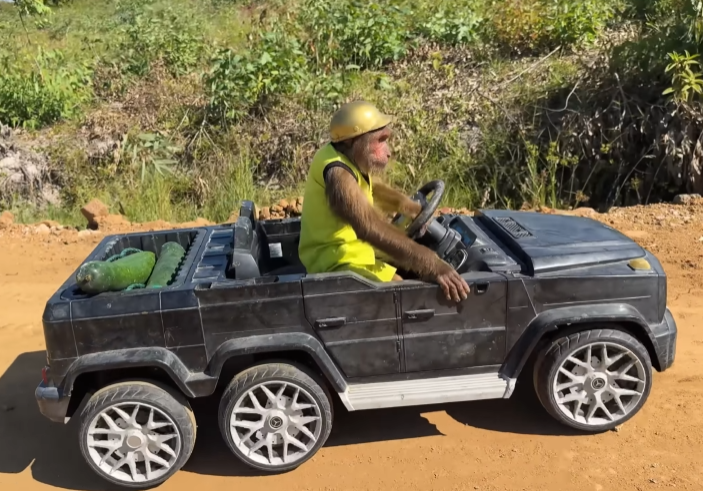
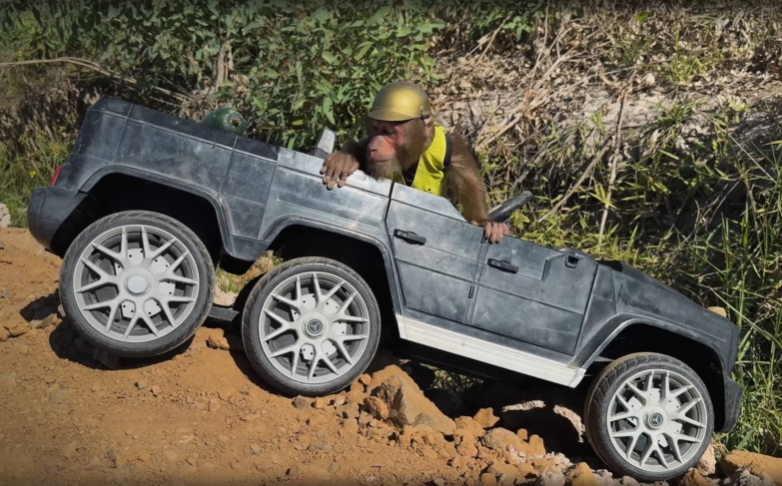
Its body was sculpted like liquid metal, painted in a deep, defiant red that usually reflected city lights and admiring faces. Low to the ground, wide and aggressive, it was designed for polished asphalt, roaring tunnels, and perfectly engineered curves. Yet here it was—silent, mud-splattered, and helpless—resting awkwardly between ancient trees and tangled roots, deep in the wilderness.
The driver, a man named Adrian Vale, stood a few steps away, hands on his hips, staring at the car in disbelief. The air smelled of damp earth and pine sap. Somewhere in the distance, a bird called out, sharp and mocking, as if laughing at his misfortune.
Just hours earlier, Adrian had been cruising along a mountain highway, the engine singing beneath him like a living thing. He had everything he thought he wanted: success, money, speed. The road had been empty, the sky a flawless blue. When he spotted a narrow dirt track branching off the main road, curiosity had taken over.
Just a short look, he’d told himself.
That single decision had led him here.
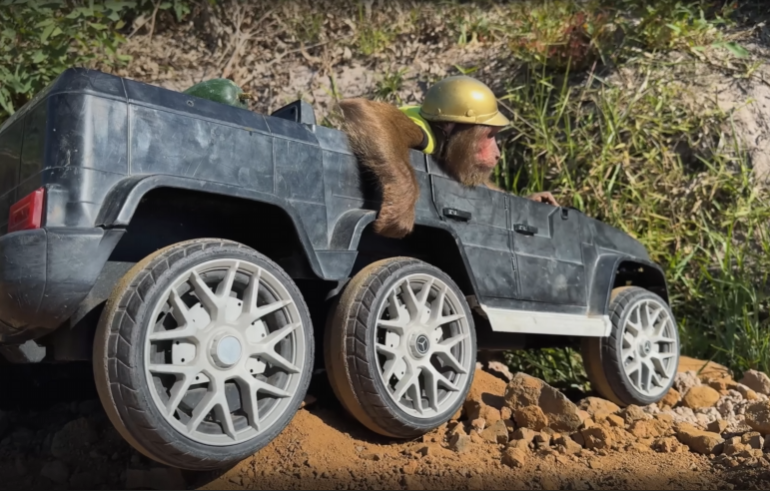
The dirt road quickly deteriorated into uneven ground, then into something barely recognizable as a path. Before Adrian could turn around, a sudden rainstorm swept in, transforming dry soil into slick mud. The supercar’s rear tires spun uselessly, and with one final, humiliating slide, the car settled into a shallow ditch. The engine refused to restart.
Now the rain had stopped, but the damage was done.
Adrian checked his phone—no signal. Of course. The wilderness swallowed sound and connection alike, leaving only the steady rhythm of nature. He leaned against the car, careful not to scrape the paint any further, and exhaled slowly.
“This is insane,” he muttered.
The wilderness did not answer.
As the light shifted, Adrian became painfully aware of how out of place he was. His expensive leather shoes were ruined with mud. His designer jacket felt useless against the cooling air. The car, once a symbol of freedom and power, now felt like an anchor—too precious to abandon, too fragile to move.
A rustling sound came from the trees.
Adrian froze.
From between the branches stepped an old man, tall and thin, carrying a worn backpack and a walking stick. His clothes were simple, his boots practical, and his eyes sharp with calm awareness.
“Didn’t expect to see that out here,” the man said, nodding toward the supercar.
Adrian blinked. “Neither did I.”
The old man smiled faintly. “You lost?”
“Stuck,” Adrian admitted. “Engine won’t start. No signal.”
The man circled the car slowly, studying it as if it were some rare animal. “Fast machine,” he said. “But the forest doesn’t care how fast you are.”
Adrian laughed weakly. “I’m starting to realize that.”
The man introduced himself as Elias, a former mechanic who now lived on the edge of the wilderness, guiding hikers and repairing tools for nearby villages. He crouched near the rear wheels, poking at the mud with his stick.
“You’ve buried yourself good,” Elias said. “Low clearance. Wrong tires. This car wasn’t meant for here.”
“I figured that out,” Adrian replied. “Any chance you can help?”
Elias looked at the sky, then back at Adrian. “Not tonight. But you can follow me to my cabin. We’ll deal with this in the morning.”
Adrian hesitated. Leaving the car felt wrong, like abandoning a wounded animal. But the wilderness was already growing darker, and he knew he had no better option.
Reluctantly, he followed Elias down a narrow trail. As they walked, Adrian noticed things he usually ignored—the way leaves shifted in the wind, the soft crunch of soil beneath his feet, the scent of wood and rain. Without the roar of the engine, the silence felt loud, alive.
Elias’s cabin was small but sturdy, built from rough timber and surrounded by wildflowers. Inside, a fire crackled, and the warmth seeped into Adrian’s bones.
Over a simple meal, the two men talked.
Adrian spoke of his life in the city, of deals and deadlines, of speed and competition. Elias listened quietly, occasionally nodding.

“You know,” Elias said at last, “machines like yours are built to conquer roads. But places like this”—he gestured toward the forest outside—“they don’t want conquering. They want respect.”
Adrian stared into the fire. “I thought speed meant freedom.”
Elias smiled. “Sometimes stopping does.”
The next morning, they returned to the supercar. Sunlight filtered through the trees, illuminating the damage. Mud caked the tires, and branches had scraped the sides, leaving faint scars on the perfect paint.
Elias brought tools, wooden planks, and a calm patience Adrian had rarely seen. Together, they worked—digging, lifting, adjusting. Adrian’s hands grew sore and dirty, but for the first time in years, he didn’t mind.
After hours of effort, the car finally rolled free.
The engine started with a reluctant growl, then settled into its familiar purr. Adrian felt a rush of relief, followed by something unexpected—gratitude.
Before leaving, he turned to Elias. “Thank you. For the help. And… for the lesson.”
Elias nodded. “Remember it. The wilderness doesn’t trap you to punish you. Sometimes it stops you so you can see where you are.”
Adrian drove slowly back to the main road, the supercar moving with a humility it had never known. When he reached the highway, he didn’t accelerate right away. Instead, he paused, looking back toward the trees.
The supercar was no longer just a symbol of speed.
It was a reminder.
Even the fastest machine in the world can be brought to a standstill—and sometimes, being stuck is exactly what you need to find a different kind of way forward.