The mat unrolls with a soft whisper against the floor, marking the beginning of a quiet promise—to move with intention, to breathe with awareness, to listen without judgment. Yoga flexibility is not about forcing the body into shapes; it is about opening space, especially in the hips, where tension, emotion, and long-held habits often reside.
The hips are powerful. They support our posture, carry our weight, and stabilize every step we take. Yet they are also one of the first places to tighten when life becomes stressful, when we sit too long, or when we carry emotions we don’t allow ourselves to release. Hip opening is not just physical. It is deeply personal.
We begin standing.
Feet rooted into the ground, knees soft, spine tall. A deep inhale lifts the chest, and on the exhale, the shoulders melt away from the ears. Already, the body starts to listen. This is the foundation of flexibility—not stretch, but awareness.
Stepping back into a gentle lunge, the front knee bends while the back leg lengthens. The hips sink slowly, cautiously, honoring their limits. There is no rush here. Each breath invites a little more space. Muscles that have been tight for years begin to soften, not through force, but through patience.
The hip flexors awaken.
These muscles work tirelessly in daily life—walking, sitting, standing, even sleeping. In yoga, we finally give them permission to let go. With arms reaching overhead, the spine lengthens upward as the hips sink downward. Strength and softness coexist.
This is flexibility.
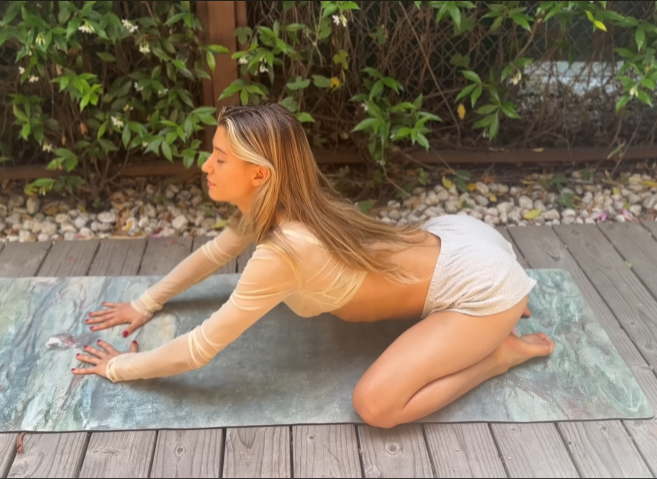
Lowering the back knee to the mat deepens the stretch. The body responds with sensation—sometimes mild, sometimes intense. The key is to breathe through it, not escape from it. In the hips, sensation often comes with emotion. A tightness releases, and suddenly there is space not just in the body, but in the mind.
We transition slowly to the floor.
Seated, one leg bends inward while the other extends. A gentle forward fold follows, spine long, heart open. The hips rotate subtly, encouraging balance between effort and ease. The stretch travels deep into the outer hip, the place where stress often hides quietly.
Flexibility is not measured by how far you fold.
It is measured by how honestly you meet yourself.
Next comes the butterfly pose. Soles of the feet meet, knees falling outward like open pages of a book. Hands rest on the ankles, spine tall. With each exhale, the knees sink closer to the floor—not because they are pushed, but because they are allowed.
This pose teaches surrender.
The hips are opening now, not dramatically, but steadily. The inner thighs soften. The lower back relaxes. The breath flows freely. There is a sense of grounding, of being supported by the earth beneath you.
From here, the body leans forward gently. The stretch deepens, and stillness takes over. In this moment, flexibility becomes meditation. Thoughts slow. The breath becomes the anchor.
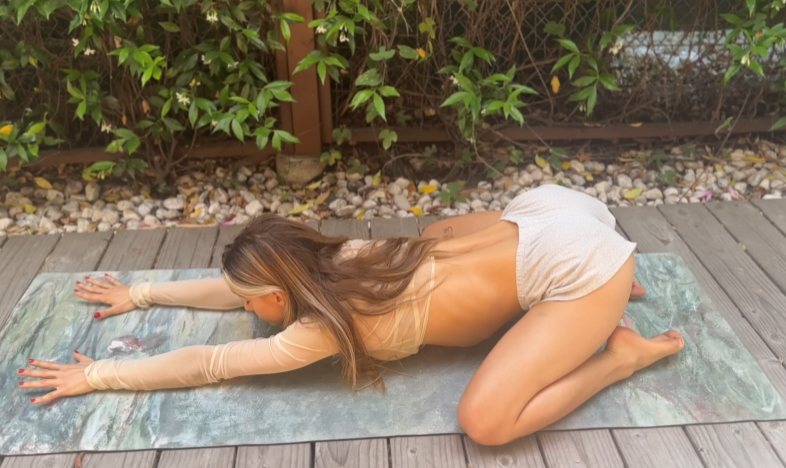
Moving onto the back, the knees draw into the chest, then open wide in a gentle hip opener. Hands rest on the knees, guiding them outward with care. The lower spine melts into the mat, releasing tension that has been held unconsciously.
This is where many feel it—the deep release.
The hips begin to soften fully, allowing energy to move freely. This pose asks nothing of you except presence. No effort. No performance. Just breath and gravity.
We shift into a figure-four stretch. One ankle crosses over the opposite knee, creating a deep external hip opening. The stretch is specific, targeted, and powerful. The breath must stay steady here. Any resistance is met with kindness.
Yoga flexibility is not about conquering the body.
It is about cooperating with it.
Rolling to one side, we come into a seated spinal twist. Though subtle, this pose supports hip mobility by releasing the surrounding muscles. The spine rotates, the hips stabilize, and balance is restored.
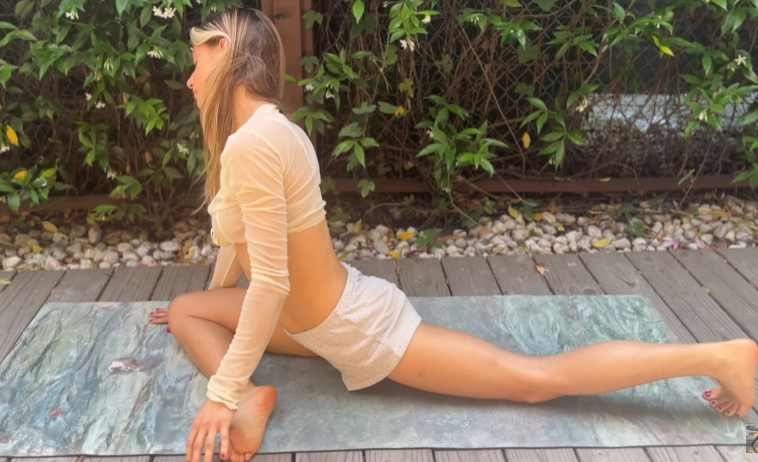
Every movement in yoga is connected.
Tight hips affect the back. A tight back affects posture. Opening the hips opens the entire system.
One final pose brings it all together: a long, supported hip-opening stretch where the body fully surrenders. Whether it is a deep squat, a resting pose, or a reclined opener, the body finds stillness. Muscles relax. Breath deepens.
This is where flexibility truly happens.
Not in motion—but in pause.
As the practice comes to an end, the body feels lighter. Movement is easier. The hips feel spacious, free, alive. But more than that, there is a sense of emotional release—a quiet clarity.
Yoga hip opening is not a destination.
It is a journey inward.
Each time you return to the mat, the hips tell a different story. Some days they resist. Some days they soften quickly. Both are valid. Both are progress.
Flexibility is not about how deep you go.
It’s about how deeply you listen.