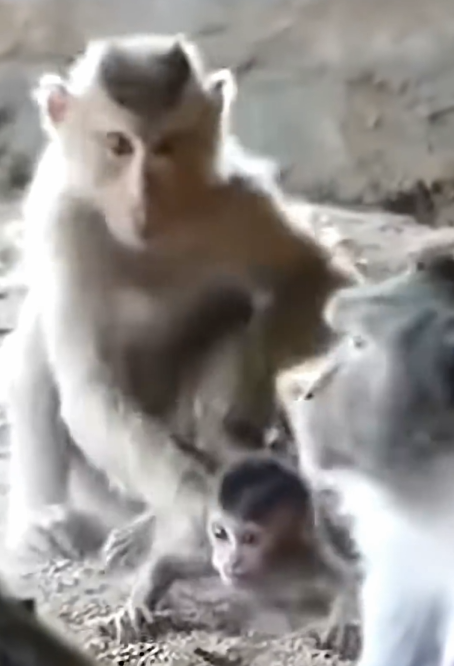
In the dense, green expanse of the jungle, where sunlight filtered through towering trees and the air was filled with the chorus of birds and insects, a young baby monkey named Kibo lived with his troop. Kibo was small but spirited, with golden-brown fur that shimmered in the sunlight and big, curious eyes that never stopped exploring. Life in the troop was a mixture of play, learning, and constant vigilance—babies had to grow quickly to survive, but under the care of their mothers and elders, life was also filled with warmth, love, and safety.
Kibo’s days were usually peaceful. He would cling to his mother, Mera, as she foraged for fruits and leaves, watch his grandmother groom the older monkeys, and play with the other babies in a safe, shaded clearing. His laughter and tiny squeals of joy often echoed through the trees, bringing smiles to the faces of all in the troop. But one day, the rhythm of Kibo’s life was shattered.
Humans rarely ventured this deep into the jungle, but sometimes they did. Not all of them came with good intentions. A group of poachers, seeking exotic animals for illegal trade, had entered the forest. They were cunning, patient, and cruel, and their eyes were set on capturing young monkeys like Kibo, whose cuteness made them a high-value target.
Kibo was playing near the riverbank, chasing a dragonfly with his tiny hands, when the danger appeared. A sudden rustle in the bushes caught his attention. Before he could retreat, a shadow fell over him. The humans moved quickly, their hands reaching for the unsuspecting baby. Kibo squealed in fear, scrambling to escape, but the attackers were faster. Within moments, he was snatched from the ground, his tiny limbs flailing, his cries piercing the jungle air.
His mother, Mera, turned just in time to see the horror unfold. She screamed, a high-pitched, desperate cry that echoed across the clearing. The troop reacted instantly. Adult males leaped from branches, screaming and baring their teeth, attempting to chase the humans away. But the poachers were prepared, moving swiftly to escape with their prize. Kibo’s heart pounded with terror as he realized he was separated from everyone he loved—the warmth of his mother, the comfort of his troop, and the safety of the trees.
The ride to the humans’ camp was frightening. Kibo was confined in a small, dark cage, the bars cold and unyielding against his soft fur. The smells, the unfamiliar sounds, and the lack of space overwhelmed him. He tried to reach through the bars, squealing for his mother, but she was nowhere to be seen. His tiny body shook with fear and sadness, and for the first time, he felt the vulnerability of being completely alone.
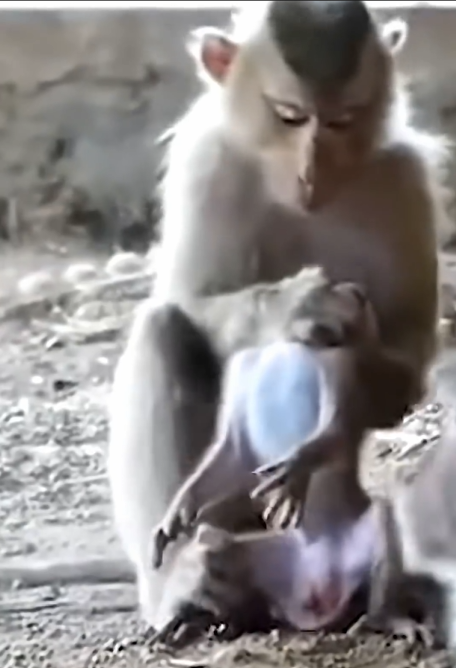
Days passed in the cramped cage. The humans offered him food, but it was strange and unfamiliar, nothing like the fresh fruits he had eaten in the forest. He missed the freedom to climb, swing, and explore. Most of all, he missed the touch of his mother, the soothing presence of his grandmother, and the camaraderie of the troop. Each day felt longer than the last, and Kibo began to understand just how cruel and unpredictable the world could be outside the jungle.
Back in the forest, Mera was not idle. She had not given up hope. She and the troop had followed the scent and tracks left by the poachers. Guided by instinct and determination, they moved quietly through the underbrush, avoiding danger and staying close enough to monitor Kibo’s captors. Every rustle of leaves and snap of a twig heightened Mera’s anxiety, but she pressed forward, driven by maternal love stronger than fear itself.
Kibo’s situation in the human camp was grim. He watched older captured animals struggle and resist, understanding through observation the importance of caution. Yet, his instincts told him to fight, to escape, and to survive. He clung to the hope that his troop would find him, that his mother would not abandon him, and that the jungle would be his sanctuary once more.
One evening, as the sun dipped below the horizon and painted the sky with deep reds and purples, the humans grew careless. They left the cage unattended for a short while, thinking the baby was too weak to escape. But Kibo, though frightened, saw his chance. He began to manipulate the bars with his tiny hands, testing for weaknesses, learning the boundaries of his confinement. The effort was exhausting, but desperation gave him strength, and slowly, he discovered a small gap just wide enough to squeeze through.
Freedom was within reach, but it was still dangerous. The humans were nearby, and one wrong move could endanger him again. Kibo waited, holding his breath, listening to their footsteps, and then, when the moment was right, he made a dash for it. His small body squeezed through the gap, landing on the forest floor with a soft thud. The underbrush offered immediate cover, and he dashed toward the direction he remembered his mother and troop had been.
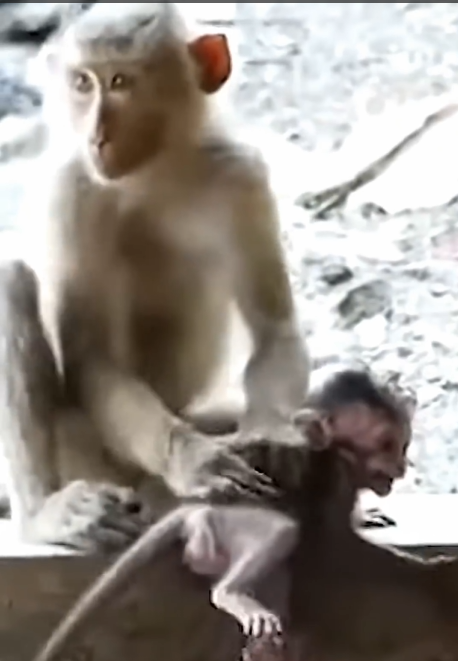
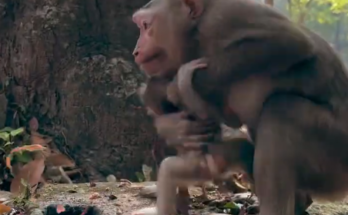
Back in the forest, Mera had already grown anxious. The poachers had slowed down, but she was alert, calling softly, searching with her sharp eyes. When she saw a small, familiar golden figure darting through the underbrush, she didn’t hesitate. She raced forward, calling to him, and Kibo responded instinctively, leaping into her arms with cries of relief.
The reunion was emotional. Kibo clung tightly to Mera, trembling from the ordeal, while she groomed his fur gently, soothing him with her soft murmurs. The troop gathered around, watching quietly, offering protection and reassurance. The danger had passed for now, and Kibo learned that even the worst moments could be overcome with courage, resilience, and the unwavering love of family.
That night, as the troop settled in their favorite trees, Kibo nestled beside his mother and grandmother, feeling the warmth of his family and the safety of his home. The experience had been terrifying, but it had also taught him valuable lessons about vigilance, courage, and trust. He understood now, more than ever, the importance of his troop and the protective instincts of those who loved him.
Life in the forest continued, but the memory of the evil kidnapper lingered as a cautionary tale. Kibo became more aware, more cautious, yet still playful and curious. He explored the jungle with renewed respect, learning to balance adventure with prudence. The jungle was his home, his sanctuary, and with his family by his side, he knew he could survive anything.
In the end, the story of Kibo—the poor baby monkey who faced cruelty, fear, and captivity—was also a story of resilience, hope, and the unbreakable bonds of family. The forest, with all its dangers, remained a place of life, love, and protection for those who understood its rhythms. Kibo’s journey from terror to reunion became a testament to the strength of spirit, the power of maternal love, and the courage it takes to survive and thrive in the wild.
And as the moon rose high above the canopy, casting silver light across the trees, Kibo lay nestled in his mother’s embrace, dreaming of safer days, endless adventures, and the love that had brought him back from the brink of despair.