A beginner-friendly stretching routine doesn’t need fancy equipment, a gym membership, or advanced flexibility. All you need is a small space, comfortable clothing, and a desire to give your body some gentle care. Stretching is one of the simplest and most effective ways to ease muscle tension, improve mobility, reduce stress, and support better posture—especially if you spend long hours sitting, standing, or doing repetitive tasks.
This guide presents an easy back and leg stretching routine that you can do right at home, even if you’re brand new to fitness. Each stretch is simple, safe, and designed to help you feel lighter, looser, and more relaxed.
Why Stretching Matters
Whether you’re active or sedentary, your muscles naturally tighten throughout the day. Tight hamstrings can pull on your lower back, weak hip mobility can make walking or bending harder, and stiffness in the spine can lead to discomfort or fatigue. Stretching helps by:
- Improving blood flow to stiff areas
- Releasing tension after long periods of sitting
- Enhancing flexibility over time
- Preventing injuries during daily activities
- Reducing stress and promoting deep relaxation
This routine focuses on the back and legs because these areas affect your movement more than most people realize. Relieving tension here will noticeably improve your comfort and mobility.
⭐ Warm-Up (2 Minutes)
Before stretching, warming up the muscles slightly will help prevent injury. You don’t need anything intense—just enough movement to wake your body up.
Do each for 30 seconds:
- March in place – Lift your knees gently.
- Arm circles – Loosen your shoulders.
- Hip circles – Hands on waist, draw big circles.
- Light forward bends – Slight hinge to warm the spine.
Now your body is ready for deeper stretches.
🧘♀️ Easy Back & Leg Stretching Routine
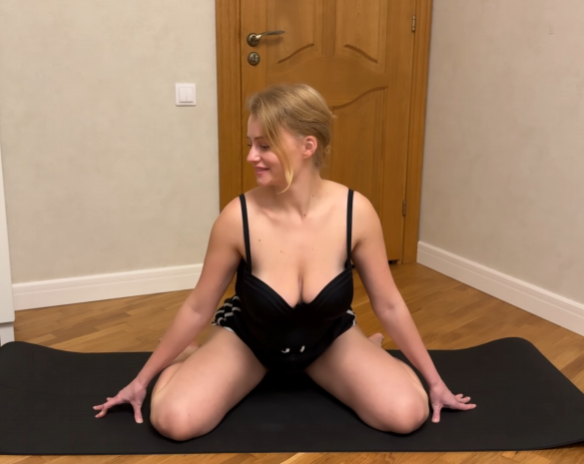
Do these stretches slowly. Hold each position for 20–30 seconds, breathing deeply. Repeat the routine 1–2 times if you want extra flexibility.
1. Standing Forward Fold (Hamstrings & Lower Back Stretch)
Stand tall with feet hip-width apart. Slowly bend forward from the hips and let your upper body hang. Bend your knees slightly if needed.
Benefits
- Lengthens tight hamstrings
- Relieves lower back tension
- Encourages spinal relaxation
Tip
Don’t force your hands to touch the floor—just hang comfortably and let gravity do the work.
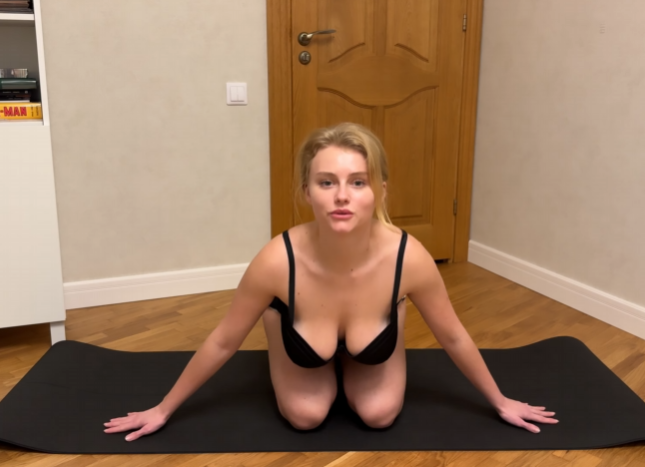
2. Cat-Cow Stretch (Spine Mobility)
Start on your hands and knees.
- Cow: Drop your belly and lift your chest.
- Cat: Round your spine like a scared cat.
Move slowly between the two.
Benefits
- Increases spine flexibility
- Loosens tight back muscles
- Great for easing morning stiffness
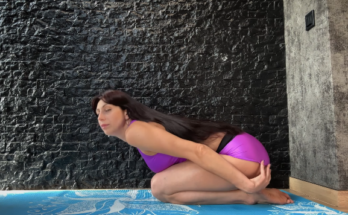
3. Child’s Pose (Back Relaxation Stretch)
Sit back onto your heels, stretch your arms forward, and lower your chest to the floor.
Benefits
- Stretches the entire spine
- Reduces stress and slows breathing
- Releases shoulder tension
Tip
If your hips don’t touch your heels, open your knees wider or place a cushion under your hips.
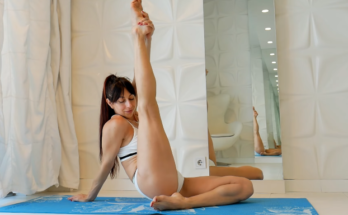
4. Seated Hamstring Stretch
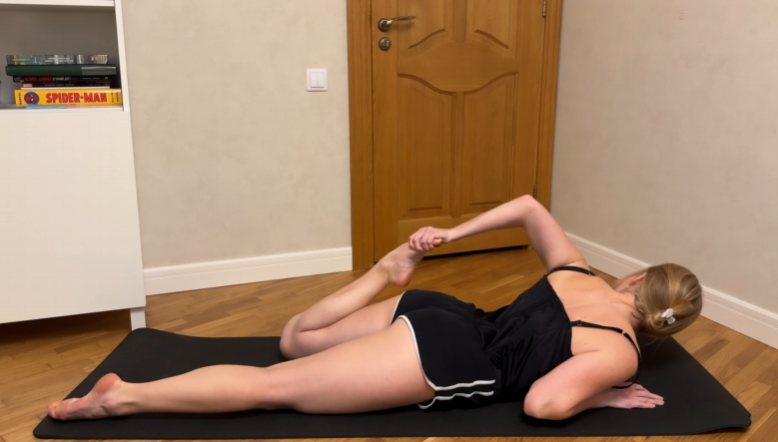
Sit on the floor with one leg extended forward and the other bent. Reach toward the extended foot with a straight spine.
Benefits
- Deep stretch for the hamstrings
- Excellent for flexibility
- Helps reduce lower back pulling caused by tight legs
Tip
Keep your chest lifted—avoid rounding your back.
5. Figure-4 Stretch (Glutes & Hips)
Lie on your back, bend your knees. Place your right ankle over your left thigh, forming a “4.” Pull your left leg toward your chest.
Benefits
- Loosens tight glutes
- Relieves lower-back pressure
- Helps reduce hip stiffness from sitting
Switch sides after 20–30 seconds.
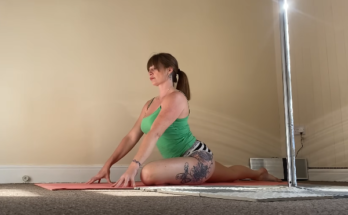
6. Hip Flexor Stretch (Front of Hips & Thighs)
Kneel on your right knee, left foot forward. Gently lean forward until you feel a stretch at the front of the right hip.
Benefits
- Opens hip flexors
- Helps correct posture from long sitting
- Reduces stress on lower back
Switch sides.
7. Calf Stretch Against Wall
Stand facing a wall. Step one foot back and press your heel down while leaning forward.
Benefits
- Stretches tight calves
- Supports better walking posture
- Helps with ankle mobility
Switch legs and repeat.
8. Knees-to-Chest Stretch (Lower Back Relief)
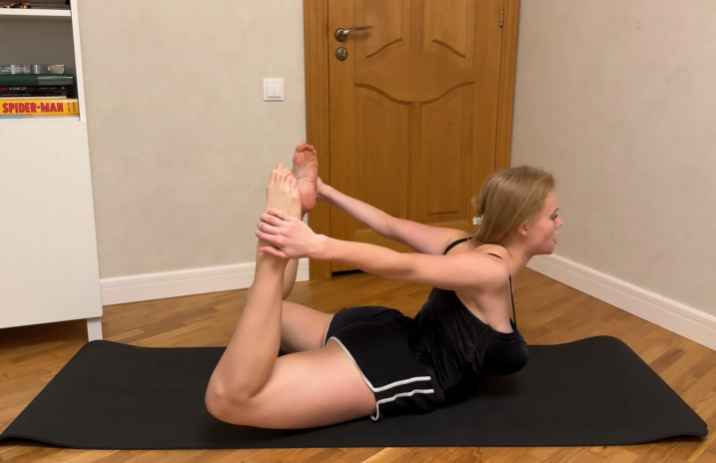
Lie on your back and pull both knees toward your chest. Hug them gently.
Benefits
- Instant relief for lower back tension
- Great cool-down stretch
- Relaxes the entire spine
Hold for 30–40 seconds if it feels good.
⭐ Bonus Stretch: Butterfly Pose (Inner Thighs & Hips)
Sit with the soles of your feet together. Hold your feet and gently press your knees toward the floor.
Benefits
- Improves hip openness
- Helps with leg flexibility
- Reduces tension from long sitting or squatting
🌟 Breathing Tips for Better Stretching
Your breath is your most powerful tool during stretching. Use it to deepen each stretch safely:
- Inhale to prepare
- Exhale to relax deeper
- Avoid holding your breath
- Slow, calm breaths help muscles release tension
Think of your breath as telling your body: “It’s okay. Relax.”
🏠 How Often Should You Stretch?
For beginners, 10–15 minutes a day is perfect. You can stretch:
- In the morning to wake up your body
- After work to release stiffness
- At night to relax before sleep
Consistency matters more than intensity. Gentle daily stretching will give you better results than one hard session per week.
💛 Common Mistakes to Avoid
Even beginners can stretch safely if they avoid these simple mistakes:
❌ Forcing the stretch
Never push into sharp pain. Stretching should feel good.
❌ Holding your breath
Breathing helps muscles relax.
❌ Rounding your back unnecessarily
Keep your spine long to avoid strain.
❌ Skipping warm-up
Cold muscles are more prone to injury.
🌈 How This Routine Helps Your Daily Life
After 1–2 weeks of regular stretching, many people notice:
- Less lower-back pain
- Easier bending, walking, and sitting
- Better posture
- More energy and smoother movement
- Fewer muscle cramps
- Better sleep due to reduced tension
Stretching is like giving your body a daily “reset,” especially if you work long hours or live a busy lifestyle.
✨ Conclusion
A beginner-friendly stretching routine doesn’t have to be complicated. With just a few simple movements—forward folds, back stretches, hip openers, and leg stretches—you can improve flexibility, reduce pain, and make your body feel lighter and healthier every day.
The most important part is consistency. Start slow. Breathe deeply. Enjoy the feeling of your muscles relaxing and your stress melting away. Your body will thank you every time.
If you’d like, I can also write:
✅ A 15-minute video script
✅ A more advanced stretching routine
✅ A version with emojis and cute tone
Just tell me!