The journey to greater flexibility doesn’t have to be intimidating, painful, or complicated. In fact, the most effective paths toward improving mobility are the gentle, consistent, and enjoyable ones—the ones that invite you to breathe deeply, move slowly, and listen to your body. That is the heart of Flexibility Flow: Stretching Made Easy, a practice designed to make stretching feel natural, soothing, and accessible for everyone.
Whether you’re a beginner, someone returning to movement after a long break, or simply looking for a calming daily routine, this flow offers a simple and enjoyable way to increase range of motion, release tension, and reconnect with the body. No intense poses. No pressure to perform. Only ease, softness, and a natural unfolding of flexibility.
Beginning With Gentle Stillness
The session starts in a comfortable seated position. Legs crossed, hands resting softly on the knees, the spine lengthens effortlessly upward. Before any physical movement begins, the first stretch happens internally—through breath.
A slow inhale through the nose brings air deep into the belly. A long, smooth exhale encourages the shoulders to relax, the jaw to release, and the mind to settle. Repeating this breathing pattern for a few cycles helps soften the entire body and prepares the joints and muscles for gentle stretching.
Setting an intention adds meaning to the practice. The intention may be:
- Move with ease.
- Let go of tension.
- Feel lighter.
- Enjoy each moment.
Neck & Shoulder Awakening
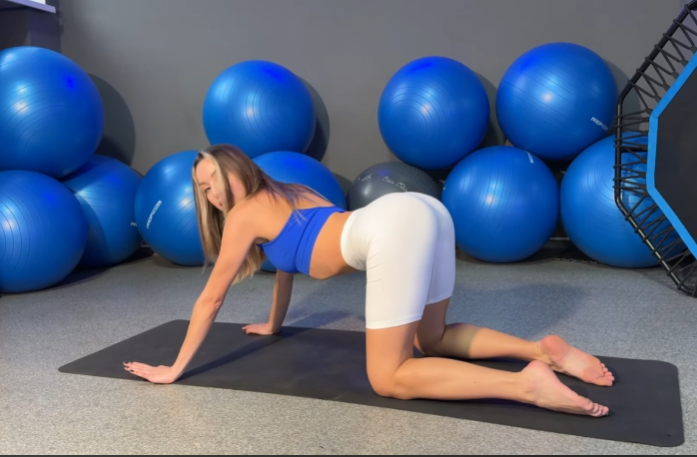
Flexibility often begins at the top of the body, where stress accumulates. Simple neck circles, performed slowly, start to release stiffness. The right ear drops toward the right shoulder, then the chin moves slowly across the chest to the left, maintaining a smooth, fluid motion.
The shoulders follow next—lifting upward with an inhale and rolling backward with an exhale. These shoulder rolls open the chest, improve posture, and warm the upper body.
This easy warm-up sets a soothing tone: soft, calm movements that gradually prepare the body for deeper flexibility.
Gentle Side Stretches
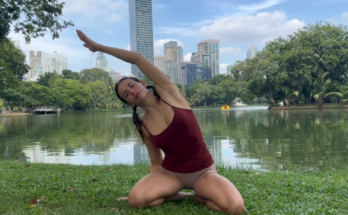
From the seated position, one arm reaches overhead as the body leans to the side. The stretch runs along the rib cage and waist—areas that often feel tight but are rarely intentionally opened. The gentle side bend expands the lungs and increases mobility in the torso.
Switching sides brings balance, encouraging equal openness on both right and left. The movement is slow, easy, and peaceful, emphasizing breath over intensity.
Cat-Cow for Spine Flexibility
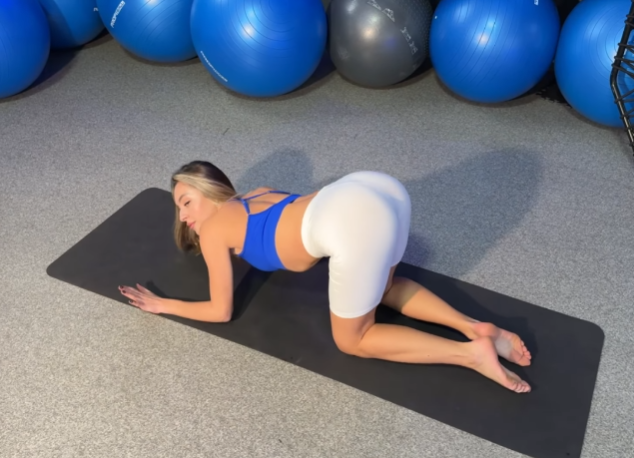
Moving onto hands and knees brings the body into a familiar and soothing pattern: Cat-Cow pose. With each inhale, the belly drops and the tailbone rises, creating a gentle arch. With each exhale, the spine rounds and the head softens downward.
This simple movement:
- warms the spine
- awakens core muscles
- encourages natural back flexibility
- releases tension stored in the lower back
Cat-Cow acts as a bridge between upper-body loosening and deeper hip and leg stretching. It also sets the breath rhythm that will guide the entire flow.
Hip-Opening Lunges
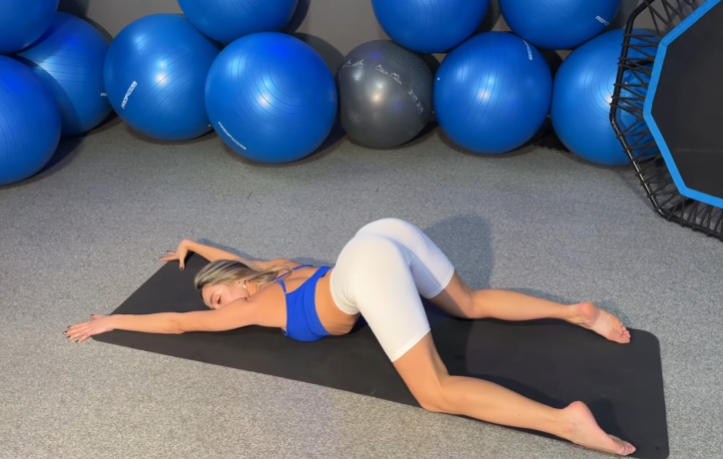
One foot steps forward into a gentle low lunge. The front knee stays stacked over the ankle, and the back knee rests comfortably on the mat. The hips sink forward just enough to feel a mild stretch along the hip flexor—the muscular area at the front of the hip that often tightens from long hours of sitting.
This movement isn’t about forcing a deep stretch; it’s about finding a spot where the body feels a pleasant opening. A few slow breaths allow the muscles to soften.
Switching sides ensures both hips receive equal attention.
Easy Hamstring Stretch
From the low lunge, shifting the hips backward brings the body into a gentle hamstring stretch. The front leg extends, toes lifting toward the face, as the hands rest lightly on the ground or thighs.
The goal is not to reach the toes or fold deeply. Instead, the flow focuses on lengthening the back of the leg with mindful breathing. Each inhale lengthens the spine; each exhale relaxes the hamstring.
Even a small stretch offers big benefits when done consistently.
Seated Forward Fold
Returning to a seated position with legs extended, the body folds gently forward over the legs. The knees can stay slightly bent, keeping the stretch easy and comfortable.
The forward fold supports:
- lower-back release
- hamstring lengthening
- calming of the nervous system
Rather than pulling or forcing, the upper body simply drapes forward, guided by gravity and breath. The softness of this pose teaches patience—one of the core elements of building flexibility.
Hip Mobility: Butterfly Stretch
Bringing the soles of the feet together and allowing the knees to fall outward naturally creates the Butterfly stretch, a relaxing hip-opening position. Hands rest lightly on the feet or ankles, and the back stays long.
Gently pressing the knees downward—only if it feels comfortable—encourages more opening through the inner thighs and groin. A subtle forward lean deepens the stretch slightly, but again, comfort is key.
This part of the flow brings awareness to the hips, one of the tightest areas in the body for many people.
Twists for Spinal Flexibility
Next, the body transitions into a simple seated twist. One hand rests behind the back while the opposite hand gently presses against the knee. The twist is soft, never forced, allowing the spine to rotate naturally.
Twists improve mobility, aid digestion, and balance muscular tension along the spine. The movement is repeated on both sides, promoting symmetry throughout the body.
Child’s Pose for Full-Body Release
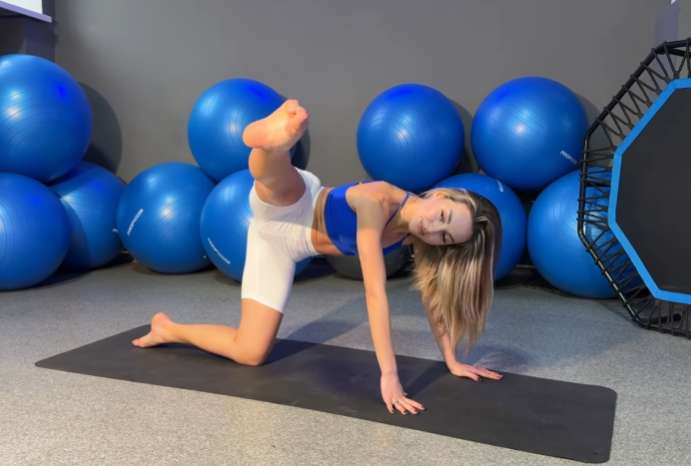
Kneeling on the mat, the hips sink back toward the heels as the forehead lowers gently to the ground. Arms extend forward in front or rest calmly alongside the body.
This comforting and restful position stretches:
- the lower back
- the hips
- the shoulders
- the entire spine
Child’s Pose is one of the most calming stretches in yoga, reminding the body to soften and let go.
Final Stretch: Lying Spinal Twist
Lying on the back, the knees draw toward the chest before dropping to one side. Arms extend out to form a T-shape, allowing the body to release deeply into the twist.
This pose offers gentle stretching across the back, hips, and side body. Holding the twist for several slow breaths encourages a peaceful state of relaxation. The movement repeats on the opposite side to finish the stretch fully.
Closing With Relaxation
The flow ends in Savasana, the final resting pose, where the body lies flat and still. The breath deepens, the muscles soften, and the mind grows quiet.
Here, the benefits of the practice settle in, reminding the practitioner that flexibility grows through:
- consistency
- relaxation
- awareness
- gentle movement
Flexibility is not about forcing the body into extreme shapes—it is about creating space, inviting softness, and moving with kindness toward yourself.