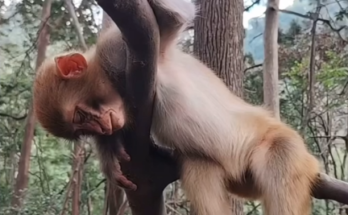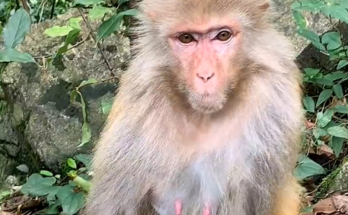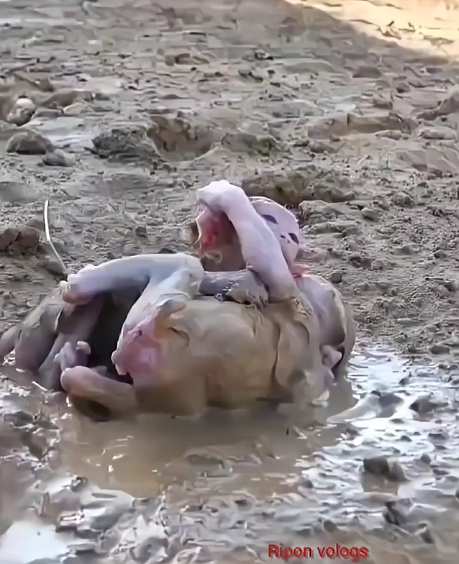
In the dense, misty forests of Southeast Asia, where sunlight barely pierced the thick canopy and the scent of earth and rain mingled in the air, a tiny macaque was struggling to survive. The little macaque, barely a month old, was weaker than the rest of his siblings. His fur, once soft and golden, was now matted and patchy, and his big brown eyes seemed to carry a weight far beyond his age. He had been born during the wet season, a time when food was scarce and dangers were plentiful. From the very beginning, life had been unforgiving.
The little macaque’s mother, a protective yet weary female named Sari, did everything she could to keep him alive. She had already birthed three healthy babies in previous years, and she knew the forest’s dangers intimately. She had learned which predators were most dangerous, which trees bore the sweetest fruits, and which waters were safe to drink. But caring for a weakling was an entirely different challenge. The tiny macaque could not cling to her as strongly as his siblings. He cried incessantly, drawing the attention of insects and even larger animals. His cries, once soft and endearing, had become a constant worry for Sari.
The forest was merciless. Eagles circled overhead, snakes slithered silently among the roots, and opportunistic predators were always on the lookout. Even food was a struggle. Sari would search tirelessly, tearing apart bark and foraging through thorny shrubs to find the insects and fruits her little one could manage to eat. But every day, the small macaque grew thinner, his fragile frame trembling as he tried to move on wobbly legs.
One morning, the forest was quieter than usual. A damp fog hung low, and the usual chorus of birds was subdued. Sari huddled the little macaque to her chest, feeling his tiny heart beating erratically. She knew something was wrong. His movements were sluggish, his cries weak, almost pitiful. She nudged him gently, urging him to eat, but he refused. Time seemed to slow as she sat there, trying to provide comfort with her warmth. Around them, the forest thrummed with life, yet for this mother and child, the world had narrowed to a small patch of soil, leaves, and uncertainty.
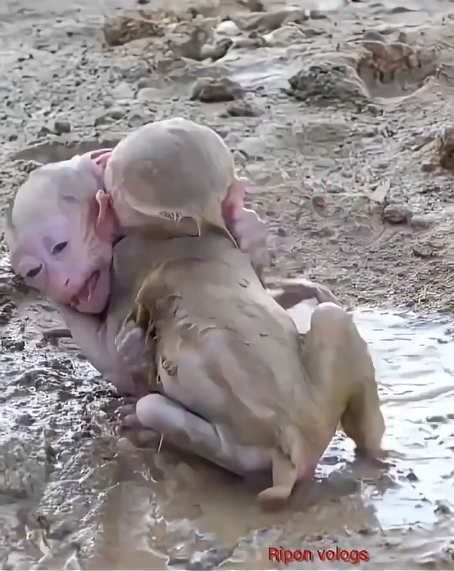
Nearby, a group of other macaques played and swung from tree to tree. They were healthy, strong, and oblivious to the struggles of the little one. Occasionally, the weak macaque would attempt to follow them, lifting his tiny limbs with effort, only to collapse after a few steps. It broke Sari’s heart to see him struggle, knowing he was too fragile to survive without constant care.
Days turned into nights, and the weather shifted. Torrential rain pelted the canopy, drenching the forest floor and making the little macaque shiver violently. Sari wrapped herself around him, trying to shelter him from the cold. Every thunderclap made him flinch, and Sari felt helpless. She remembered the stories of elder macaques, how they spoke of the harshness of nature and the countless little ones who never made it. But hoping for survival was all she had left.
One fateful evening, Sari went to forage farther than usual. Hunger gnawed at her, and she knew she had to find enough food or risk both of their lives. She left the little macaque in a hollowed section of a fallen tree, hoping the shelter would keep him safe. Minutes turned into an hour, and when she returned, dread filled her chest. The little macaque was still there, but his breathing was shallow, and his eyes were half-closed. Panic surged through her as she nuzzled him, calling softly, coaxing him to respond. His tiny body trembled one last time, and then, heartbreakingly, he went still.
Sari’s cries pierced the quiet forest, a raw, visceral sound that seemed to echo endlessly. Other macaques froze, sensing her grief. The mother’s wails were not just sorrow but a profound expression of helplessness, a grief born of love and the impossibility of changing fate. For the first time, Sari’s usually strong, vigilant eyes were filled with tears. She stayed there all night, curled around her little one, refusing to leave even as the rain continued to fall and the wind howled through the trees. It was as though her very being had fused with her lost child, unwilling to separate even in death.
The next morning, the forest seemed to mourn with her. Birds were quieter, insects slower, and the wind carried a sorrowful whisper. Sari finally rose, lifting the little macaque gently. She buried him in a secluded spot near the base of a massive tree, covering him with soft leaves and soil. Though his body was small, the mark he left on her heart was immense. This tiny life, so fragile and fleeting, had filled her days with worry, love, and tireless devotion. Even in death, he reminded her of the relentless fragility of life in the wild.
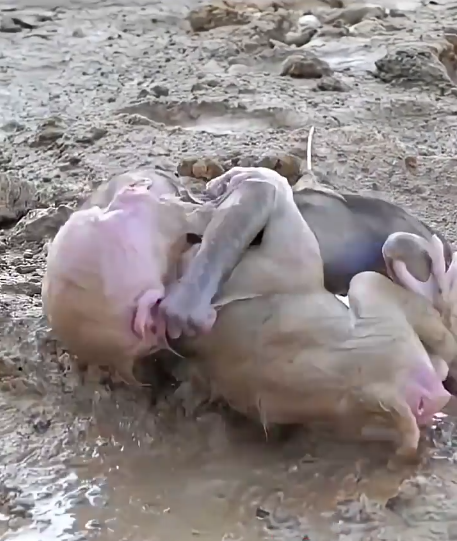
Weeks passed, and Sari tried to regain some semblance of normalcy. She played with her other offspring, swung through the trees, and returned to foraging with determination. Yet, in the quiet moments, she would pause near the spot where her little one rested. The loss lingered, a deep ache she could not shake. Every gust of wind, every rustle of leaves reminded her of him. Nature moved on, as it always does, but Sari carried the memory of her child with her—an enduring testament to the love and heartbreak intertwined in the lives of wild creatures.
This story of the little macaque is not just a tale of tragedy but a reminder of the harsh realities that exist beyond human care. In the wild, life is beautiful but unforgiving, and even the most devoted parent can sometimes be powerless against fate. The forest will continue its cycles, the trees will continue to grow, and the other macaques will thrive, but the memory of the tiny life that struggled and loved fiercely will remain embedded in the heart of one mother—a silent, heartbreaking witness to the fragility and resilience of life.
And sometimes, in the early morning mist, when the sun barely peeks through the canopy and the forest is still, one might hear a faint, sorrowful cry—not of the little macaque himself, but the echo of love and loss that forever lingers in the heart of a mother.