After a long day of work, school, or daily responsibilities, the body often carries hidden tension. Hours of sitting, walking, lifting, or even staring at screens can cause muscles to tighten and joints to feel stiff. When bedtime arrives, many people lie down hoping to relax, yet their bodies still feel restless or uncomfortable.
This is where gentle stretching before bed can make a powerful difference.
Stretching at night helps release built-up tension, relax tight muscles, improve flexibility, and prepare the body for restful sleep. Instead of jumping straight into bed with stiff muscles, spending just 10–15 minutes stretching can calm both the body and the mind.
Unlike intense workouts, bedtime stretches should be slow, gentle, and relaxing. The goal is not to exhaust the body but to help it unwind and transition into a peaceful state.
Below are several simple stretches that can help your body relax before sleep.
Why Stretching Before Bed Is Helpful
Stretching before bedtime offers several physical and mental benefits.
First, it reduces muscle tension that builds up during the day. When muscles stay tight for long periods, they can cause discomfort, cramps, and poor sleep quality.
Second, stretching improves blood circulation. Gentle movements help increase blood flow to the muscles, delivering oxygen and nutrients that support recovery and relaxation.
Third, stretching calms the nervous system. Slow breathing combined with gentle movement signals the body that it’s time to slow down and prepare for rest.
Many people also find that stretching helps quiet racing thoughts and reduce stress, making it easier to fall asleep.
1. Neck Stretch
The neck often holds a lot of tension, especially for people who spend time using computers or phones.
To perform a neck stretch:
Sit comfortably on your bed or a soft mat. Slowly tilt your head toward your right shoulder, allowing your neck muscles to lengthen. Hold this position for about 15–20 seconds while breathing slowly.
Return your head to the center and repeat the stretch on the other side.
This simple stretch releases tension in the neck and upper shoulders, helping reduce stiffness that can interfere with relaxation.
2. Shoulder and Arm Stretch
The shoulders carry stress throughout the day, often becoming tight without us noticing.
To stretch the shoulders, extend one arm across your chest. Use your opposite hand to gently pull the arm closer to your body. Hold the stretch for about 20 seconds while breathing deeply.
Switch arms and repeat.
This stretch relaxes the shoulder muscles and improves flexibility in the upper body.
3. Seated Forward Fold
The seated forward fold is excellent for stretching the back, hamstrings, and hips.
Sit on the floor or bed with your legs extended in front of you. Slowly lean forward, reaching your hands toward your toes. You don’t need to touch your toes—simply reach as far as comfortable.
Allow your back to relax as you breathe slowly.
Hold the stretch for about 20–30 seconds.
This movement gently lengthens the spine and releases tension in the lower back.
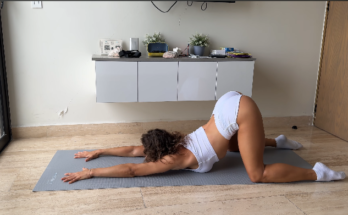
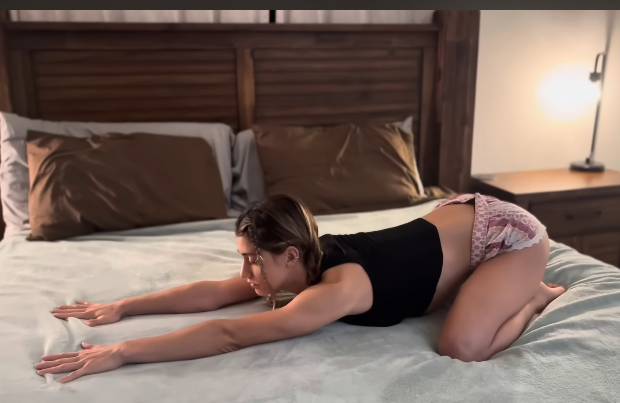
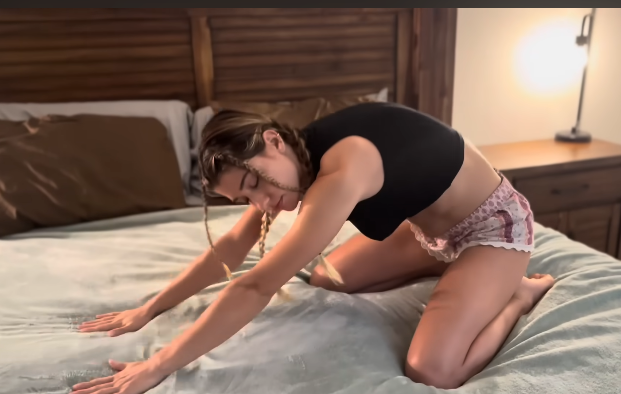
4. Child’s Pose

Child’s Pose is one of the most relaxing stretches for the entire body. It’s often used in yoga to calm the mind and relax the back.
Start by kneeling on the floor or bed. Sit back onto your heels and slowly lower your chest toward the ground. Extend your arms forward and rest your forehead down.
Take slow, deep breaths while holding this position for 30–60 seconds.
Child’s Pose stretches the back, shoulders, and hips while promoting deep relaxation.
5. Knee-to-Chest Stretch
This stretch helps release tension in the lower back and hips.
Lie on your back with your legs extended. Slowly bring one knee toward your chest and gently hold it with both hands. Pull the knee slightly closer to your body while keeping your shoulders relaxed.
Hold for about 20 seconds, then switch legs.
For a deeper stretch, you can pull both knees toward your chest at the same time.
This exercise is especially helpful for people who experience lower back tightness.
6. Supine Spinal Twist
Twisting stretches are excellent for releasing tension in the spine and improving flexibility.
Lie on your back and bring one knee toward your chest. Then gently guide that knee across your body toward the opposite side while keeping your shoulders on the bed.
Extend your arms out to the sides for balance.
Hold the twist for about 20–30 seconds, breathing slowly, then switch sides.
This stretch relaxes the spine and helps release tension from the lower back and hips.
7. Legs-Up-the-Wall Stretch
This simple stretch is incredibly relaxing and helps improve circulation.
Lie on your back near a wall and extend your legs upward so they rest against the wall. Your body should form a gentle L-shape.
Rest your arms comfortably at your sides and focus on slow breathing.
Stay in this position for one to three minutes.
This stretch reduces pressure in the legs and encourages relaxation throughout the entire body.
Creating a Bedtime Stretching Routine

A nighttime stretching routine does not need to be long or complicated. In fact, shorter routines are often easier to maintain consistently.
A simple routine could look like this:
- Neck Stretch – 20 seconds each side
- Shoulder Stretch – 20 seconds each arm
- Seated Forward Fold – 30 seconds
- Child’s Pose – 1 minute
- Knee-to-Chest Stretch – 20 seconds each leg
- Supine Spinal Twist – 30 seconds each side
- Legs-Up-the-Wall – 1–3 minutes
This routine takes about 10 minutes and gently relaxes the entire body before sleep.
Helpful Tips for Nighttime Stretching
To make the most of bedtime stretching, keep a few simple tips in mind.
Move slowly.
Quick movements can cause strain. Stretch gradually and gently.
Focus on breathing.
Deep breathing helps the body relax and improves the effectiveness of stretches.
Avoid pushing too far.
Stretching should feel comfortable, not painful.
Create a calm environment.
Soft lighting and quiet surroundings can enhance relaxation.
Be consistent.
Stretching regularly produces better results than doing it occasionally.
Ending the Day with Relaxation
Stretching before bed is a simple habit that can greatly improve physical comfort and sleep quality. It allows the body to release tension, calm the mind, and prepare for a peaceful night of rest.
Over time, this gentle routine can increase flexibility, reduce muscle soreness, and create a relaxing bedtime ritual that signals the body it’s time to sleep.
Even just a few minutes of stretching can make a noticeable difference.
At the end of the day, your body deserves the chance to unwind—and stretching is one of the easiest ways to give it that gift. 🌙🧘♀️💤