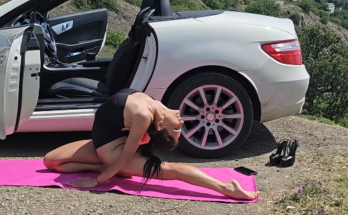
Gymnastics is a sport that combines strength, flexibility, balance, and artistic expression. Over the years, athletes and fitness enthusiasts have continued to push the limits of what the human body can achieve. One of the most striking examples of extreme flexibility is the oversplit—a position where the legs extend beyond a traditional split, creating an angle greater than 180 degrees.
Recently, a unique variation of this movement has caught attention in the world of fitness and performance: gymnastic oversplits performed while wearing high heels. While it may sound unusual at first, this combination of elegance and athletic ability showcases incredible control, balance, and dedication to flexibility training.
An oversplit alone requires a tremendous amount of flexibility. In a standard front split, the legs stretch forward and backward in a straight line along the ground. An oversplit, however, takes the movement further. One or both legs are elevated on blocks, benches, or platforms, allowing the hips to drop below the normal split line. This pushes the body into a deeper stretch, extending flexibility beyond the usual limit.
When high heels are added to the movement, the challenge increases significantly.
High heels change the angle of the foot and ankle. Instead of the foot resting flat on the ground, the heel lifts upward, shifting body weight toward the front of the foot. This altered alignment affects balance and stability. Maintaining a deep split under those conditions requires even greater body awareness and muscle control.
For performers who combine oversplits with high heels, the goal is often not just athletic ability but also visual artistry. The posture can appear graceful and dramatic, especially when used in dance, performance art, or flexibility demonstrations. The long lines created by extended legs, pointed toes, and elevated heels give the movement a striking appearance that many viewers find fascinating.
However, achieving such a position safely requires serious training.

Flexibility does not develop overnight. Athletes who perform oversplits typically spend months or even years conditioning their muscles and joints. The hips, hamstrings, hip flexors, and lower back must all gradually adapt to deeper stretches. Without proper preparation, attempting oversplits can easily lead to injury.
Training usually begins with basic flexibility exercises.
Stretching the hamstrings and hip flexors is essential for improving split depth. Common exercises include lunges, seated forward folds, and gentle split stretches supported by yoga blocks or cushions. Over time, the body becomes more comfortable with the extended position.
Once a regular split becomes easy and comfortable, athletes may begin exploring oversplit training. This often involves placing the front foot or back foot on a raised surface, allowing the hips to sink lower than the floor level.
Careful control is extremely important.
Professional flexibility trainers emphasize slow progress and proper alignment. The hips should remain square, and the muscles must stay engaged to support the joints. Rushing into deep oversplits without preparation can strain ligaments or cause muscle tears.
Adding high heels introduces another layer of complexity.
Because the heel elevates the foot, it reduces the natural support normally provided by flat shoes or bare feet. Balance becomes more delicate, and the calf muscles must work harder to stabilize the ankle.
For this reason, many performers practice oversplits in regular footwear or barefoot before ever attempting the movement in heels. When they eventually add high heels, they often choose stable, well-fitted shoes that provide better support.
Some performers also use platforms, mats, or bars to help maintain balance during practice.
Beyond the physical challenge, oversplits with high heels often appear in creative performance settings. Flexibility artists, dancers, and fitness influencers sometimes incorporate the move into choreographed routines. In these performances, the oversplit is not simply a stretch—it becomes part of a visual story.
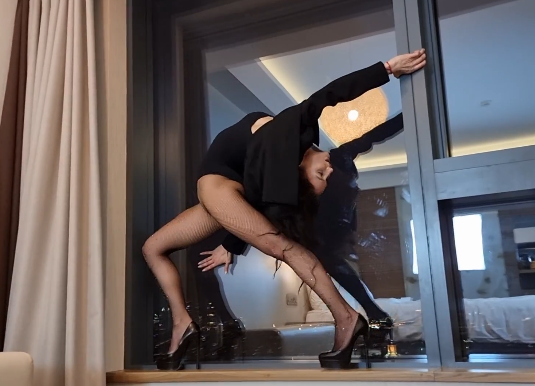
The contrast between the elegance of high heels and the athletic intensity of a deep oversplit creates a memorable image. It blends elements of dance, acrobatics, and artistic posing.
Audience reactions are often a mix of amazement and curiosity.
Many people are surprised that such flexibility is even possible, especially while maintaining balance in heels. But for trained athletes, the movement represents the result of discipline, patience, and careful conditioning.
One key aspect of performing oversplits safely is listening to the body.
Flexibility training should never involve sharp pain. A strong stretch sensation is normal, but discomfort beyond that point can signal a risk of injury. Athletes often warm up thoroughly before attempting deep stretches, using light cardio and dynamic movements to prepare the muscles.
Cooling down afterward is also important. Gentle stretches and relaxation help the muscles recover and maintain flexibility over time.
Another factor that contributes to successful oversplits is strength.
While flexibility is essential, strong supporting muscles help stabilize the body in extreme positions. Core muscles, hip stabilizers, and leg muscles all play important roles in controlling movement and preventing strain.
In fact, many professional flexibility trainers emphasize that strength and flexibility must develop together. A flexible muscle without strength may not protect the joint effectively, while strong muscles help maintain control during deep stretches.
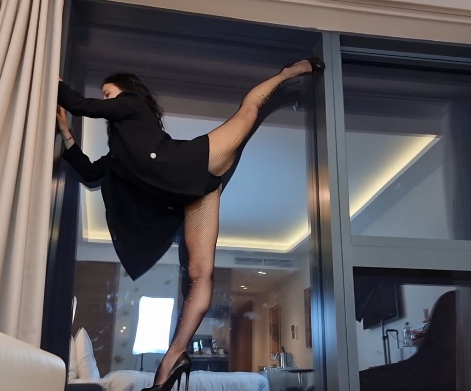
As social media continues to showcase creative fitness and performance styles, movements like oversplits with high heels have gained more visibility. Videos and photos of these positions often attract attention because they combine beauty, athleticism, and a sense of dramatic flair.
For viewers, the images can be inspiring.
They remind people of the incredible adaptability of the human body. With consistent practice, patience, and proper technique, flexibility can improve far beyond what many people initially imagine.
At the same time, experts encourage beginners to approach advanced flexibility carefully. Oversplits—especially with heels—should never be attempted without proper preparation and guidance.
What appears effortless in a performance often represents years of training behind the scenes.
In the end, gymnastic oversplits with high heels highlight the intersection of sport and artistry. They demonstrate how strength, flexibility, and creativity can combine to produce visually stunning movements.
Whether performed in a dance routine, a flexibility showcase, or a creative fitness demonstration, the movement stands as a powerful example of what dedicated practice can achieve.
And for those who witness it, the image of a perfectly balanced oversplit in elegant heels remains unforgettable—a blend of grace, determination, and remarkable human capability.