The jungle was heavy with the warmth of late afternoon, and golden light filtered through the thick canopy like a soft curtain. Leaves rustled gently as a mild breeze passed through, carrying the distant calls of birds and the soft hum of insects. High in the trees, a troop of monkeys moved quietly, resting after a long day of searching for food.
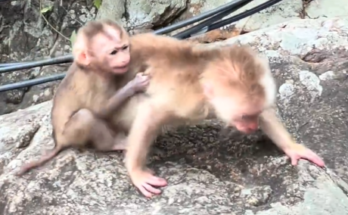
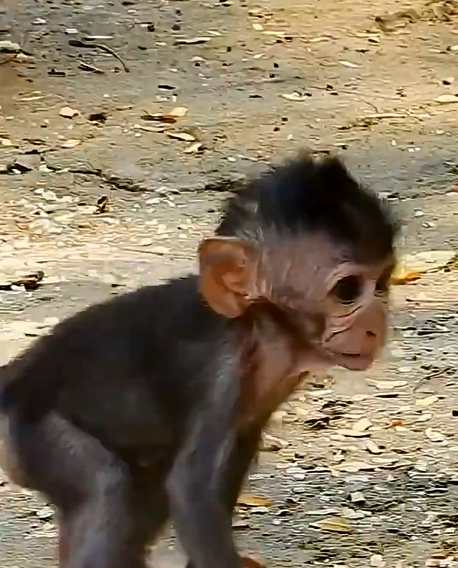
Among them was a little monkey — small, timid, and still learning the rules of life in the forest. His soft fur fluffed slightly whenever he felt nervous, and his wide eyes seemed to hold both curiosity and caution. Though he loved exploring, he depended deeply on the comfort of his mother’s presence.
That day had begun like any other. The troop gathered in a shady cluster of branches, grooming one another and sharing bits of fruit. But earlier in the morning, the little monkey had received a clear warning from his mother. She had noticed him wandering too close to a stern adult male known for guarding his space carefully.
Her message was firm: stay close, observe carefully, and do not approach unless invited.
At first, the little monkey obeyed. He played with other young monkeys, swinging gently on vines and chasing drifting leaves. But as the day wore on, his attention drifted. He noticed the large male resting alone on a sturdy branch not far away, his eyes half closed and his posture calm yet commanding.
The little monkey’s curiosity stirred.
He remembered the warning, yet a quiet voice inside him whispered, Just a little closer…
Slowly, step by step, he edged along the branch. His tiny fingers gripped the bark tightly, and his tail swayed slightly to keep balance. Each movement was cautious, yet his heart beat faster with both excitement and unease.
The forest seemed to hold its breath.
When he was only a short distance away, the large male shifted slightly. One eye opened, sharp and alert. A low rumble escaped his chest — a clear signal to stop.
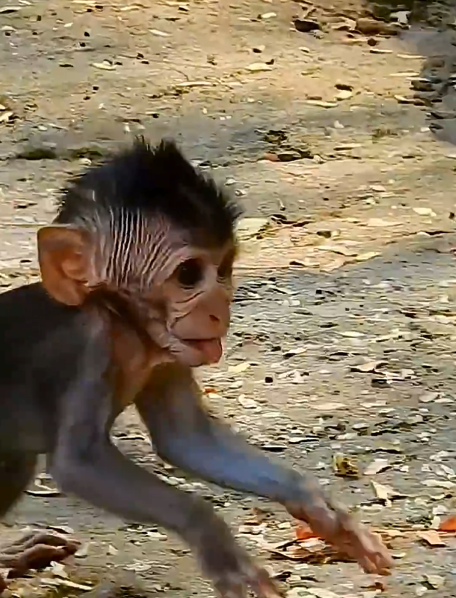
The little monkey froze instantly.
Fear washed over him, and he lowered his body, trying to appear smaller. He remembered the warning too late. The silence between them felt heavy, like a storm waiting to break.
The male sat upright, his presence suddenly overwhelming. With a short, sharp call, he expressed his displeasure at the intrusion. The little monkey’s body trembled, and instinct took over.
He let out soft, pleading chirps — the sounds young monkeys make when frightened — a way of saying, I didn’t mean harm. Please forgive me.
It was as if he were begging for his safety, hoping the adult would understand his innocence.
Nearby, his mother heard the call and turned quickly. She recognized the tone immediately — fear mixed with submission. Without rushing recklessly, she moved toward them, keeping her posture calm to avoid escalating tension.
The male stepped forward and delivered a quick swat — not intended to injure, but to reinforce the boundary. The little monkey squeaked and crouched low, trembling as his tiny hands clung to the branch.
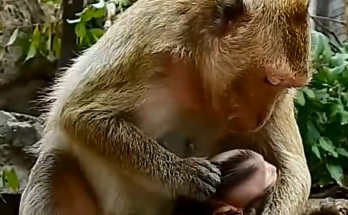
Moments later, his mother arrived. She gently gathered him close, wrapping him in warmth and reassurance. Her grooming was slow and soothing, her soft vocalizations calming his racing heart.
The tension faded like mist under the sun.
The male returned to his resting position, his message clear and complete. Around them, the troop resumed their quiet activities, as such moments were part of life in the complex social world of monkeys.
The little monkey stayed close to his mother for the rest of the afternoon, still shaken but safe. His mind replayed the event again and again — the warning sound, the sudden movement, the fear that had gripped him.
As evening approached, the forest glowed in shades of amber and soft green. The troop gathered together, settling into comfortable sleeping spots among the branches. The little monkey nestled beside his mother, feeling the steady rhythm of her breathing.
Over the next few days, he became more attentive. He watched carefully how older monkeys approached one another, noticing subtle signals — a pause, a soft call, a respectful distance maintained until welcomed closer. He learned that warnings were not meant to frighten unnecessarily, but to maintain harmony and safety within the group.

One morning, he found himself near the same branch where the incident had occurred. The large male rested there once more, calm and observant.
This time, the little monkey stopped well back. He lowered his gaze briefly in a gesture of respect and stayed still.
The male glanced at him, then relaxed.
No tension. No fear. Only quiet understanding.
The little monkey felt a gentle sense of pride. He had learned an important lesson — that courage includes knowing when to step back, and that respect builds peace.
As weeks passed, his confidence grew. He explored with greater awareness, played joyfully with friends, and listened carefully to the subtle language of the forest. The frightening moment became a memory that guided him rather than haunted him.
One afternoon, while grooming beside his mother, he noticed a younger infant inching curiously toward a resting adult. The little monkey gave a soft warning call — gentle yet clear — echoing what he had once been told.
The infant paused and turned back, avoiding trouble.
His mother watched approvingly, recognizing how experience transforms fear into wisdom.
Life continued in its natural rhythm — mornings filled with movement, afternoons of rest, evenings of quiet companionship. The little monkey grew stronger each day, carrying with him the lessons of caution, humility, and understanding.
On a peaceful night, as the forest settled into a chorus of soft sounds, he curled up close to his family. The memory of fear had softened into knowledge, and he felt secure in the warmth of the troop.
Under the whispering leaves, the little monkey slept peacefully, knowing that even frightening moments can lead to growth — and that every warning carries a lesson meant to guide, protect, and prepare him for the journey ahead.