It was a bright and sweltering afternoon in the small village on the edge of the forest. The sun hung high in the sky, casting a golden light over the dirt roads, humble houses, and the sprawling canopy of trees that marked the beginning of the jungle. Children ran through the streets, their laughter echoing against the walls of clay and brick homes. Among them was a boy named Arun, no older than ten, with dark hair tousled by the wind and eyes full of curiosity. He carried a small woven basket in his hand, filled with pieces of fresh fruit his mother had given him.
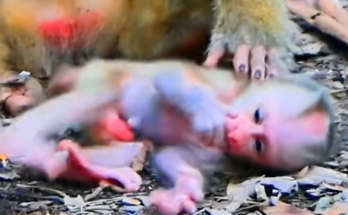
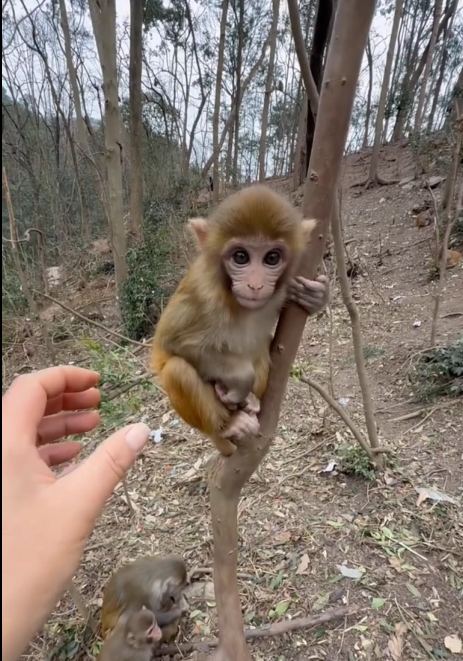
As Arun walked toward the edge of the village, he noticed movement among the trees. At first, he thought it was another child playing, but then he saw the figure — small, thin, and wary — crouched beneath the shade of a large banyan tree. It was a monkey. Its fur was dusty, clinging to its skin in patches, and its eyes, dark and round, reflected both fear and hunger. Arun stopped in his tracks. Something about the way the monkey looked at him made him pause, a pang of empathy piercing his young heart.
He watched silently from a distance. The monkey seemed cautious, almost hesitant, moving closer to the ground as if it was unsure whether the world could be trusted. Its thin arms reached toward the soil, scratching for scraps, picking at leaves, anything edible. Arun could see its ribs faintly through its matted fur. The scene was heart-wrenching. He knew he had to act.
Arun took a deep breath, then slowly opened the basket in his hands. He pulled out a small piece of banana and held it in his palm. He crouched low to the ground, keeping his movements slow and gentle. The monkey froze at first, eyes wide and body tense. Arun whispered softly, though he wasn’t sure the monkey understood words: “It’s okay… you can eat.”
After what felt like an eternity, the monkey inched forward. Its nose twitched, and it sniffed the air, unsure whether this gesture of kindness was genuine. Arun held the banana out steadily, showing no signs of threat. Slowly, the monkey reached out with its small, trembling hands and grabbed the fruit. Its movements were tentative, careful, almost as if it were afraid the boy might take it back.
The first bite was taken cautiously, the monkey retreating slightly with each chew. Arun smiled softly, sitting quietly on the ground, allowing the monkey to eat in peace. He understood instinctively that rushing or forcing interaction would only frighten it. Patience, he realized, was the bridge between their worlds.
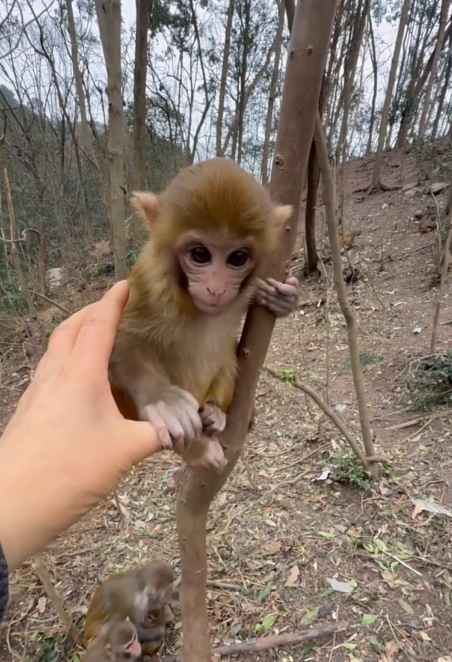
After the first banana, the monkey looked up at him again, eyes glinting with recognition, as if to say, Thank you. Arun reached into the basket and pulled out more pieces of fruit — small mango chunks, scraps of papaya, and a few grapes. The monkey’s pace quickened slightly, though it never lost the wary glances toward the surrounding trees. Arun didn’t move; he stayed still, offering food without expectation, without judgment.
Other children had started to notice Arun. They gathered at the edge of the road, curious. “Why are you sitting there, Arun?” one asked. “Isn’t that monkey dangerous?”
Arun shook his head. “No. It’s hungry. It just needs something to eat.”
The other children watched with a mix of skepticism and amazement. For them, monkeys were mischievous, sometimes even aggressive, and certainly not creatures to be approached freely. But Arun’s calm presence seemed to soothe the small creature. It ate more confidently now, and even picked up a tiny piece of mango with delicate precision, savoring the taste as if it had never known sweetness before.
Minutes passed, though to Arun it felt like hours. He stayed patient, offering piece after piece, until he realized the monkey had eaten as much as it could. Its movements were slower now, the frantic hunger replaced with a tentative satisfaction. Arun’s heart swelled with a quiet joy.
He reached into his pocket and pulled out a small piece of cloth, a remnant from his shirt. He didn’t know if the monkey would understand, but he gently laid it near the creature. “Rest here,” he murmured. The monkey sniffed the cloth and eventually curled up on it, eyes half-closed, comforted by the gesture.
In that moment, Arun realized something profound: kindness did not require words, only action. A simple act of sharing, a gesture of care, could cross the boundaries of species, fear, and misunderstanding. The monkey, once wary and desperate, had found temporary safety and nourishment. And Arun, once a boy with just a basket of fruit, had discovered the power of compassion.
The other children, inspired by Arun’s example, began to offer small pieces of their own snacks. A piece of bread here, a slice of mango there. The monkey’s eyes sparkled with each offering, and it seemed to recognize that not all humans were threats. Gradually, a small circle formed around it, filled with laughter, whispers, and the quiet hum of shared empathy.
After some time, Arun knew he had to return home. His mother would be wondering where he was, and the sun was beginning its descent behind the treetops. He carefully packed the remaining fruit, ensuring the monkey had enough for the next day if it could find it. He waved softly, and though the monkey didn’t respond in words, it gave a small, almost imperceptible nod, a silent acknowledgment of the bond they had shared.
As Arun walked back to his village, he reflected on what had happened. This wasn’t just feeding a hungry monkey; it was a lesson in observation, patience, and empathy. He realized that sometimes those who seem the weakest or most desperate can teach the greatest lessons about the power of care.
The story of Arun and the hungry monkey spread quickly through the village. People spoke of the boy who had shown kindness without fear, who had offered food without expectation, and who had bridged the gap between humans and nature with nothing but gentle hands and a basket of fruit.
Local elders spoke of the event with reverence. “There are few hearts like Arun’s,” one said. “A boy who sees the need of another and does not hesitate — that is a rare gift.” Parents encouraged their children to emulate his example, showing that compassion was not a trait reserved for adults but something even the youngest could practice.
Meanwhile, the monkey began to linger near the edge of the village more frequently. It seemed to recognize Arun and the safe space he had created. Occasionally, it would come close enough to be seen, scanning the area for food or the comforting presence of the boy who had cared for it. Over time, villagers learned that not all wildlife should be feared. With patience and kindness, even wild creatures could trust humans in small, meaningful ways.
Arun continued to visit the monkey regularly. He carried fruits, vegetables, and even nuts he could spare. With each visit, he observed carefully, learning the animal’s habits, preferences, and moods. The monkey, in turn, became less fearful, more confident, and began to interact in subtle, playful ways. Sometimes it would mimic Arun’s gestures, pick up leaves and toss them gently, or even attempt a small, clumsy approach to the basket of food.
The bond between them grew quietly but steadily. Arun learned that care was not just about immediate gratification — feeding the monkey once was good, but consistent attention, observation, and respect for its independence were even more important. He learned to balance generosity with patience, and to respect the natural instincts of the animal.
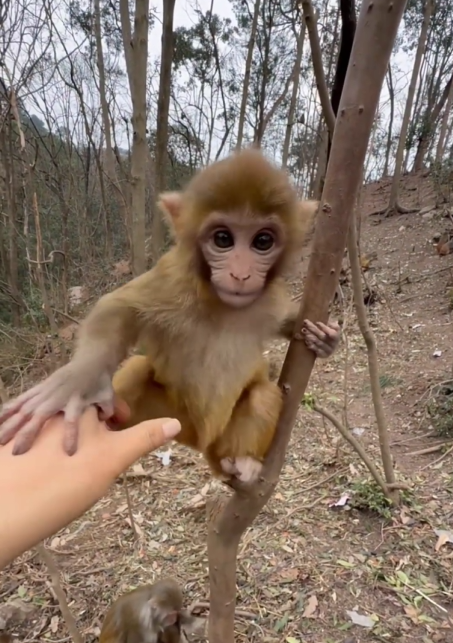
Villagers began to understand that this relationship was not just about survival. It was about respect, empathy, and coexistence. Children would gather at a distance, watching as Arun interacted with the monkey, learning lessons about kindness that went far beyond words. It became a living example of how small acts of compassion could ripple outward, influencing a community and the natural world simultaneously.
One particularly memorable day, a storm swept through the village. Torrential rain poured from the sky, and the winds rattled the trees. Arun grabbed his basket, thinking of the monkey, and ran to its usual resting spot. There it was, crouched beneath the banyan tree, shivering and soaked. Without hesitation, Arun wrapped a small cloth around it, holding it close as best he could while offering dry fruit pieces from his basket. The monkey, though frightened, leaned into him, finding warmth and comfort in the human touch.
This moment, more than any other, solidified their bond. It wasn’t just food that mattered — it was care, presence, and protection. The monkey had survived on its own for so long, but in the moments of shared struggle, the bond between species became undeniable.
Months passed, and the monkey became a regular visitor to Arun’s small home. Villagers began to provide small offerings as well, ensuring the animal could find food even when Arun was at school. In return, the monkey brought a sense of joy and connection to the village — a reminder that kindness begets kindness, and that no act of care is ever wasted.
Arun’s mother often watched him interact with the monkey, smiling at the lessons her son had learned so early in life. She understood that compassion was not taught in books but demonstrated through action. Her son had discovered a simple truth: empathy, patience, and generosity have a power far greater than one could ever imagine.
As the years passed, Arun never forgot those first moments under the banyan tree, when a thin, hungry monkey looked up at him with wide, desperate eyes. He had started with a piece of banana, a small gesture, yet it had blossomed into a life-changing experience — not just for the monkey, but for him and his community.
Their story became a symbol in the village, a living example of how even small acts of kindness can ripple through the world, touching hearts, bridging divides, and creating harmony where fear once ruled.
In the end, it was never about feeding the monkey. It was about understanding, connecting, and giving without expectation. And in doing so, Arun learned the true power of empathy, leaving an unforgettable mark on the world — one fruit at a time.