The sun was beginning its slow descent behind the dense canopy of the forest, casting long shadows across the narrow dirt path that wound through the park. The air was warm but tinged with the earthy scent of wet soil and leaves, a reminder of last night’s rain. Birds chirped in the treetops, and a soft breeze rustled the foliage. Most people walked quickly, eager to leave the forest’s quiet solitude behind, but I lingered, drawn by a noise that made me pause.
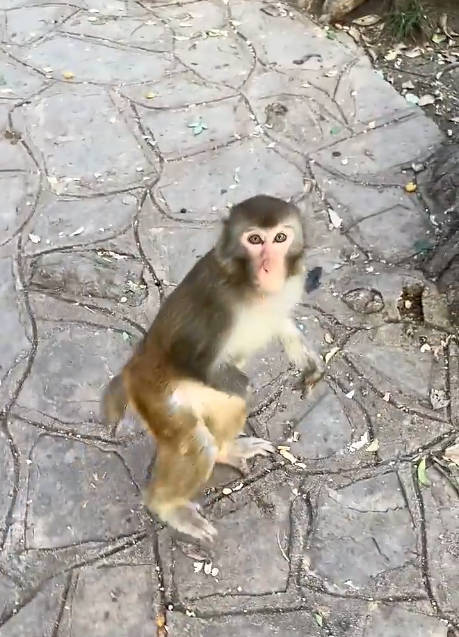
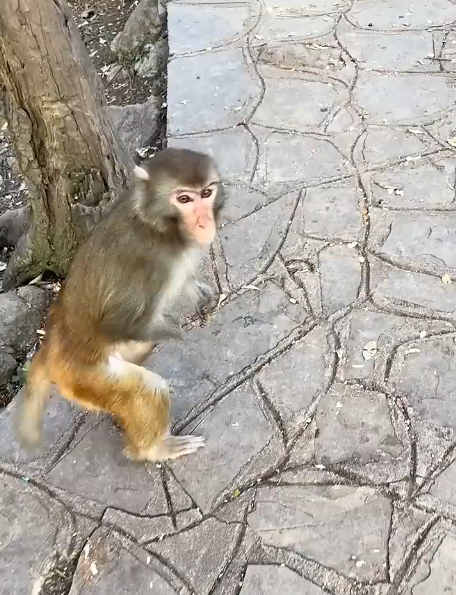
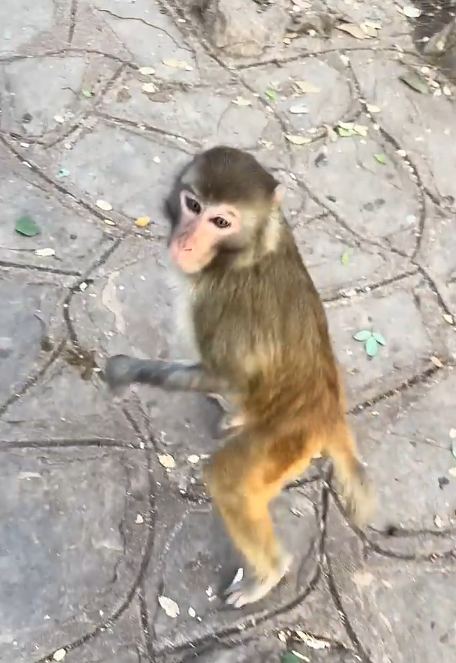
It started as a soft rustle, almost imperceptible. At first, I thought it was just the wind playing through the trees, but then I saw it: a small, frail figure crouched near the edge of the path, partially hidden by the shadows. It was a monkey, and even from a distance, I could see something was wrong. One of its hands was deformed, curled awkwardly, twisted in a way that made movement difficult.
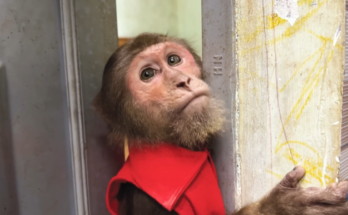
The monkey’s fur was patchy, matted in places, and its eyes, large and dark, flickered nervously as it observed me. Hunger was etched into every line of its small body. I could see the ribs pressing against its thin torso, the way it shifted from foot to foot as if trying to find comfort or balance. The deformed hand hung limply, unable to grasp or hold properly, leaving the monkey even more vulnerable in its fight to survive.
I had brought a small piece of bread with me as a snack, intending to eat it while walking along the trail. But now, seeing the monkey, I realized it was no longer mine. The forest had many creatures struggling to survive, and this one’s plight was immediate, heartbreaking.
Slowly, I approached, careful not to frighten it. Monkeys, especially those living semi-wild in parks, were wary of humans. Quick movements or loud noises could make them bolt, losing their chance at sustenance entirely. I knelt down at a safe distance and tore the bread into smaller pieces, letting the smell drift toward the monkey.
Its nose twitched, eyes following the crumbs. There was hesitation—fear mixed with hunger—but the deformed hand limited its ability to reach for the bread as quickly as it wanted. It shifted awkwardly, trying to balance, and I realized that even a simple act like feeding itself was an immense challenge.
“Here,” I murmured softly, tossing a small piece closer. The monkey flinched but didn’t retreat. Hunger was stronger than fear. Another piece went forward, and it slowly inched closer, sitting back on its haunches, one good hand extended while the deformed one rested uselessly by its side.
The sight was both heartbreaking and humbling. To see a creature so small and frail, struggling with the simplest of tasks that most animals—or humans—take for granted, reminded me of how fragile life could be. Every movement the monkey made was deliberate, calculated, a mix of desperation and determination.
I continued to break the bread into smaller morsels, each one landing closer and closer until the monkey could reach without fear. Finally, it grasped a piece with its functional hand, lifting it to its mouth with a trembling motion. It ate quickly, hungrily, but even this simple act was a challenge. The deformed hand occasionally brushed the crumbs from the path, an awkward reminder of its struggle.
I stayed there, watching, offering a quiet presence so it wouldn’t feel threatened. Each piece of bread I fed it seemed to strengthen not just its body but its confidence. The monkey began to relax slightly, eyes flicking toward me occasionally, as if acknowledging my presence and the small assistance I had provided.
This was not the first time I had encountered animals in need, but there was something particularly poignant about this monkey. The deformity was not recent; it had likely been born that way or injured long ago. Every action, every attempt to reach for food or climb a tree, required more effort, more thought, more courage than it would for any other monkey. Yet here it was, surviving in a world that was unforgiving and indifferent.
After it had eaten a fair portion, the monkey paused, head tilted, watching me. There was a moment of silent communication, a fragile understanding that this act of kindness was a lifeline. I could see gratitude in its eyes, subtle but unmistakable. The forest was dangerous, the paths full of predators, humans, and the unpredictability of daily life. And yet, here, in this small moment, trust had been established between us.
I tossed another piece closer, noticing how it maneuvered the bread with its good hand while its deformed one awkwardly brushed the ground. I thought about how difficult it must be to survive in the wild with such a limitation, how many dangers it faced daily that others might never consider. Every encounter with humans, every struggle to find food, every challenge of navigating the forest with a deformity was a story of courage and endurance.
As the sun dipped lower, casting a golden hue across the forest floor, the monkey finished the last piece of bread I had for it. It sat back, resting on its haunches, licking crumbs from its mouth, eyes never leaving me entirely. I felt a strange connection, a quiet bond formed through shared empathy and understanding.
For several minutes, we simply observed each other. The monkey, now slightly stronger and calmer from the food, and I, profoundly aware of the fragility and determination of life around me. There was no need for words—none could capture the experience. Its struggle, its resilience, and its courage spoke louder than anything I could articulate.
Then, with a sudden agile motion, the monkey hopped to a low branch of a nearby tree. Its deformed hand made the climb awkward, but it adapted, twisting its body, balancing with extraordinary effort, finally finding a secure perch. From there, it looked down at me, eyes alert, acknowledging the help, before disappearing further into the foliage.
I stayed a few moments longer, ensuring it had moved safely, then continued my walk, the encounter lingering in my mind. Every rustle of leaves, every distant chirp, reminded me of that fragile life, and the silent struggles that go unnoticed every day in the wild.
Later, I thought about the broader picture. The forest and its creatures are full of beings that endure far more than we often consider. The monkey with a deformed hand is not unique in suffering, yet its resilience is remarkable. It survives not because life has been easy, but because it has adapted, persevered, and, in small moments, received help from strangers willing to act with empathy.
That brief encounter shaped how I saw the world. It reminded me that life is not always fair, that survival often depends on courage, adaptation, and sometimes, the kindness of others. A simple act—feeding a piece of bread—had profound significance. It could mean the difference between life and death for creatures who struggle silently.
In the days that followed, I returned to the same path a few times, hoping to see the monkey again. Sometimes it appeared, always cautious, watching from a distance, its deformed hand still awkward and vulnerable. But it thrived, showing remarkable adaptation to its limitation. Each time I offered food, its movements became slightly more confident, a small testament to resilience in the face of adversity.
Observing the monkey over time, I realized the broader lesson: challenges are part of life, and limitations do not define the potential for survival or courage. The monkey’s struggle, its clever adaptations, and its perseverance illustrated a profound truth about life: even in the harshest conditions, strength can emerge from vulnerability, and hope can thrive through determination and care.
I reflected on my own life and the many ways we humans face challenges, often unseen by others. The monkey’s experience was a mirror—a reminder that compassion, patience, and attentiveness can make a real difference. It reinforced the importance of noticing those in need, whether animal or human, and offering assistance, however small it may seem.
The encounter remained etched in my memory, a vivid story of struggle, resilience, and quiet triumph. Feeding the monkey bread was a simple act, yet it represented so much more: empathy, connection, and the acknowledgment of another life’s struggle. The monkey, with its deformed hand, became a symbol of endurance, a reminder that life persists against odds when given even the smallest chance.
Over time, I carried the memory of that day with me, sharing it with friends, family, and anyone willing to listen. It became a lesson in kindness, patience, and awareness. Small acts, like feeding a piece of bread, can ripple outward, impacting lives in ways we cannot fully predict. The monkey’s survival, aided by that moment of care, was proof of the profound effects of empathy.
As seasons changed, I often returned to the forest. Sometimes the monkey appeared, sometimes not. But every time, I remembered that day—the fragile hand, the hungry eyes, the trust it placed in me, and the resilience that carried it through hunger, limitation, and fear.
It was more than feeding bread; it was a story of life persevering against obstacles, of courage manifested in small, everyday actions, and of the profound impact of human kindness when extended to the smallest and most vulnerable of beings.
In the end, the monkey thrived, a survivor of adversity, a testament to adaptation, resilience, and the quiet power of empathy. And for me, the memory of that deformed hand reaching for bread remains a vivid reminder that even the smallest acts of compassion can save lives, inspire change, and illuminate the strength found in the struggle to survive.