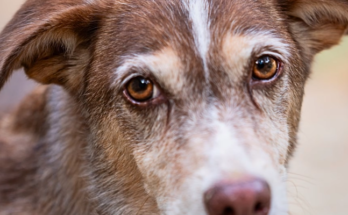
He had spent his whole life believing that loyalty was enough. From the first day he followed his owner home, tail wagging, eyes full of trust, he gave everything he had. He guarded the house without being asked. He waited patiently for meals. He lay quietly at his owner’s feet, content just to belong. To him, this human was family. To his owner, he was a responsibility that eventually became too expensive.
The change didn’t happen all at once. At first, it was small. He moved a little slower. He didn’t run as far or jump as high. His body ached in ways he couldn’t explain. Animals don’t understand illness the way humans do; they only understand discomfort and instinct. He tried to hide his pain, as animals often do, hoping it would pass. He still wagged his tail. He still tried to please.
But the pain stayed.
Soon, walking became difficult. His appetite faded. His eyes lost their shine. Every movement required effort, yet he never complained. He only looked at his owner with the same trust he always had, waiting for help that never came.
When the time came to see a veterinarian, the diagnosis didn’t matter as much as the cost. Treatment required money, follow-up care, patience. And that was more than his owner was willing to give. Instead of seeing a living being who had given years of loyalty, his owner saw a problem. An expense. Something broken.
The decision was cold and final.
One day, he was taken outside. He thought it was a walk. Even in pain, that small routine sparked hope. But there was no leash, no familiar route, no gentle voice calling him back. The door closed behind him. The sound echoed louder than any shout.
He waited.
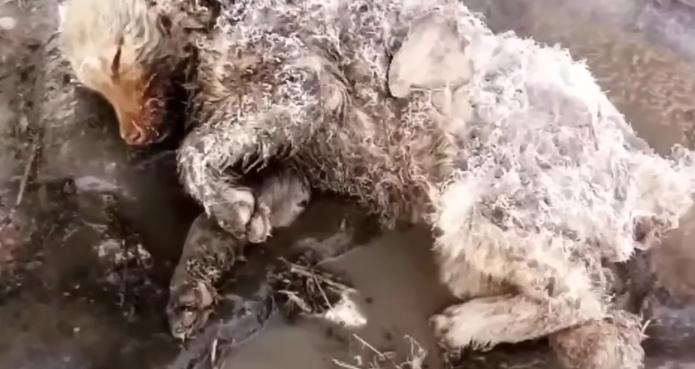
At first, he stayed right where he was left. He believed his owner would return. Surely this was a mistake. Surely the door would open again. Hours passed. The sun shifted. Hunger gnawed at him, but he didn’t move far. Loyalty kept him close to the place he still thought was home.
As night fell, the truth began to sink in. He was alone.
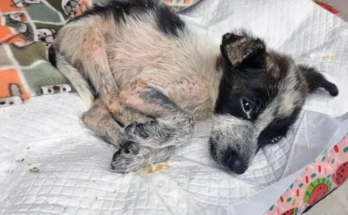
Weak and sick, he dragged himself a short distance and collapsed near the roadside. His body hurt too much to go on. The ground was cold. The air was heavy. He curled into himself, trying to conserve what little warmth and strength he had left. Every breath was a reminder that he was still alive, even though someone had decided his life wasn’t worth saving.
Days passed in a blur of pain and exhaustion. Rain soaked his fur. Dirt clung to his skin. Flies gathered, drawn to the scent of illness and neglect. He no longer had the strength to stand when people walked by. Some glanced at him and looked away. Others didn’t see him at all. To them, he was just another stray, another sad sight in a world full of them.
But he wasn’t a stray. He was abandoned.
Despite everything, he still watched the road. His eyes followed movement, ears lifting at footsteps. Hope is stubborn in animals. Even when logic is gone, even when the body is failing, hope remains. He waited for someone—anyone—to notice him.
He waited to die alone.
When help finally came, it didn’t come from the person who had promised to care for him. It came from a stranger. Someone who stopped. Someone who saw past the dirt, the sickness, and the smell, and recognized a life fading away.
They knelt beside him and spoke softly. Their voice was gentle, careful not to scare him. He barely moved, but his eyes met theirs. In that moment, something shifted. For the first time since being abandoned, he wasn’t invisible.
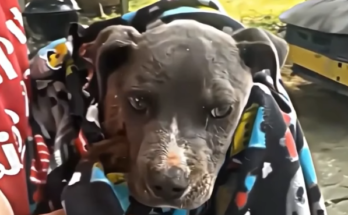
Hands touched him carefully, lifting him with effort and concern. A blanket wrapped around his thin body. The warmth made him tremble—not just from cold, but from shock. Kindness felt unfamiliar now. He didn’t resist. He didn’t have the strength to. He only let himself be carried.
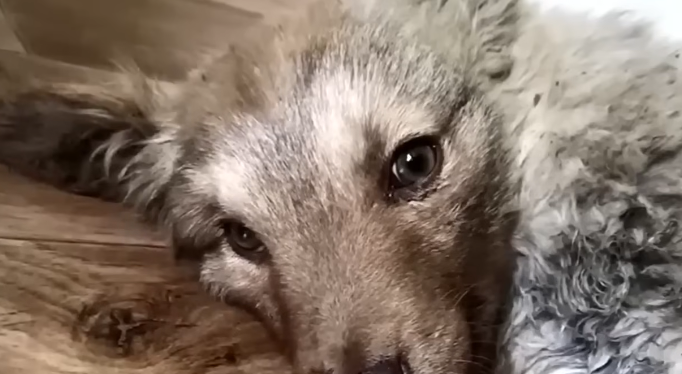
At the clinic, the truth became clear. He was suffering, but he was not beyond help. His condition was serious, made worse by neglect and time, but treatment was possible. The cost—so unbearable to his owner—was nothing compared to the value of his life.
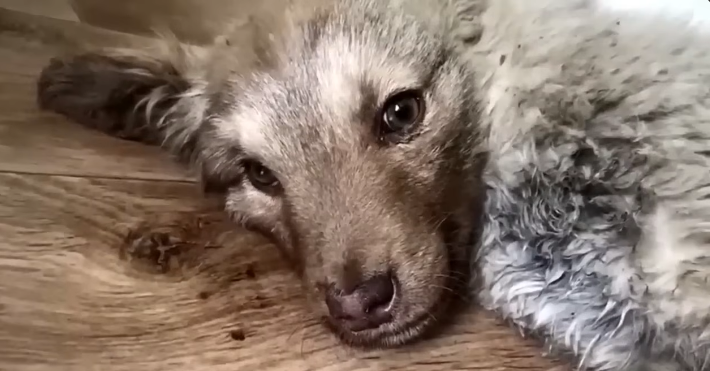
As fluids flowed into his body and medication eased his pain, his breathing slowed. His muscles relaxed. He slept deeply, the kind of sleep that only comes when fear finally loosens its grip. For the first time in days, maybe longer, he was safe.
Recovery was slow. Some days were harder than others. His body was weak, and his spirit had been wounded deeply. Loud noises made him flinch. Sudden movements frightened him. Abandonment leaves scars that don’t always show on X-rays.
But every day, kindness chipped away at the damage.
He was fed regularly. He was spoken to gently. He was never hit, never yelled at, never ignored. Slowly, he began to respond. He ate more. He lifted his head when someone entered the room. One day, almost shyly, his tail moved.
That small movement meant everything.
It meant he hadn’t given up. It meant trust, though broken, was not completely destroyed. It meant that love, once lost, could still be relearned.
What makes stories like his so painful is not just the suffering, but how easily it could have been avoided. A simple choice—to care instead of discard, to treat instead of abandon—would have spared him unimaginable pain. Animals don’t ask for much. They ask for food, shelter, and commitment. When illness comes, they rely on us completely.
Throwing an animal away because treatment costs money is not poverty—it is a failure of responsibility.
He didn’t deserve to be kicked out. He didn’t deserve to rot. He didn’t deserve to wait alone for death simply because he became inconvenient.
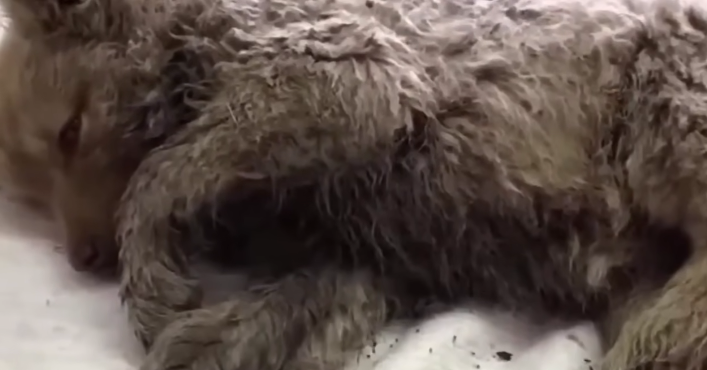
And yet, this happens every day.
Animals are abandoned when they grow old. When they get sick. When they no longer fit into someone’s life. They are left behind without understanding, carrying loyalty to people who no longer want them.
But his story didn’t end the way his owner intended.
Today, he is no longer lying on cold ground waiting to die. He is healing. He is learning that hands can bring comfort instead of pain. His eyes are brighter now. They follow people not with desperation, but with curiosity. He still carries scars—inside and out—but he also carries something stronger.
He survived.
He was meant to end alone, forgotten, and unwanted. Instead, he was found. He was cared for. He was given a second chance that should never have been denied in the first place.
His story matters because it speaks for the ones who never get rescued. For the ones who wait until the end, still hoping, still loyal. It reminds us that compassion is a choice—and that choosing it can mean the difference between life and death.
He was abandoned when he needed help the most.
But he was not worthless.
He was not disposable.
He was—and still is—worthy of love.