If you’re searching for a core exercise that looks impressive, feels brutal, and delivers real results, stability ball pike ups deserve your full attention. This movement isn’t just another flashy ab exercise—it’s a serious test of strength, control, balance, and mental focus. One set done properly can leave your core shaking and your entire body fired up. Welcome to Core Blueprint, where we break down why stability ball pike ups are not for the faint of heart and why they might be exactly what your training has been missing.
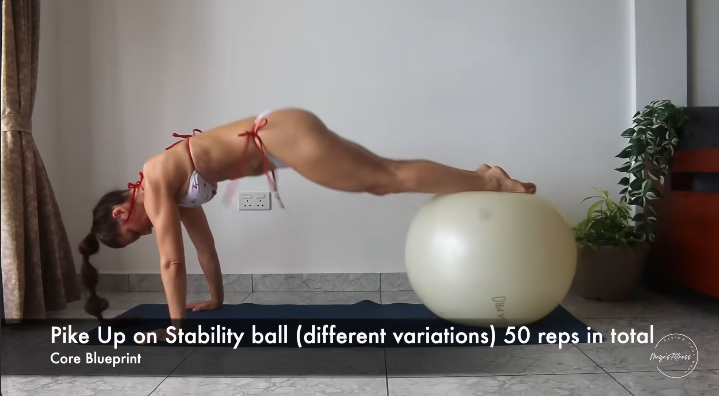
At first glance, the stability ball pike up seems straightforward. You start in a plank position with your feet resting on a stability ball and your hands on the floor. From there, you lift your hips upward, rolling the ball toward your chest and forming a pike position. Simple, right? Not even close. The moment your feet touch the ball, instability enters the equation, forcing your core to work overtime just to keep you from collapsing.
What makes this exercise so powerful is that it targets the core as a complete system rather than isolating one muscle group. Your rectus abdominis, obliques, transverse abdominis, hip flexors, lower back, shoulders, and even glutes are all recruited to maintain balance and control. Unlike floor-based ab exercises, where stability is built in, the stability ball pike up demands constant adjustment and full-body tension.
The instability of the ball is what truly lights your core on fire. Every tiny shift forces your deep core muscles to engage instantly. These are the muscles responsible for spinal stability and injury prevention, yet they are often undertrained. With pike ups, there is no hiding weak links. Your core must respond in real time, making this exercise incredibly effective for building functional strength.
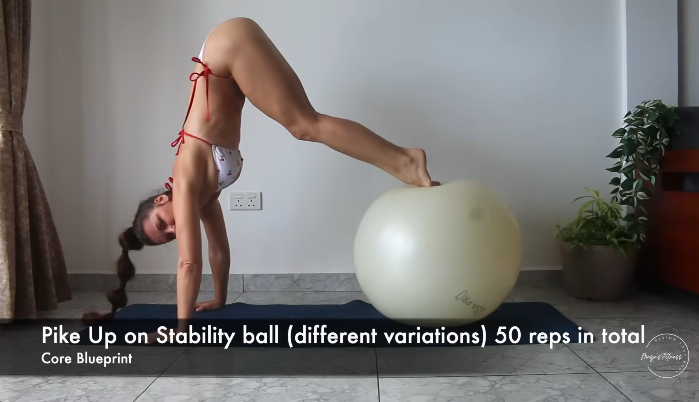
Another reason stability ball pike ups are so intense is the long lever created by your extended body position. When your legs are straight and elevated, your core has to generate significant force to lift your hips against gravity while controlling the ball. This creates massive tension through the abdominal wall. Even experienced athletes are often surprised by how challenging this movement feels.
Breathing plays a critical role during pike ups. Many people instinctively hold their breath, especially during difficult reps. However, controlled breathing helps maintain core engagement and improves performance. Exhaling as you lift into the pike allows your abs to contract more deeply and keeps your movement smooth rather than rushed. Proper breathing can be the difference between a shaky rep and a strong one.
One of the standout benefits of stability ball pike ups is how they bridge the gap between strength and control. This exercise doesn’t just build visible abs; it trains your body to move efficiently under unstable conditions. That’s why it’s a favorite among athletes who need explosive power, balance, and coordination. Whether you’re sprinting, jumping, or changing direction, a strong, reactive core is essential.
From a physique standpoint, pike ups are incredibly effective for developing abdominal definition. The intense contraction and extended time under tension stimulate muscle growth and strengthen the midsection. While no exercise can spot-reduce fat, building a strong core enhances posture and creates a tighter, more athletic appearance around the waist.
Form, however, is everything. Poor technique turns this powerful movement into a risky one. A common mistake is letting the lower back sag in the starting plank position. This places unnecessary stress on the spine and reduces core activation. Before attempting pike ups, it’s essential to master a solid plank with proper alignment—shoulders over wrists, ribs tucked, and glutes engaged.
As you initiate the pike, the movement should come from your core, not momentum. Rolling the ball forward while snapping the hips up too quickly often leads to loss of control. Instead, think about lifting your hips straight upward while keeping your legs as straight as possible. The slower and more controlled the movement, the harder your core has to work.
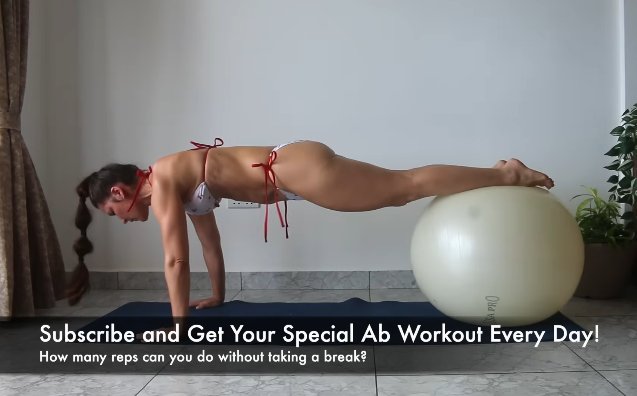
The return phase is just as important as the lift. Lowering back into the plank should be slow and deliberate. This eccentric control builds strength and protects your joints. Rushing the descent wastes one of the most effective parts of the exercise and increases the risk of slipping or straining.
Because stability ball pike ups are so demanding, they fit perfectly into a structured core program like Core Blueprint. They are best performed after foundational core exercises or as a main strength movement within your workout. Doing them while your core is already slightly fatigued can amplify their effectiveness—but only if your form remains solid.
Progression is key to long-term improvement. Beginners can start with stability ball knee tucks, where the knees bend as the ball rolls in. This shortens the lever and reduces intensity while still training core control. As strength improves, transitioning to straight-leg pike ups increases difficulty significantly. Advanced variations may include pauses at the top or slow tempo reps for maximum tension.
Mental toughness is another underrated benefit of this exercise. Stability ball pike ups demand focus and commitment. The fear of losing balance or failing a rep forces you to stay present. Each successful repetition builds confidence, not just in your core strength, but in your ability to control your body under pressure.
The shoulder and upper-body engagement involved in pike ups is another reason they stand out. Your shoulders and arms must stabilize your body throughout the movement, making this exercise a hybrid between core training and upper-body strength work. Over time, this leads to improved shoulder stability and endurance, which carries over into push-ups, handstands, and overhead movements.
Despite their intensity, stability ball pike ups can be adjusted to fit different training goals. Want strength? Use slow, controlled reps with longer rest periods. Want endurance? Perform higher-rep sets or timed intervals. Want a finisher that leaves your abs burning? Add them at the end of your workout when your core is already fatigued.
Recovery and awareness are important when working with such a challenging movement. Listening to your body helps prevent overuse injuries. If your lower back feels strained, it’s a sign to regress the movement or focus more on form. Core training should feel intense but controlled—not painful or reckless.
In the bigger picture, stability ball pike ups represent what effective core training should be: challenging, functional, and purposeful. They prepare your body for real-world movement, improve athletic performance, and build a strong foundation that supports everything else you do in training.
As part of the Core Blueprint, this exercise sets a high standard. It reminds you that true core strength isn’t built through endless crunches, but through movements that demand stability, control, and full-body engagement. It’s not about chasing easy reps—it’s about mastering difficult ones.
So yes, consider this your warning. Stability ball pike ups will light your core on fire 😱🔥. They will challenge your balance, test your patience, and expose weaknesses you didn’t know you had. But if you commit to the process and respect the movement, the payoff is undeniable: a stronger core, better control, and a body that moves with confidence and power.
Approach them with focus, stay consistent, and let the burn remind you that real progress is being made. This is core training done right.