Building strength doesn’t require a gym membership, expensive equipment, or hours of free time. With the right routine, consistency, and mindset, you can develop full-body strength right at home. A daily strength routine for total body training is about smart movement, balance, and sustainability—not exhaustion.
This guide walks you through a realistic, effective daily routine designed to build strength from head to toe while protecting your joints and fitting easily into everyday life.
Why Train Strength at Home?
Home strength training offers unique advantages:
- No commute or waiting for equipment
- Full control of pace and environment
- Easier consistency and habit formation
- Minimal equipment needed
- Suitable for all fitness levels
When done correctly, home workouts can be just as effective as gym sessions—sometimes more so—because they prioritize movement quality and regular practice.
Key Principles of a Daily Strength Routine
Before jumping into exercises, it’s important to understand what makes a daily routine effective and safe.
- Total Body Focus
Each session should engage major muscle groups: legs, glutes, core, back, chest, shoulders, and arms. - Moderate Intensity
Daily strength training works best when intensity is controlled. You shouldn’t feel destroyed after every session. - Progressive Challenge
Strength improves when muscles are gradually challenged through time under tension, reps, or variations. - Recovery Awareness
Even daily routines must respect recovery. Variation and proper warm-ups matter.
Warm-Up: Prepare the Body (5–8 Minutes)

A proper warm-up wakes up muscles, lubricates joints, and reduces injury risk.
Start with:
- Arm circles and shoulder rolls
- Hip circles and gentle twists
- Marching in place or light jumping jacks
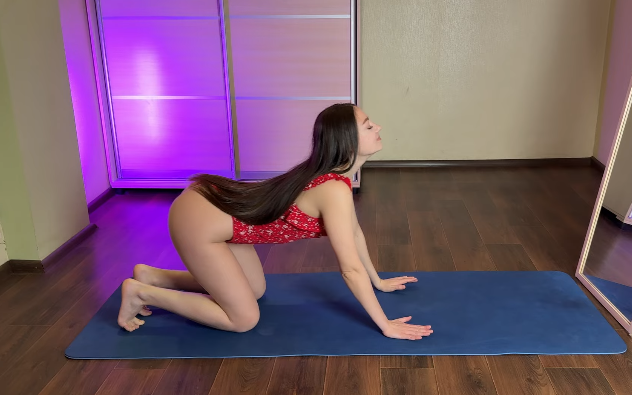
- Cat-Cow stretches for the spine
Your goal is to increase blood flow and mobility, not to fatigue yourself.
Lower Body Strength: Foundation of Power
Strong legs and glutes support posture, balance, and overall movement.
Bodyweight Squats
- Feet shoulder-width apart
- Chest tall, hips back
- 12–15 reps
Reverse Lunges
- Step back instead of forward to protect knees
- Alternate legs
- 10 reps per side
Glute Bridges
- Lying on your back, feet planted
- Squeeze glutes at the top
- 15–20 reps
These exercises build strength while reinforcing proper alignment.
Core Strength: Stability and Control
A strong core isn’t just about abs—it supports your entire body.
Plank Hold
- Forearms under shoulders
- Body in one straight line
- Hold for 20–45 seconds
Dead Bug
- Lying on your back, arms and legs raised
- Alternate lowering opposite arm and leg
- 8–10 controlled reps per side
Standing Core Twists
- Hands together, rotate torso slowly
- Focus on control, not speed
- 15 reps per side
Core exercises should feel controlled and intentional.
Upper Body Push: Chest and Shoulders

These movements build pushing strength needed for daily tasks.
Push-Ups (Modified or Full)
- On knees or toes
- Elbows at about 45 degrees
- 8–12 reps
Pike Push-Ups
- Hips lifted, head moving toward floor
- Targets shoulders
- 6–10 reps
If push-ups feel too difficult, wall push-ups are a great alternative.
Upper Body Pull: Back and Arms
Balancing push movements with pull exercises protects shoulders and posture.
Bent-Over Towel Rows
- Hold towel under feet
- Pull elbows back
- 12–15 reps
Reverse Snow Angels (Floor)
- Lying face down, lift arms slightly
- Sweep arms slowly from overhead to sides
- 10–12 reps
These exercises strengthen the upper back, helping counteract hours of sitting.
Full-Body Integration: Functional Strength
To connect everything together, include compound movements.
Squat to Overhead Reach
- Squat down, stand up reaching arms overhead
- Encourages coordination
- 10–12 reps
Bear Crawl (Short Distance)
- Hands and knees hovering above floor
- Move slowly forward and back
- 20–30 seconds
These movements train the body as a unit, not isolated parts.
Daily Structure: How to Use This Routine
You can perform this routine in several ways depending on your schedule:
Option 1: Circuit Style
- Perform one set of each exercise
- Rest minimally
- Repeat 2–3 rounds
Option 2: Time-Based
- Work for 30 seconds, rest 15 seconds
- Cycle through exercises
- Great for busy days
Option 3: Split Focus Days
- Alternate emphasis (legs one day, upper body the next)
- Still include light total-body movements
How Long Should a Daily Strength Workout Be?
A daily routine doesn’t need to be long.
- Beginners: 15–20 minutes
- Intermediate: 25–35 minutes
- Advanced: 40 minutes (with variations)
Consistency matters more than duration.
Recovery Within a Daily Routine
Daily strength training should feel energizing, not draining.
Support recovery by:
- Using different exercise variations
- Keeping reps moderate
- Including mobility and stretching
- Listening to fatigue signals
If your body feels overly sore or exhausted, scale back intensity—not frequency.
Cool-Down: Reset and Relax (5 Minutes)
End your workout with gentle stretching:
- Hamstring stretches
- Hip flexor stretches
- Chest and shoulder openers
- Deep breathing
Cooling down helps the nervous system relax and improves flexibility.
Progressing Over Time
Strength grows gradually.
You can progress by:
- Adding reps or sets
- Slowing down movements
- Holding pauses at the hardest point
- Using household items as light weights
Small increases over weeks create lasting results.
The Mental Side of Daily Strength
Daily routines build more than muscles.
They build:
- Discipline
- Body awareness
- Confidence
- A sense of control
Even on low-energy days, showing up for a short session reinforces the habit.
Final Thoughts
A Strength Daily Routine for Total Body Home is one of the most sustainable ways to build fitness. It respects your time, adapts to your energy, and supports long-term health.
You don’t need perfection.
You don’t need equipment.
You just need to start—and keep going.
Your body is your gym.
Your consistency is your strength. 💪