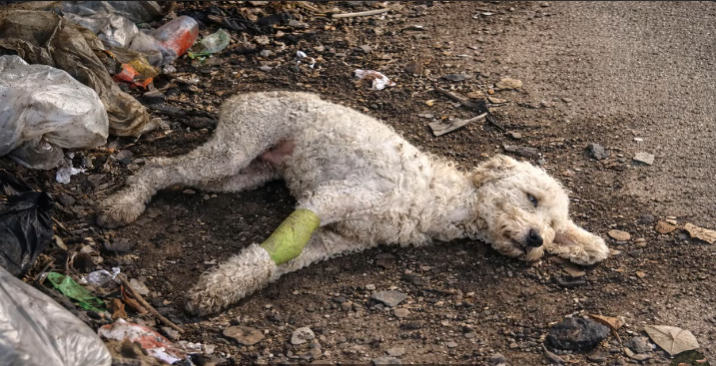
The landfill lay far beyond the edge of the city, where the road turned rough and the air grew thick with the smell of rot and smoke. It was a place meant for forgotten things—broken furniture, torn bags, scraps of a life already used up. No one came there looking for hope. And yet, on one quiet afternoon, hope was left behind in the smallest, cruelest way.
The puppy had just come from the veterinary clinic.
Hours earlier, he had been wrapped in a towel, his small body trembling as unfamiliar hands poked and prodded him. Bright lights hurt his eyes. Strange smells filled his nose. He didn’t understand the words the humans spoke, only the tone—worried, impatient, annoyed. His owner stood nearby, arms crossed, checking the time more than once.
The puppy was young, barely old enough to understand the world. He still believed that every car ride ended somewhere safe. He believed that the person who fed him, who sometimes patted his head, would always come back for him.
When they left the clinic, he wagged his tail weakly. He was sore, tired, and confused, but relieved to be with his owner again. He thought they were going home.
Instead, the car drove farther and farther away.
The smooth city streets disappeared, replaced by potholes and dust. The puppy whined softly, pressing his nose against the seat, sensing something was wrong. The air that came through the open window smelled sharp and ugly. When the car finally stopped, there were no houses, no people—only mountains of trash and circling birds.
The door opened.
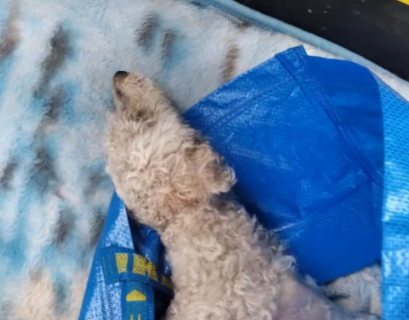
Rough hands lifted him out, still wrapped in the towel. For one brief second, the puppy felt safe again, held close. Then the hands lowered him to the ground.
The towel was pulled away.
The car door slammed shut.
The engine started.
The puppy stood frozen, watching as the car turned around and drove off, growing smaller, then disappearing behind a hill of garbage.
At first, he waited.
He waited the way puppies always do—trusting, certain this was some strange mistake. He sat where he had been placed, ears perked, eyes locked on the road. Surely the car would come back. Surely his owner would realize he’d forgotten something very important.
Minutes passed. Then hours.
The sun slid lower, casting long shadows over the landfill. Flies buzzed around him. The ground was hot and uneven, sharp bits of metal and glass pressing into his paws. Hunger gnawed at his belly, but fear was worse.
As night came, the landfill changed. The wind carried strange sounds—scraping, rustling, distant howls. Shapes moved in the darkness. The puppy whimpered and curled into himself, tucking his nose under his tail, trying to be small, trying to disappear.
Rain came sometime after midnight.
Cold drops soaked his thin fur. He shivered violently, too weak to move far, too scared to wander. Water pooled around him, washing filth against his body. Still, he clung to life, driven by something older than fear—a quiet, stubborn will to survive.
Morning brought no rescue.
Instead, it brought heat. The sun rose mercilessly, turning the landfill into an oven. The puppy stumbled to his feet and tried to walk, but his legs shook. He collapsed beside a torn plastic bag, panting, eyes dull.
He might have died there. Many animals do.
But fate had not finished with him yet.
Late that afternoon, a scavenger searching for scrap noticed a small movement near a pile of trash. At first, he thought it was a rat. Then he saw the eyes—too big, too gentle, staring back at him.
“Hey… what are you doing here?” the man muttered, kneeling.
The puppy didn’t run. He didn’t bark. He simply lifted his head weakly and wagged his tail once, a tiny motion that seemed to say, I’m still here. Please.
The man’s chest tightened.
He called out to others nearby, and soon a small group gathered. Someone brought water. Someone else fetched an old cardboard box. When the puppy tried to stand and failed, hands carefully lifted him inside.
They argued about what to do next. Some said to leave him—there were too many strays already. Others shook their heads, unable to look away.
Finally, a woman stepped forward. She had come to the landfill to help document illegal dumping for a local rescue group. She took one look at the puppy and knew.
“He’s coming with me,” she said firmly.
At the clinic, the truth came out.
The puppy was sick, yes—but not hopeless. Dehydrated. Malnourished. Infected with parasites. Weak, but treatable. The vet sighed when he heard where the puppy had been found. He had seen this story too many times.
“He would’ve died out there,” the vet said quietly. “Another day, maybe less.”
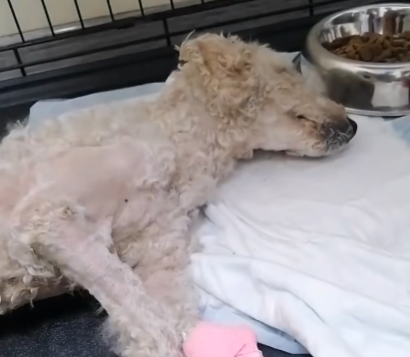
Treatment began immediately. Fluids. Medication. Warm blankets. The puppy barely reacted at first, too exhausted to care. But as hours passed, color slowly returned to his gums. His breathing steadied. His eyes, once clouded with pain, began to focus.
The woman stayed with him the entire night.
She spoke softly, even when he slept. She told him he was safe now. That he mattered. That someone had chosen him.
Recovery was not quick.
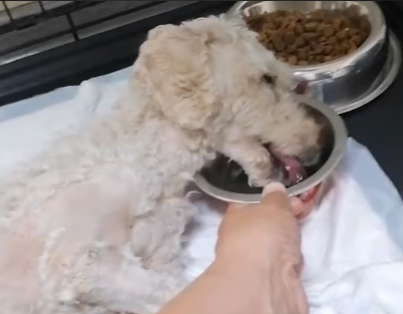
There were days when the puppy refused food. Nights when he cried softly, as if remembering the landfill, the cold, the abandonment. But each morning, he tried again. He learned that hands could be gentle. That cars could lead somewhere good. That not every goodbye was forever.
Weeks passed.
The puppy gained weight. His fur grew shiny. His tail wagged more often. He discovered toys, grass, sunshine. He learned how to trust again, one careful step at a time.
The woman who rescued him officially became his foster—then, without much thought, his forever human.
On the day the adoption papers were signed, the puppy sat at her feet, chewing on a shoelace, completely unaware of how close he had come to disappearing from the world.
Sometimes, when they drove past open land or rough roads, he would grow quiet, staring out the window. The woman would reach over and place her hand on his head. He would lean into her touch, grounding himself in the present.
He had been dumped in a landfill, treated like trash after leaving a place meant to heal him.
But he survived.
Not because the world was kind—but because he was strong. Because strangers cared. Because one person chose compassion over convenience.
And today, when he runs across grass instead of garbage, when he sleeps warm instead of shivering, his survival stands as a quiet miracle—a reminder that even in the ugliest places, life can fight back… and win.